Delpisheh Ali, Feyzi Rezvan, Jorjani Goljamal, Davatgar Raha, Panahi Hadi, Panahi Mohammad Hossein
Safety Promotion and Injury Prevention Research Center, Research Institute for Health Sciences and Environment, Shahid Beheshti University of Medical Sciences, Tehran, Iran.
Department of Epidemiology, School of Public Health and Safety, Shahid Beheshti University of Medical Sciences, Tehran, Iran.
Bull Emerg Trauma. 2025;13(1):53-61. doi: 10.30476/beat.2025.103825.1537.
This study explored the underlying reasons for non-compliance with seatbelt usage among rear-seat passengers in Iran.
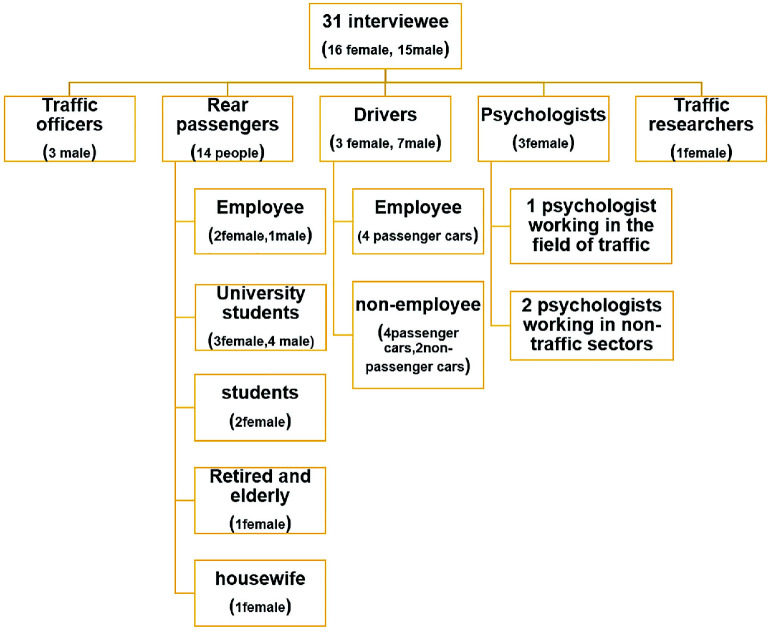
This qualitative study was conducted in 2023 with a diverse group of participants, including driving instructors, drivers, psychologists, rear-seat passengers, and experts in the field of traffic accidents and driving from Tehran, Khuzestan, and Golestan (n=39 persons). Data were collected through semi-structured interviews and focus group discussions and analyzed using conventional content analysis. The interviews, which lasted between 40 and 90 minutes, were recorded using two digital recorders, transcribed verbatim, and analyzed following the conventional qualitative content analysis method.
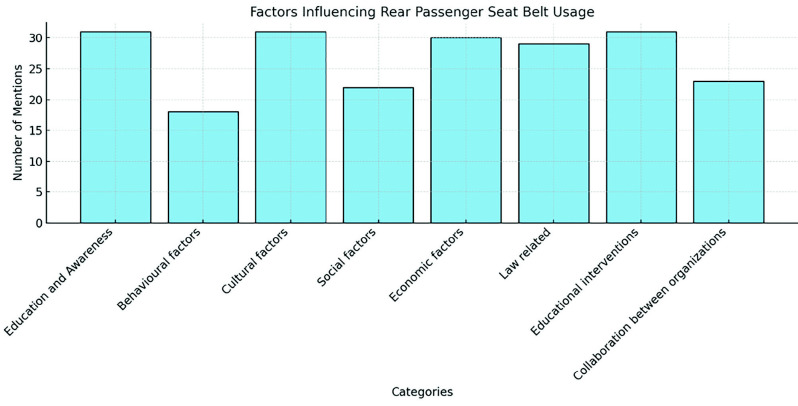
The findings revealed several factors contributing to the non-use of rear seatbelts, including lack of sufficient awareness of laws and regulations, incorrect behavioral and cultural attitudes, socio-economic influences factors, inadequate law enforcement and related organizations, and poor quality of seatbelts. Based on these findings, potential solutions were proposed, such as continuous education and awareness campaigns, improvements in seatbelt quality, and enhanced collaboration among relevant organizations to promote traffic safety culture. Education on the importance of seatbelt use should begin comprehensively in early childhood and continue into adulthood, with families playing a pivotal role in fostering this awareness.
This study identified key factors influencing the non-use of rear seatbelts, including awareness of laws, cultural attitudes, socio-economic influences, and seatbelt quality issues. To address these challenges, the study recommended prioritizing ongoing education on seatbelt use, improving the quality of seatbelts, and fostering collaboration among traffic police, media, and educational institutions. These measures aimed to enhance traffic safety, increase compliance with seatbelt laws, and ultimately reduce fatalities and injuries resulting from road accidents.
本研究探讨了伊朗后排乘客不系安全带的潜在原因。
这项定性研究于2023年进行,参与者群体多样,包括驾驶教练、司机、心理学家、后排乘客以及来自德黑兰、胡齐斯坦和戈勒斯坦的交通事故和驾驶领域专家(共39人)。通过半结构化访谈和焦点小组讨论收集数据,并采用传统内容分析法进行分析。访谈持续40至90分钟,使用两台数字录音机进行记录,逐字转录,并按照传统定性内容分析法进行分析。
研究结果揭示了导致后排乘客不系安全带的几个因素,包括对法律法规的认识不足、不正确的行为和文化态度、社会经济影响因素、执法和相关组织不力以及安全带质量不佳。基于这些发现,提出了一些潜在的解决方案,如持续开展教育和宣传活动、提高安全带质量以及加强相关组织之间的合作以促进交通安全文化。安全带使用重要性的教育应从幼儿期全面开始并持续到成年期,家庭在培养这种意识方面发挥关键作用。
本研究确定了影响后排乘客不系安全带的关键因素,包括法律意识、文化态度、社会经济影响和安全带质量问题。为应对这些挑战,该研究建议优先持续开展安全带使用教育、提高安全带质量,并促进交警、媒体和教育机构之间的合作。这些措施旨在提高交通安全,增加对安全带法律的遵守,并最终减少道路事故造成的伤亡。