Zhang Xiaoxue, Han Liping, Nie Fangfang, Zhang Huimin, Li Liming, Liang Ruopeng
Department of Physical Examination, The First Affiliated Hospital of Zhengzhou University, Zhengzhou, Henan, P. R. China.
Department of Obstetrics and Gynecology, The First Affiliated Hospital of Zhengzhou University, Zhengzhou, Henan, P. R. China.
Sci Rep. 2025 Apr 30;15(1):15259. doi: 10.1038/s41598-025-99625-1.
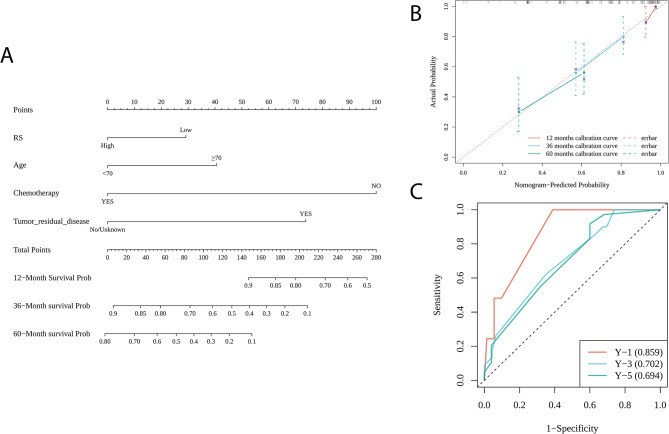
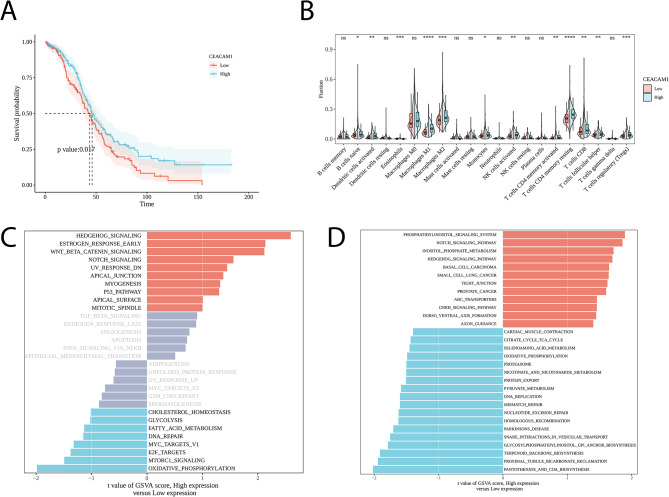
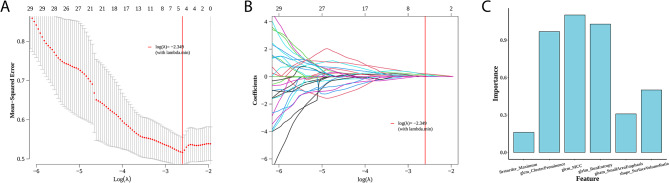
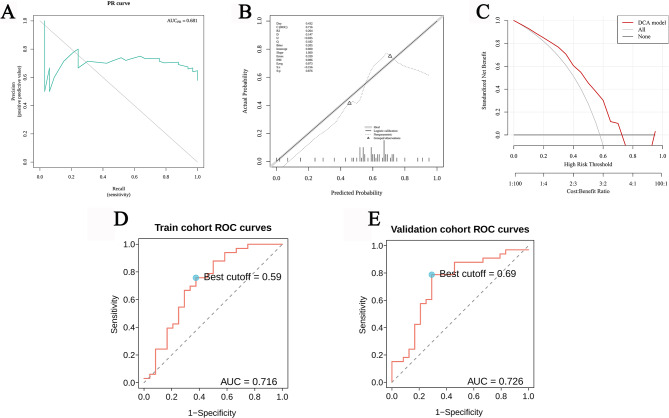
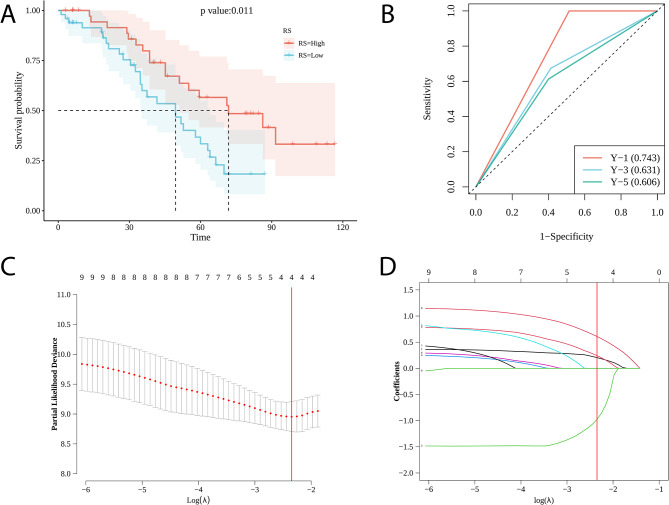
We aimed to investigate the prognostic role of CEACAM1 and to construct a radiomic model to predict CEACAM1 expression and prognosis in ovary cancer (OC). Sequencing data and CT scans in OC were sourced from TCGA and TCIA databases. CEACAM1 expression was assessed by Cox regression analyses, Kaplan-Meier curves and GSVA enrichment analysis. Furthermore, radiomic features were extracted from CT scans and selected by LASSO and ROC. The selected radiomic features were used to construct a radiomic model to predict CEACAM1 expression. In addition, the radiomic score (RS) and its relationship with OC survival were investigated by Kaplan-Meier and ROC curves. At last, RS and clinical features were included into LASSO, using nomogram to predict OC prognosis. Cox regression analyses showed that CEACAM1 expression was an independent prognostic factor and associated with immune cell infiltration in OC. By LASSO and ROC, six radiomic features were selected and used to construct a radiomic model. The PR, calibration, DCA and ROC curves revealed the good performance and clinical utility of the radiomic model to predict CEACAM1 expression. In addition, RS based on radiomic features was found to be associated with OC survival. At last, a nomogram based on RS, age, chemotherapy and tumor residual disease was constructed and was found to have high accuracy in predicting OC prognosis. For the first time, our study constructed a radiomic model to predict CEACAM1 expression and prognosis of OC patients. Those findings may guide novel diagnosis and treatment for OC patients.
我们旨在研究癌胚抗原相关细胞黏附分子1(CEACAM1)的预后作用,并构建一个放射组学模型来预测卵巢癌(OC)中CEACAM1的表达及预后。OC的测序数据和CT扫描数据来源于癌症基因组图谱(TCGA)数据库和癌症影像存档与通信系统(TCIA)数据库。通过Cox回归分析、Kaplan-Meier曲线和基因集变异分析(GSVA)评估CEACAM1的表达。此外,从CT扫描中提取放射组学特征,并通过最小绝对收缩和选择算子(LASSO)及受试者工作特征曲线(ROC)进行筛选。将筛选出的放射组学特征用于构建预测CEACAM1表达的放射组学模型。另外,通过Kaplan-Meier曲线和ROC曲线研究放射组学评分(RS)及其与OC患者生存的关系。最后,将RS和临床特征纳入LASSO分析,使用列线图预测OC的预后。Cox回归分析表明,CEACAM1表达是OC的一个独立预后因素,且与OC中的免疫细胞浸润相关。通过LASSO和ROC筛选出6个放射组学特征,并用于构建放射组学模型。预测准确率(PR)、校准曲线、决策曲线分析(DCA)和ROC曲线显示,该放射组学模型在预测CEACAM1表达方面具有良好的性能和临床实用性。此外,发现基于放射组学特征的RS与OC患者的生存相关。最后,构建了一个基于RS、年龄、化疗和肿瘤残留疾病的列线图,发现其在预测OC预后方面具有较高的准确性。本研究首次构建了一个放射组学模型来预测OC患者的CEACAM1表达及预后。这些发现可能为OC患者的新型诊断和治疗提供指导。