Grundnig Julia S, Roehe Marlen A, Trost Carmen, Anvari-Pirsch Anahit, Holzinger Anita
Department: Teaching Center, Medical University of Vienna, Spitalgasse 23, 1090, Vienna, Austria.
BMC Med Educ. 2025 May 2;25(1):642. doi: 10.1186/s12909-025-07077-y.
Medical end-of-life decisions, including voluntary active euthanasia (lethal injection), (physician-)assisted dying (prescribing lethal substances), passive euthanasia (refraining from or ceasing life-sustaining treatments), palliative sedation (administering sedatives to alleviate suffering, possibly leading to unintended life-shortening), and treatment withdrawal/withholding, have become prevalent in modern medical practice.
This systematic review aims to analyse international data on undergraduate medical students' attitudes towards (physician-) assisted dying, palliative sedation, treatment withdrawal/withholding, active and passive euthanasia. The objectives are to assess approval rates over the past 24 years and to identify factors influencing these attitudes.
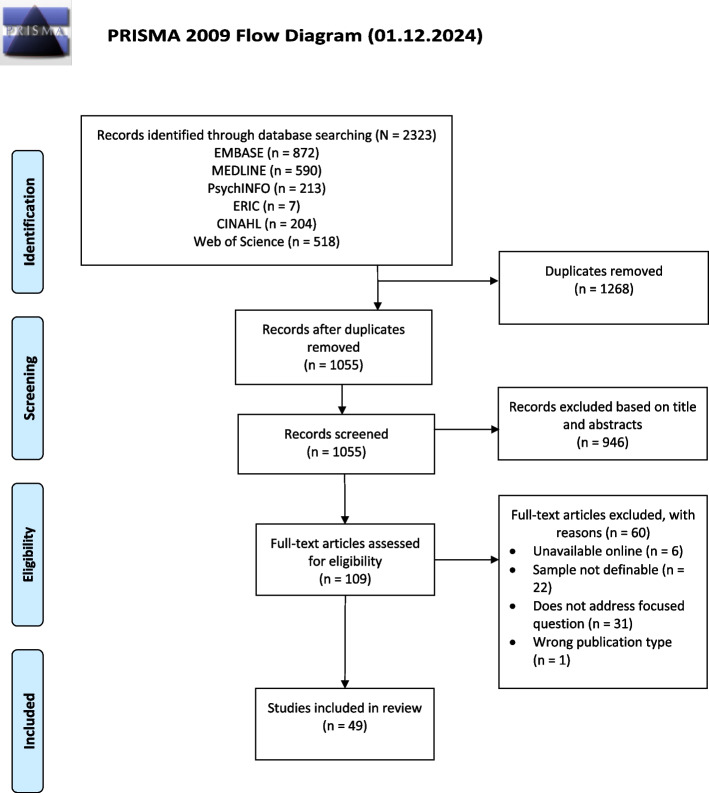
In accordance with PRISMA guidelines, a systematic search of six electronic databases (MEDLINE, CINAHL, EMBASE, ERIC, PsycINFO, and Web of Science) was conducted. The review encompasses studies from 2000-2024.
Forty-nine studies met the inclusion criteria (43 surveys, 6 qualitative studies, 1 mixed-method study). The studies were globally distributed: Europe (27), Asia (10), America (8), Africa (3), and Australia (1). Predictors such as age, clinical vs. pre-clinical status, religious aspects, sex, and ethnicity were investigated. Age and gender had limited influence, whereas religion was a significant factor. Compared with pre-clinical students, clinical students showed more support for end-of-life practices. Geographic locations and socioeconomic status also affect attitudes.
Medical students' attitudes towards end-of-life decisions are influenced by clinical experience, religious beliefs, and geographic location. The acceptance rates for euthanasia and (physician-)assisted dying vary significantly across regions, reflecting diverse cultural and educational backgrounds.
医疗临终决策,包括自愿主动安乐死(注射致死剂)、(医生)协助死亡(开具致死物质)、被动安乐死(停止或终止维持生命的治疗)、姑息性镇静(使用镇静剂减轻痛苦,可能导致意外缩短生命)以及撤除/ withhold治疗,在现代医疗实践中已变得普遍。
本系统评价旨在分析关于本科医学生对(医生)协助死亡、姑息性镇静、撤除/ withhold治疗、主动和被动安乐死态度的国际数据。目标是评估过去24年的批准率,并确定影响这些态度的因素。
根据PRISMA指南,对六个电子数据库(MEDLINE、CINAHL、EMBASE、ERIC、PsycINFO和科学网)进行了系统检索。该评价涵盖2000年至2024年的研究。
49项研究符合纳入标准(43项调查、6项定性研究、1项混合方法研究)。这些研究分布在全球各地:欧洲(27项)、亚洲(10项)、美洲(8项)、非洲(3项)和澳大利亚(1项)。研究了年龄、临床与临床前状态、宗教方面、性别和种族等预测因素。年龄和性别影响有限,而宗教是一个重要因素。与临床前学生相比,临床学生对临终实践表现出更多支持。地理位置和社会经济地位也会影响态度。
医学生对临终决策的态度受临床经验、宗教信仰和地理位置影响。安乐死和(医生)协助死亡的接受率在不同地区差异显著,反映了不同的文化和教育背景。