Yang Cho-Hsiang, Lin Yi-Ting, Hsieh Ming H, Hwang Tzung-Jeng
Department of Psychiatry, National Taiwan University Hospital Bei-Hu Branch, Taipei, Taiwan.
Department of Psychiatry, National Taiwan University Hospital, Taipei, Taiwan.
PLoS One. 2025 May 5;20(5):e0321570. doi: 10.1371/journal.pone.0321570. eCollection 2025.
The Eight-Item Informant Interview to Differentiate Aging and Dementia (AD8) was developed as a screening tool for dementia, with a cutoff score of 2 suggested by the initial study. However, various studies have reported different cutoff values, and many have found that a cutoff of 2 may result in a high false positive rate. Furthermore, a high false positive rate has repeatedly been shown when the AD8 is self-administered in local government screening programs in Taiwan.
This study aimed to test the AD8's performance, define its best cutoff value, review factors that may affect its performance, and reconsider its role in clinical practice.
We recruited 118 participant-informant dyads from a university teaching hospital. For each informant, the AD8 was administered before the Clinical Dementia Rating (CDR) to minimize recall bias. Two geriatric psychiatrists made a consensus clinical diagnosis for each participant based on the DSM-5 criteria. Receiver operating characteristic analysis was used to assess the performance of the AD8.
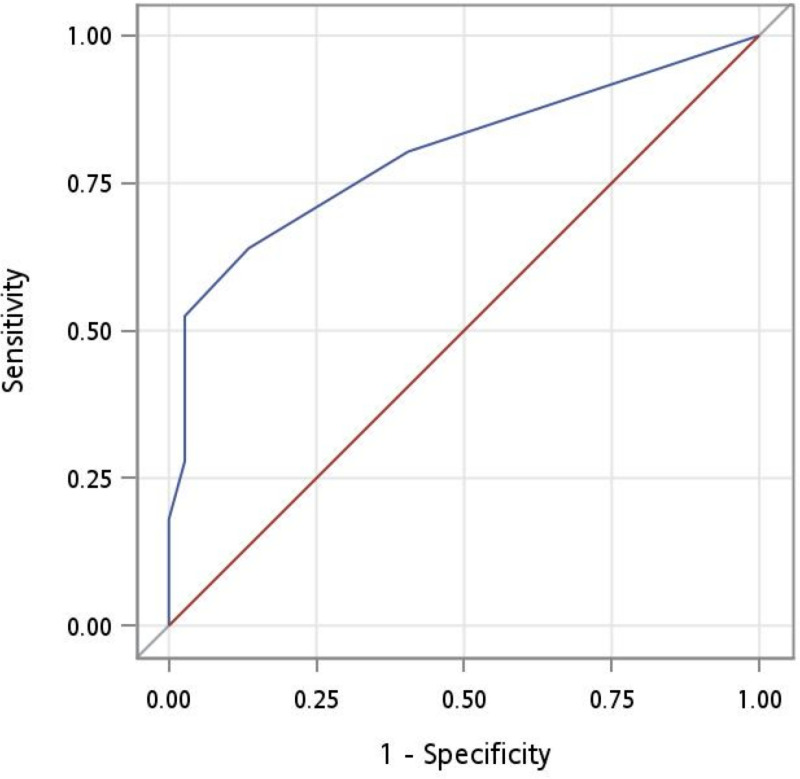
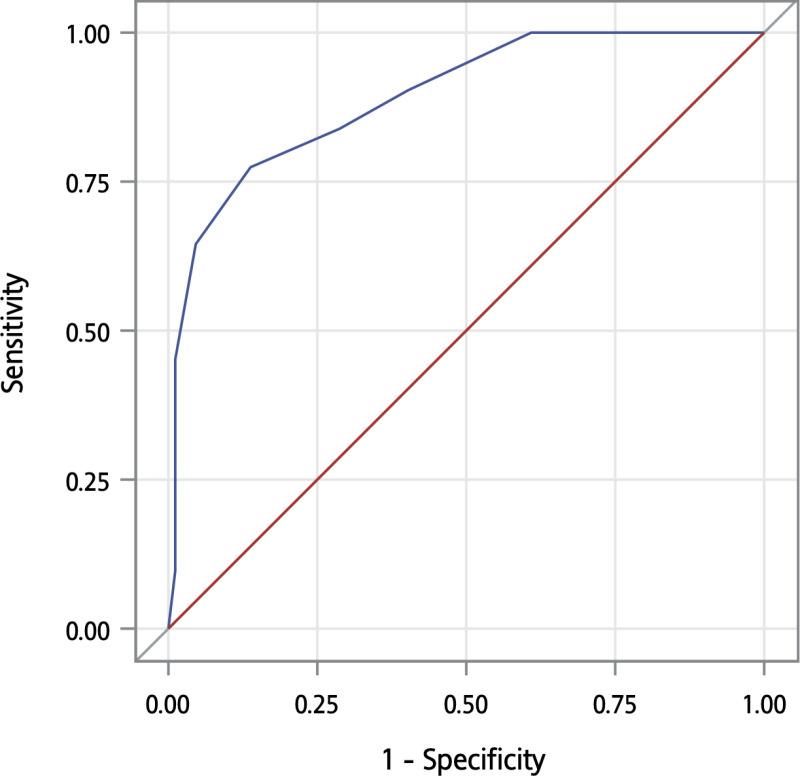
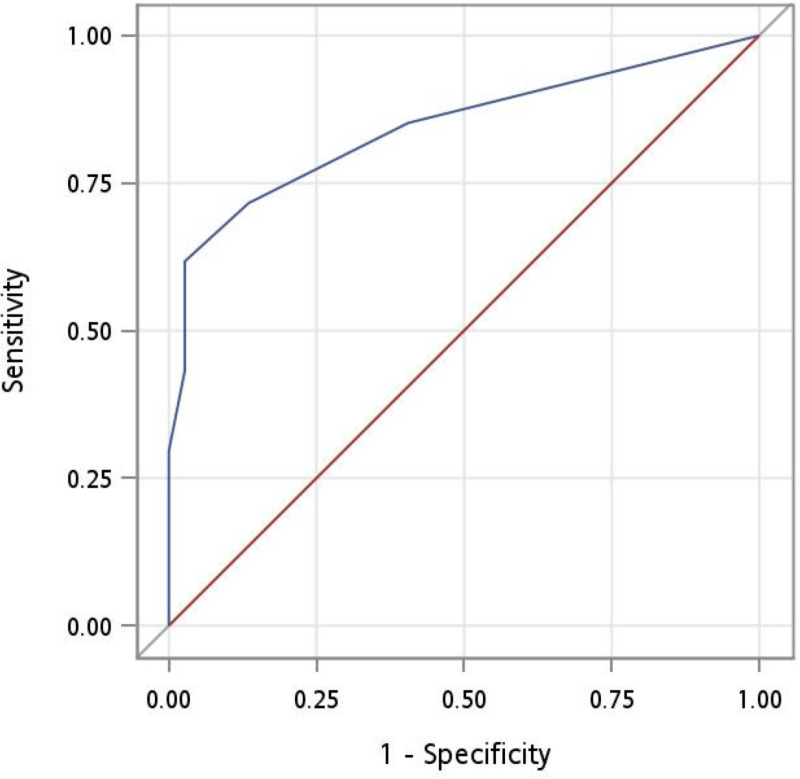
Thirty-seven participants had a CDR of 0, 61 had a CDR of 0.5, and 20 had a CDR ≥ 1. To discriminate between the participants with CDR 0 and those with CDR 0.5, the optimal cutoff score for the AD8 was 2. Including those with CDR ≥ 1 changed the best cutoff value to 3. In terms of the DSM-5 criteria, 59 participants had normal cognition, 28 had mild neurocognitive disorder, and 31 had major neurocognitive disorder or dementia. To discriminate between those with and without dementia, an AD8 cutoff value of 4 maximized the Youden index with more balanced sensitivity and specificity.
The AD8 may have different cutoff values depending on different purposes. Our findings suggest that the AD8 may perform better with a cutoff value of 4 to discriminate between those with and without dementia.
用于区分衰老与痴呆的八项知情人访谈(AD8)被开发用作痴呆筛查工具,初始研究建议的临界值为2分。然而,多项研究报告了不同的临界值,且许多研究发现临界值为2分可能导致较高的假阳性率。此外,在台湾地方政府筛查项目中,AD8由本人自行填写时,反复出现较高的假阳性率。
本研究旨在测试AD8的性能,确定其最佳临界值,评估可能影响其性能的因素,并重新审视其在临床实践中的作用。
我们从一所大学教学医院招募了118对参与者-知情人。对于每位知情人,在临床痴呆评定量表(CDR)评定之前进行AD8评定,以尽量减少回忆偏倚。两名老年精神科医生根据《精神疾病诊断与统计手册》第五版(DSM-5)标准对每位参与者达成共识性临床诊断。采用受试者工作特征分析评估AD8的性能。
37名参与者的CDR评分为0,61名参与者的CDR评分为0.5,20名参与者的CDR评分≥1。为区分CDR评分为0的参与者和CDR评分为0.5的参与者,AD8的最佳临界值为2分。纳入CDR评分≥1的参与者后,最佳临界值变为3分。根据DSM-5标准,59名参与者认知正常,28名参与者患有轻度神经认知障碍,31名参与者患有重度神经认知障碍或痴呆。为区分有痴呆和无痴呆的参与者,AD8临界值为4分时约登指数最大,敏感性和特异性更平衡。
根据不同目的,AD8可能有不同的临界值。我们的研究结果表明,AD8临界值为4分时,在区分有痴呆和无痴呆参与者方面可能表现更佳。