Asadi Amirreza, Constantinidis Christos, Daliri Mohammad Reza
Neuroscience and Neuroengineering Research Laboratory, Biomedical Engineering Department, School of Electrical Engineering, Iran University of Science and Technology (IUST), Tehran, Iran.
Department of Biomedical Engineering, Vanderbilt University, Nashville, TN, USA.
Commun Biol. 2025 May 6;8(1):703. doi: 10.1038/s42003-025-08142-4.
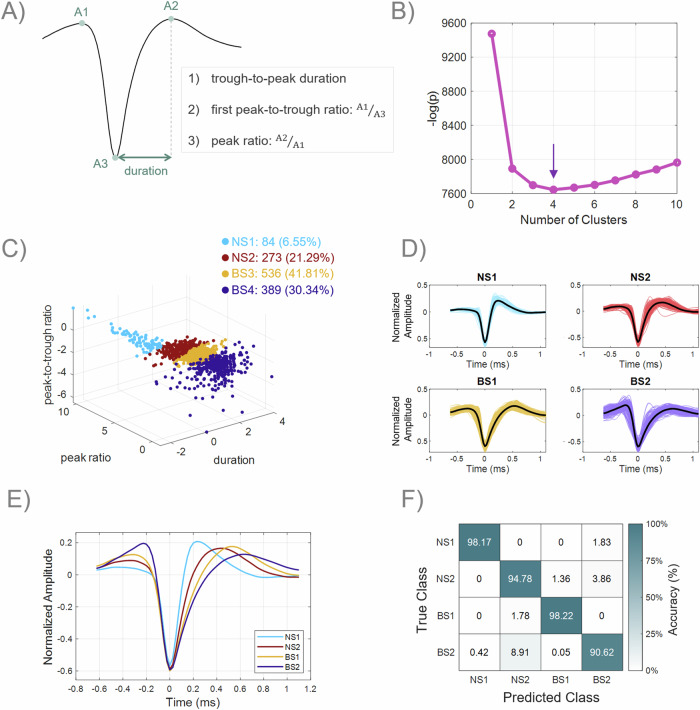
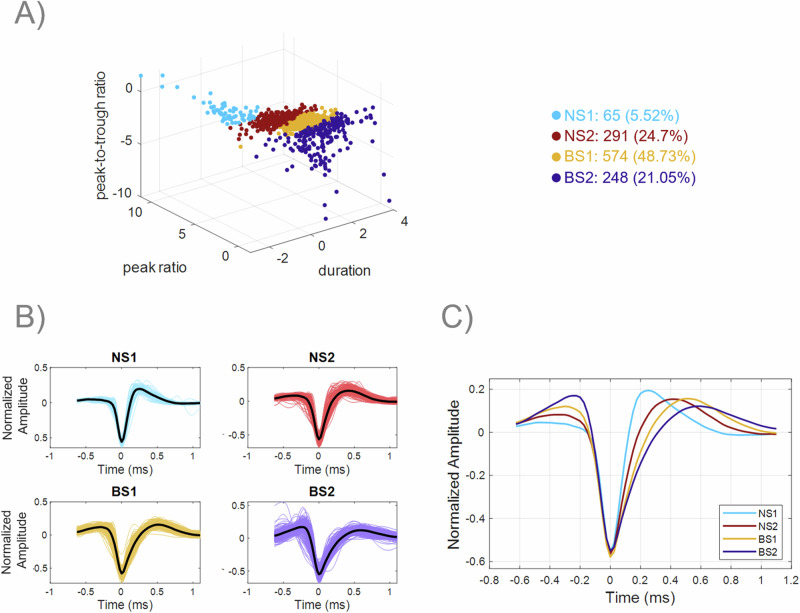
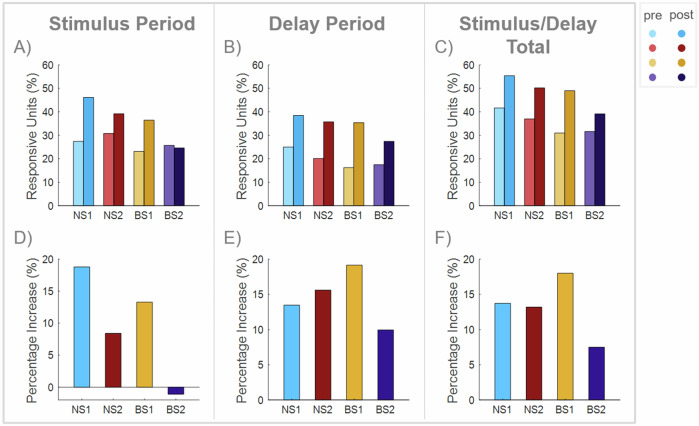
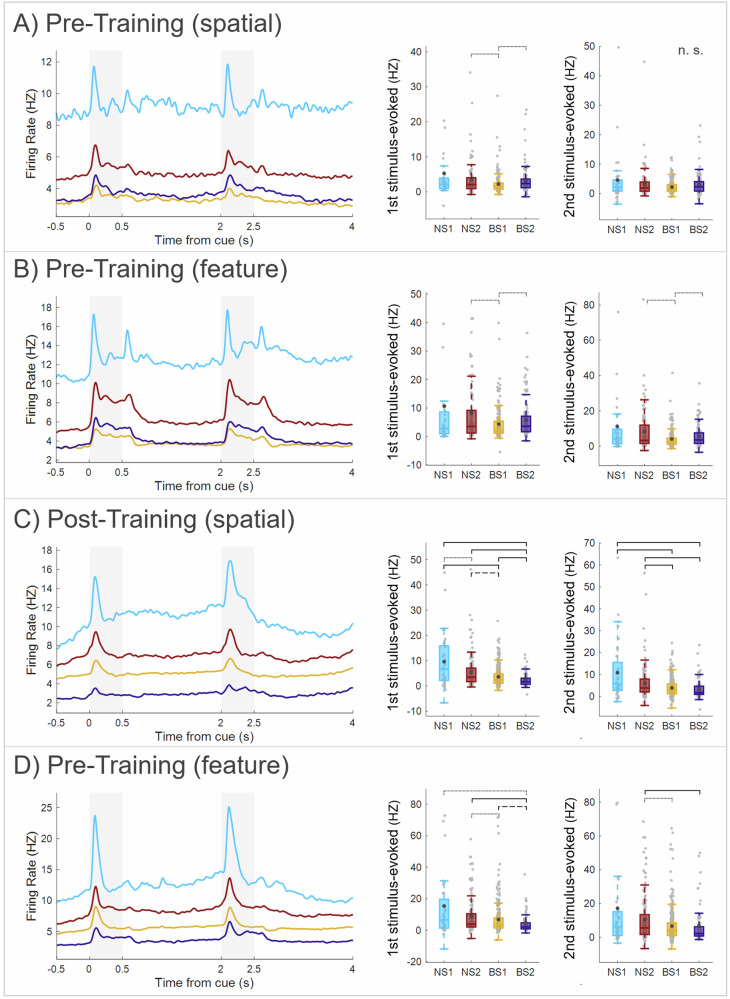
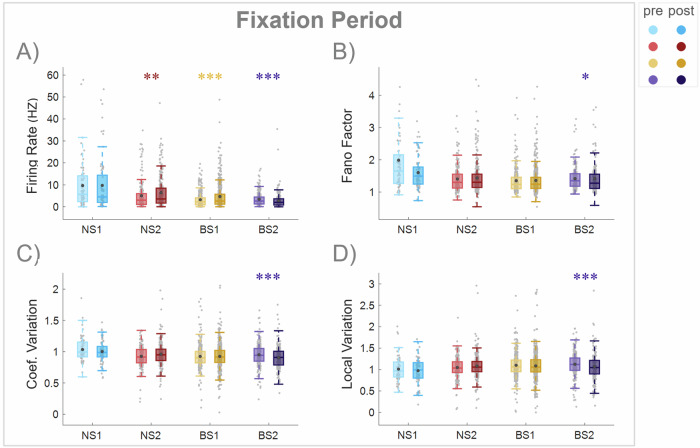
The prefrontal cortex (PFC) is important for learning and performing working memory tasks. However, its precise role for spatial and non-spatial working memory, and the role of different cell types in the circuits that maintain working memory remain poorly understood. To investigate this issue, we analyzed single-unit recordings from the PFC of monkeys during the passive viewing phase before they learned the task rules and after learning, during the execution of active working memory tasks (spatial and feature). Through cluster analysis of extracellular spike waveform features, we identified two classes of narrow-spiking neurons (putative inhibitory cells) and two classes of broad-spiking neurons (putative pyramidal cells). These putative cell classes exhibited distinct physiological characteristics, including baseline firing rates, baseline neural firing variability, and visual stimulus-evoked responses. Neuronal response modulation varied heterogeneously across these cell classes after training and performing active tasks. Training and execution of spatial working memory resulted in higher activity in all class types, highlighting the involvement of diverse prefrontal circuits in spatial information processing. In contrast, feature working memory training and execution affected activity of broad-spiking cell classes alone, suggesting less involvement of a prefrontal circuit in the representation of feature information. We also revealed hitherto unknown, differential effects of training and task execution on different broad-spiking cell types. One broad-spiking neuron subtype exhibited significant response modulation, with increased baseline firing rate, stimulus-evoked responses, and working memory-related firing rates. Another broad-spiking subtype showed decreased baseline firing rate and variability, which may optimize neural coding efficiency. This study advances our understanding of the functional heterogeneity within the PFC and the specialized contributions of different neuronal subtypes to cognitive processes.
前额叶皮质(PFC)对于学习和执行工作记忆任务很重要。然而,其在空间和非空间工作记忆中的精确作用,以及不同细胞类型在维持工作记忆的神经回路中的作用仍知之甚少。为了研究这个问题,我们分析了猴子在学习任务规则之前的被动观看阶段以及学习之后在执行主动工作记忆任务(空间和特征)期间PFC的单单元记录。通过对细胞外尖峰波形特征的聚类分析,我们确定了两类窄峰神经元(假定的抑制性细胞)和两类宽峰神经元(假定的锥体细胞)。这些假定的细胞类别表现出不同的生理特征,包括基线放电率、基线神经放电变异性和视觉刺激诱发反应。在训练和执行主动任务后,这些细胞类别之间的神经元反应调制存在异质性变化。空间工作记忆的训练和执行导致所有类别类型的活动增加,突出了不同前额叶神经回路在空间信息处理中的参与。相比之下,特征工作记忆训练和执行仅影响宽峰细胞类别的活动,表明前额叶神经回路在特征信息表征中的参与较少。我们还揭示了训练和任务执行对不同宽峰细胞类型迄今未知的差异影响。一种宽峰神经元亚型表现出显著的反应调制,基线放电率、刺激诱发反应和与工作记忆相关的放电率增加。另一种宽峰亚型显示基线放电率和变异性降低,这可能优化神经编码效率。这项研究推进了我们对PFC内功能异质性以及不同神经元亚型对认知过程的特殊贡献的理解。