Filgueiras Marcos Daniel Gomes, Mascarin Gabriel Moura, Lima Valesca Henrique, Barreto Lucas Prado, de Souza Ribeiro-Silva Cárita, do Nascimento Pinto Salorrane Miranda, Rizzo Pricila Vetrano, Freitas Fernanda Mara Cunha, de Freitas Soares Filippe Elias, Monteiro Caio, Fernandes Éverton Kort Kamp
Programa de Pós-Graduação em Ciência Animal, Universidade Federal de Goiás, Goiânia, Goiás, Brazil.
Embrapa Meio Ambiente, Jaguariúna, São Paulo, Brazil.
Sci Rep. 2025 May 6;15(1):15836. doi: 10.1038/s41598-025-90123-y.
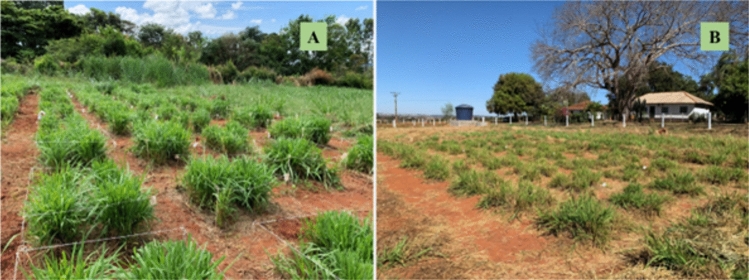
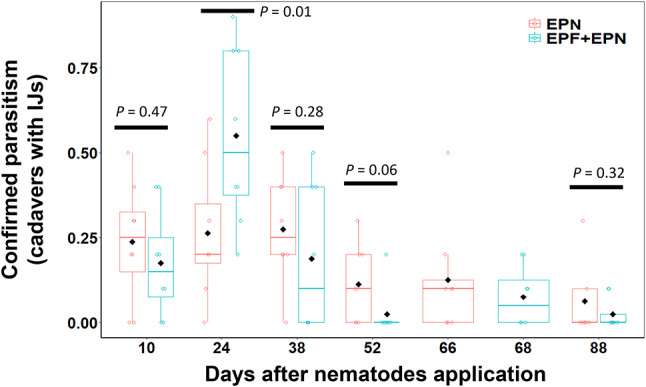
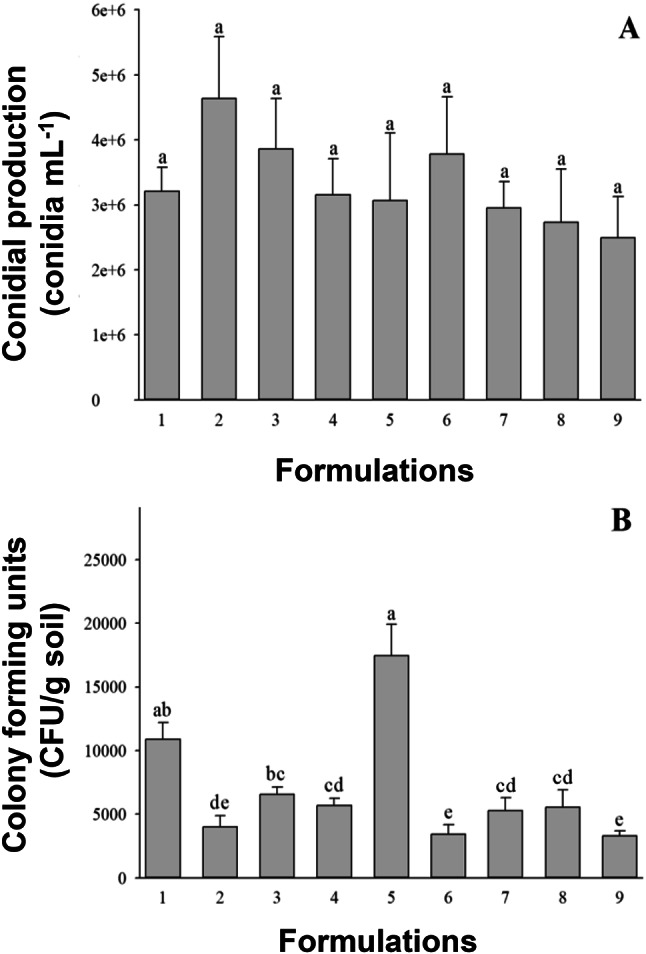
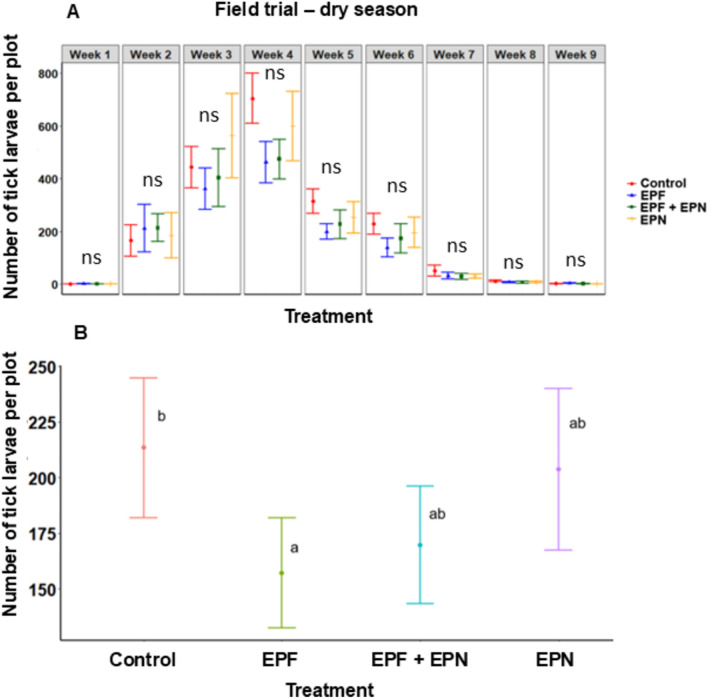
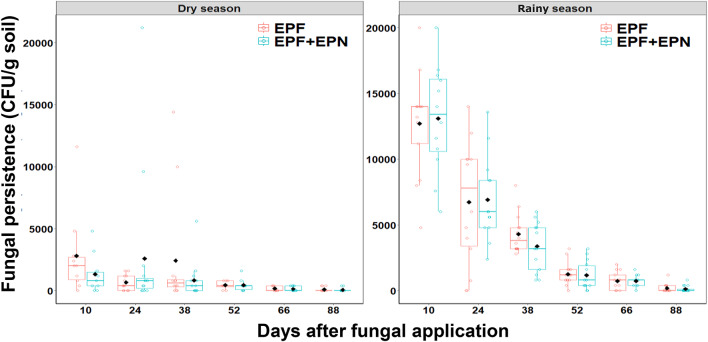
Rhipicephalus microplus, commonly known as the cattle tick, is responsible for causing severe economic losses in livestock production in several countries. The utilization of entomopathogens in infested pastures may represent a sustainable and eco-friendly alternative for tick control. This study evaluated the effectiveness of combining entomopathogenic fungi (EPF, Metarhizium spp.) and entomopathogenic nematodes (EPN, Heterorhabditis bacteriophora) for controlling R. microplus. Laboratory assays tested sub-doses of M. robertsii IP 146 conidia in combination with H. bacteriophora HP88 infective juveniles against engorged females of R. microplus, whereas field trials assessed a granular formulation containing M. robertsii microsclerotia applied with H. bacteriophora infective juveniles in infested field plots to target the tick's non-parasitic phase during rainy and dry seasons. In laboratory experiments, the co-application of fungal sub-doses and nematodes demonstrated synergistic effects, significantly enhancing tick control. Field applications during the rainy season achieved tick population reductions of 54.09% (M. robertsii), 38.11% (H. bacteriophora), and 46.72% (combination). During the dry season, only the fungal formulation significantly reduced tick populations, with 26.27% efficacy. These findings underscore the potential of EPF and EPN, either singly or in combination, as complementary tools to traditional chemical methods for sustainable cattle tick management.
微小牛蜱,通常被称为牛蜱,在多个国家的畜牧业生产中造成了严重的经济损失。在受侵染的牧场中利用昆虫病原体可能是一种可持续且环保的蜱虫控制替代方法。本研究评估了将昆虫病原真菌(EPF,绿僵菌属)和昆虫病原线虫(EPN,嗜菌异小杆线虫)联合用于控制微小牛蜱的效果。实验室试验测试了罗伯茨绿僵菌IP 146分生孢子的亚剂量与嗜菌异小杆线虫HP88感染性幼虫联合对微小牛蜱饱血雌蜱的作用,而田间试验评估了一种含有罗伯茨绿僵菌小菌核的颗粒制剂与嗜菌异小杆线虫感染性幼虫一起施用于受侵染的田间地块,以针对蜱虫在雨季和旱季的非寄生阶段。在实验室实验中,真菌亚剂量和线虫的联合应用显示出协同效应,显著增强了蜱虫控制效果。雨季的田间应用使蜱虫种群数量减少了54.09%(罗伯茨绿僵菌)、38.11%(嗜菌异小杆线虫)和46.72%(联合应用)。在旱季,只有真菌制剂显著减少了蜱虫种群数量,防治效果为26.27%。这些发现强调了昆虫病原真菌和昆虫病原线虫单独或联合作为传统化学方法的补充工具用于可持续牛蜱管理的潜力。