Laudańska Zuzanna, Caunt Anna, Cristia Alejandrina, Warlaumont Anne, Patsis Katerina, Tomalski Przemysław, Warreyn Petra, Abney Drew H, Borjon Jeremy I, Airaksinen Manu, Jones Emily Jh, Bölte Sven, Dall Magdalena, Holzinger Daniel, Poustka Luise, Roeyers Herbert, Wass Sam, Zhang Dajie, Marschik Peter B
Department of Child and Adolescent Psychiatry, Heidelberg University Hospital, Heidelberg University, and German Center for Mental Health (DZPG), Heidelberg, Germany; Institute of Psychology, Polish Academy of Sciences, Warsaw, Poland.
Department of Child and Adolescent Psychiatry, Heidelberg University Hospital, Heidelberg University, and German Center for Mental Health (DZPG), Heidelberg, Germany; School of Psychology, University of Plymouth, UK.
Neurosci Biobehav Rev. 2025 Jul;174:106199. doi: 10.1016/j.neubiorev.2025.106199. Epub 2025 May 5.
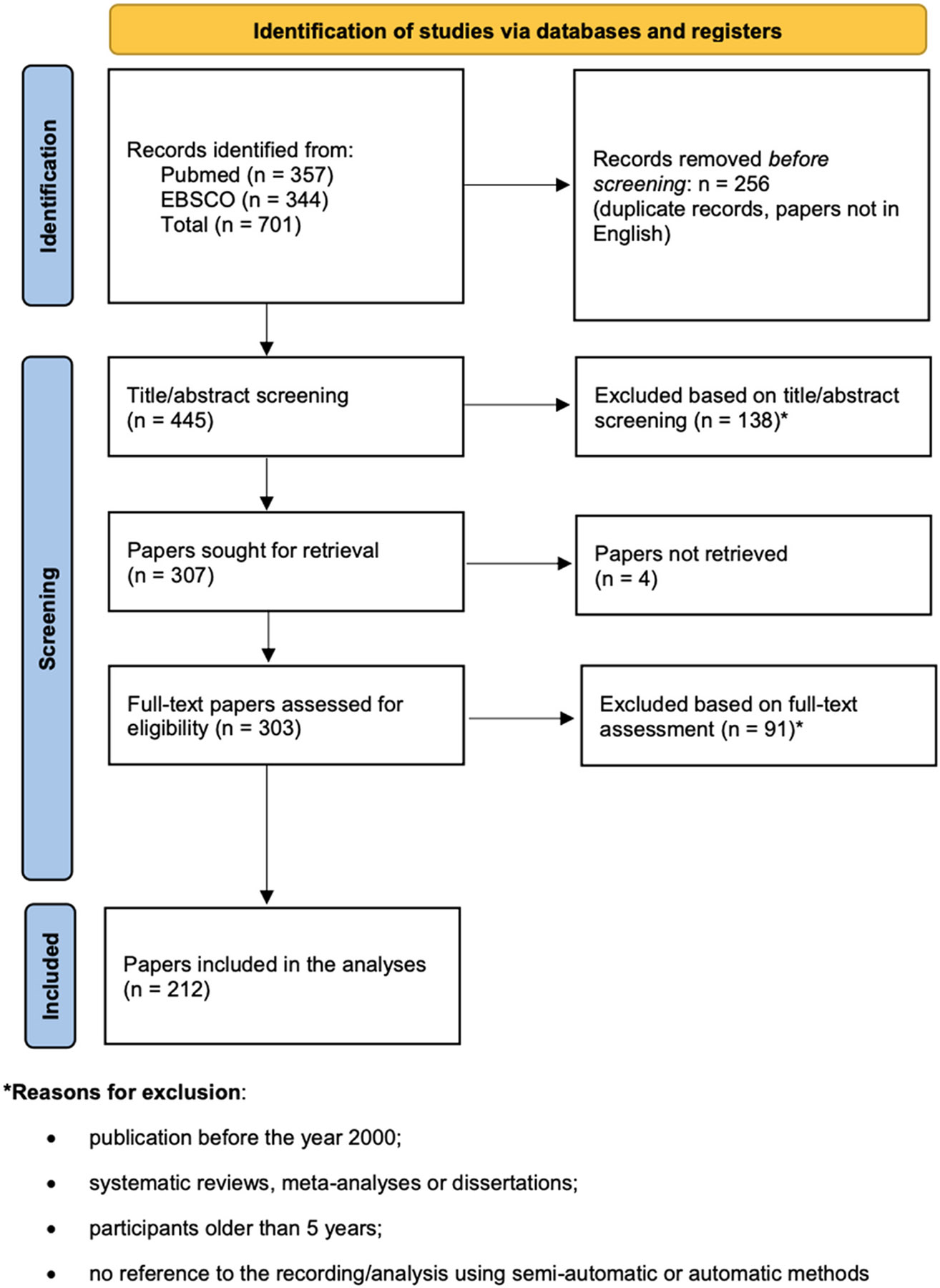
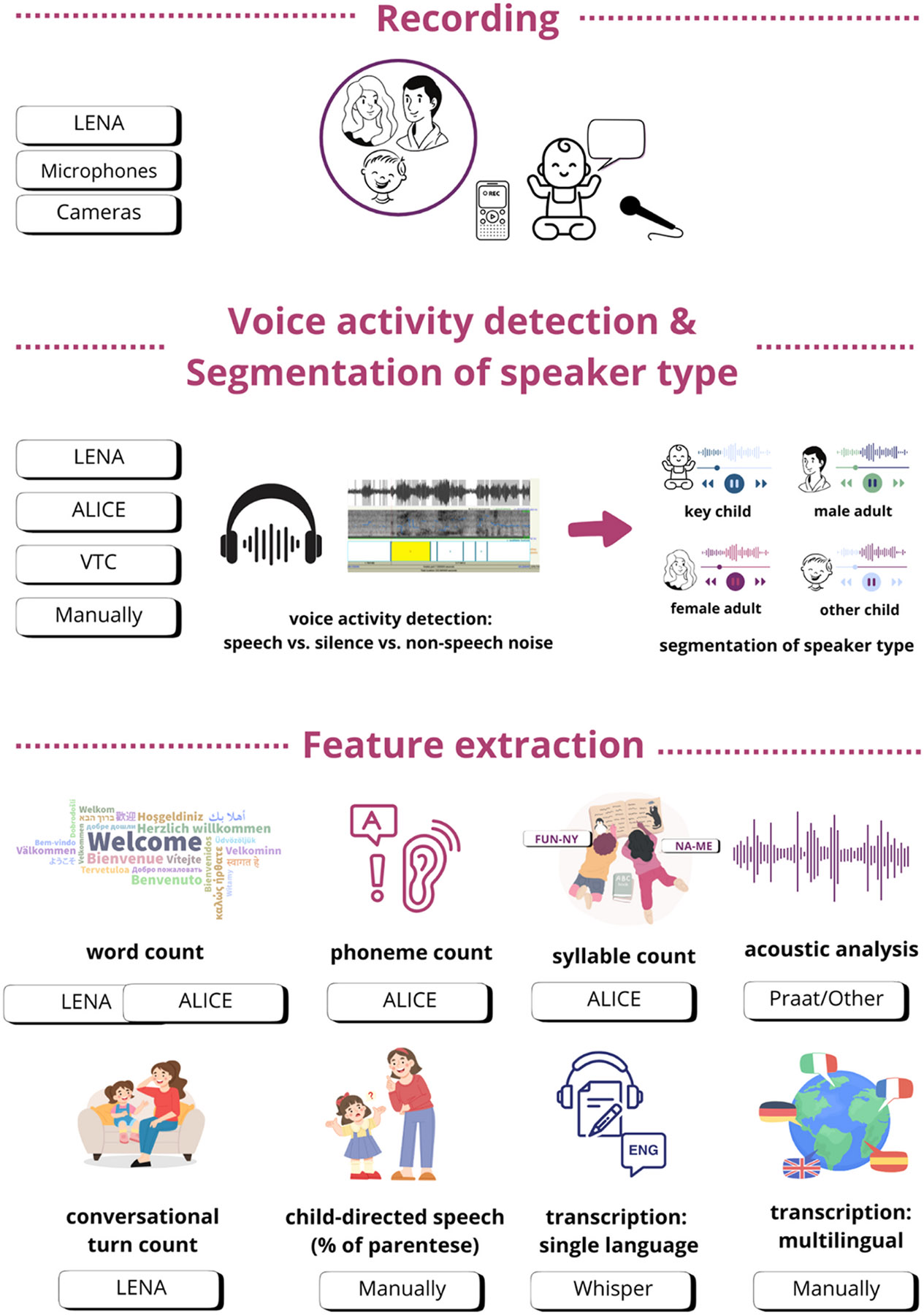
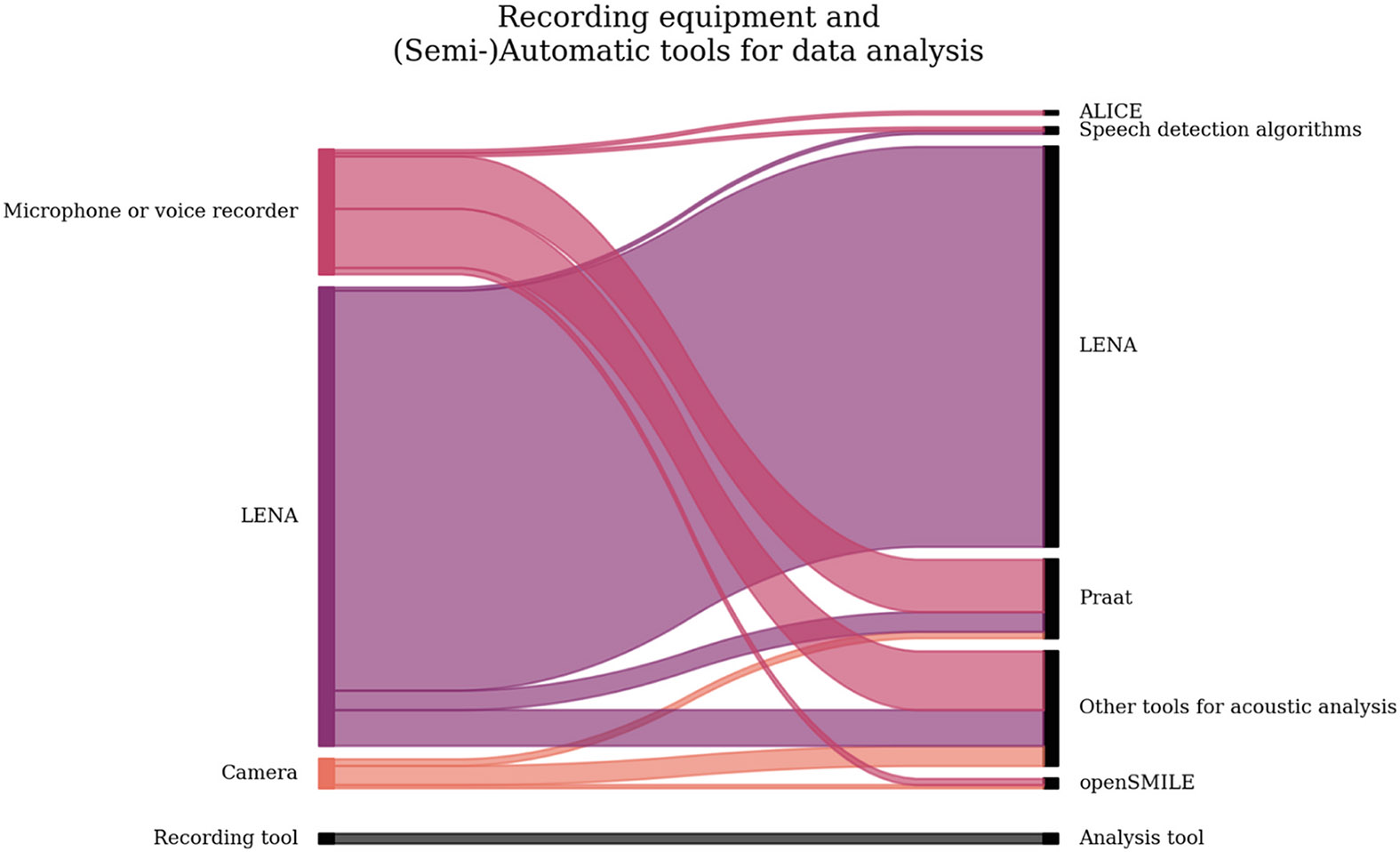
Research on speech and language development has a long history, but in the past decade, it has been transformed by advances in recording technologies, analysis and classification tools, and AI-based language models. We conducted a systematic literature review to identify recently developed (semi-)automatic tools for studying speech-language development and learners' environments in infants and children under the age of 5 years. The Language ENvironment Analysis (LENA) system has been the most widely used tool, with more and more alternative free- and/or open-source tools emerging more recently. Most studies were conducted in naturalistic settings, mostly recording longer time periods (daylong recordings). In the context of vulnerable and clinical populations, most research so far has focused on children with hearing loss or autism. Our review revealed notable gaps in the literature regarding cultural, linguistic, geographic, clinical, and social diversity. Additionally, we identified limitations in current technology-particularly on the software side-that restrict researchers from fully leveraging real-world audio data. Achieving global applicability and accessibility in daylong recordings will require a comprehensive approach that combines technological innovation, methodological rigour, and ethical responsibility. Enhancing inclusivity in participant samples, simplifying tool access, addressing data privacy, and broadening clinical applications can pave the way for a more complete and equitable understanding of early speech and language development. Automatic tools that offer greater efficiency and lower cost have the potential to make science in this research area more geographically and culturally diverse, leading to more representative theories about language development.
关于言语和语言发展的研究有着悠久的历史,但在过去十年中,录音技术、分析和分类工具以及基于人工智能的语言模型的进步使其发生了变革。我们进行了一项系统的文献综述,以确定最近开发的用于研究5岁以下婴幼儿言语语言发展和学习环境的(半)自动工具。语言环境分析(LENA)系统是使用最广泛的工具,最近出现了越来越多的免费和/或开源替代工具。大多数研究是在自然环境中进行的,大多记录较长时间段(全天记录)。在弱势群体和临床人群的背景下,迄今为止大多数研究都集中在听力损失或自闭症儿童身上。我们的综述揭示了文献在文化、语言、地理、临床和社会多样性方面存在显著差距。此外,我们发现了当前技术的局限性——特别是在软件方面——这限制了研究人员充分利用现实世界的音频数据。要在全天记录中实现全球适用性和可及性,需要一种综合方法,将技术创新、方法严谨性和道德责任结合起来。提高参与者样本的包容性、简化工具获取、解决数据隐私问题以及拓宽临床应用,可以为更全面、公平地理解早期言语和语言发展铺平道路。提供更高效率和更低成本的自动工具有可能使该研究领域的科学在地理和文化上更加多样化,从而产生更具代表性的语言发展理论。