Chan P-C, Chiang C-Y, Lee P-H, Lo H-Y, Chu P-W, Chen J-J, Kato S, Raviglione M C B
Division of Chronic Infectious Diseases, Centers for Disease Control, Taiwan.
Division of Preparedness and Emerging Infectious Diseases, Centers for Disease Control, Taiwan.
IJTLD Open. 2025 May 12;2(5):251-259. doi: 10.5588/ijtldopen.25.0103. eCollection 2025 May.
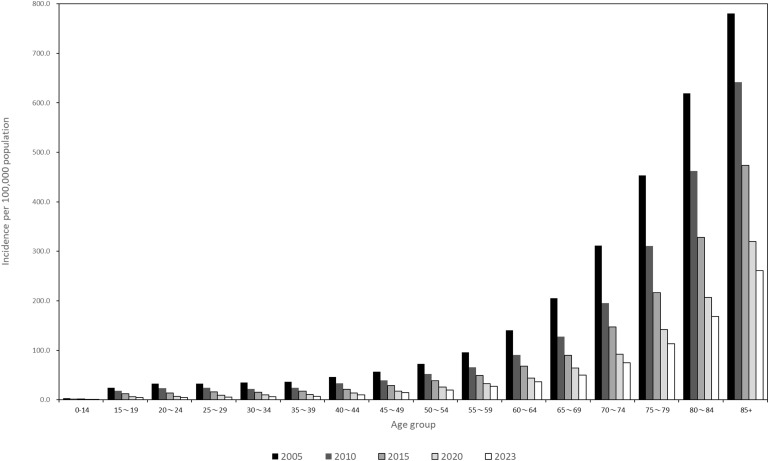
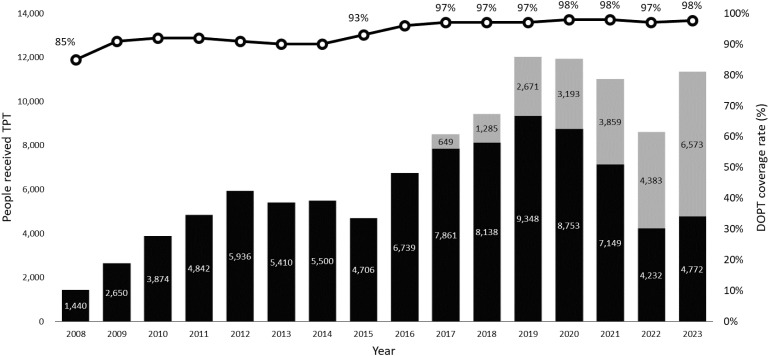
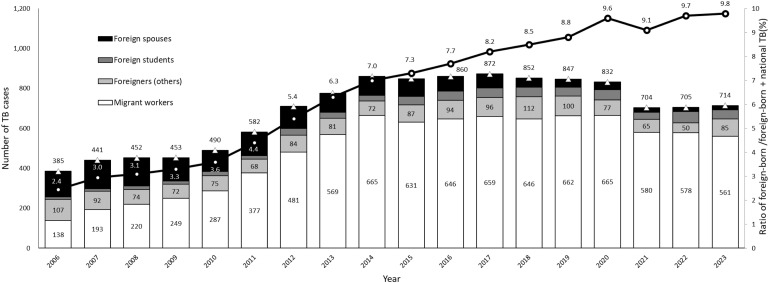
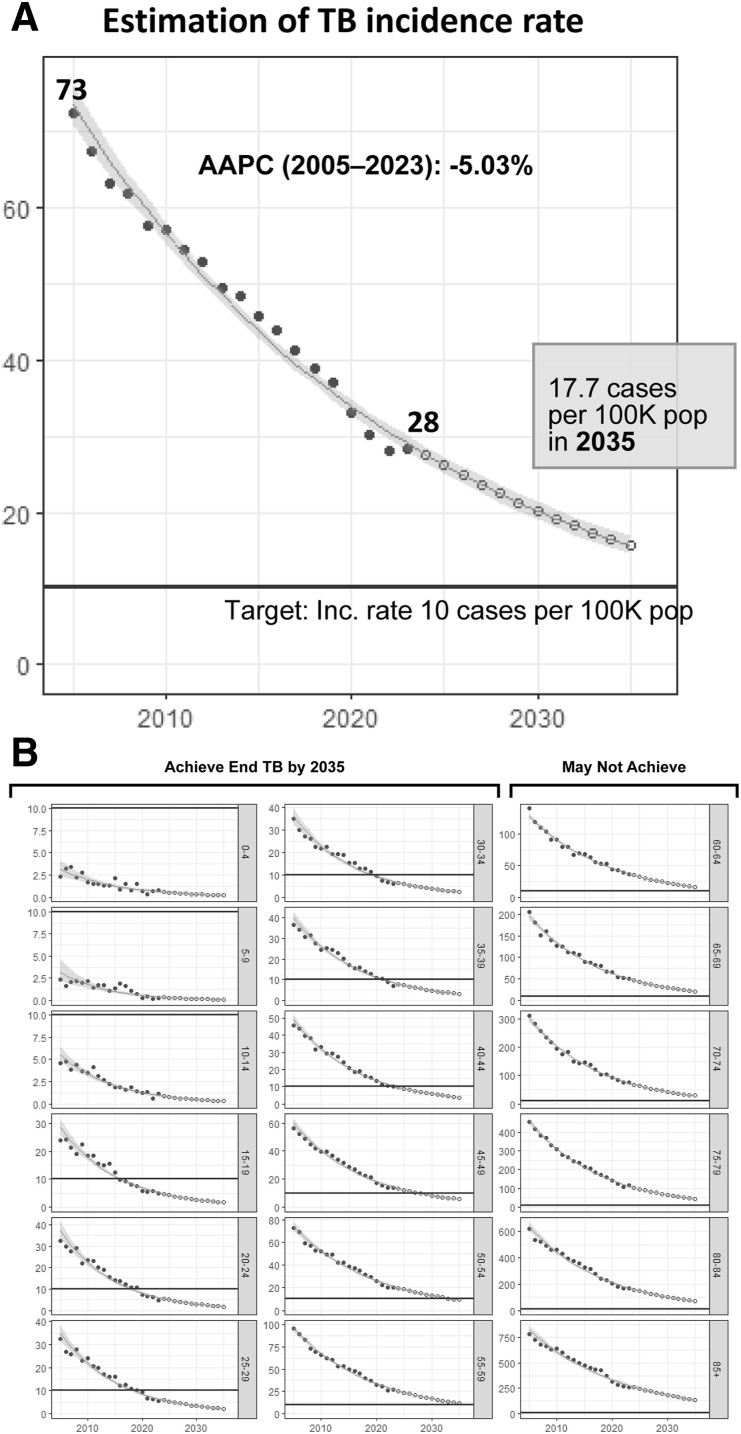
The incidence of TB in Taiwan declined by 62% from 2005 to 2023 (i.e., from 73/100,000 to 28/100,000). Here we review the past two decades of TB epidemiology, policy implementation, and outcomes, identifying gaps and solutions for domestic and global responses. An external review in 2024 assessed National TB Program progress towards the End TB goal, integrating feedback from an International Review Panel and a 2023 expert questionnaire. The findings informed Phase III (2026-2030) of the 'End TB by 2035 Project'. We present review materials, consensus recommendations, and follow-ups through 2024. In 2023, 64% of the TB cases were aged ≥ 65. TB incidence among those < 60 is projected to meet the End TB targets (<10/100,000) by 2035, while elimination (<1 per million) is expected among 0-14-year-olds. During 2005-2024, Taiwan universally adopted new diagnostic tools for drug-resistant TB, shorter regimens and user-friendly platforms for reporting and case management. Nationwide policy innovations included active case finding, and TB infection (TBI) treatment. Taiwan's consistent investment in TB reflects strong political commitment to End TB. Current challenges include aging, co-morbidities, high TB/TBI among foreign migrant workers and societal disparities, and we suggest that future efforts must leverage artificial intelligence, universal genotyping and greater inter-departmental collaboration.
2005年至2023年期间,台湾地区的结核病发病率下降了62%(即从每10万人73例降至每10万人28例)。在此,我们回顾过去二十年台湾地区结核病的流行病学、政策实施情况及成果,找出国内和全球应对措施中存在的差距并提出解决方案。2024年的一次外部评估对国家结核病规划在实现终止结核病目标方面的进展进行了评估,整合了国际审查小组的反馈意见以及2023年专家调查问卷的结果。这些结果为“2035年终止结核病项目”的第三阶段(2026 - 2030年)提供了参考。我们展示了截至2024年的审查材料、共识建议及后续跟进情况。2023年,64%的结核病病例年龄在65岁及以上。预计到2035年,60岁以下人群的结核病发病率将达到终止结核病目标(低于每10万人10例),而0 - 14岁儿童的结核病发病率预计将实现消除(低于百万分之一)。在2005 - 2024年期间,台湾地区全面采用了耐多药结核病的新诊断工具、更短的治疗方案以及便于报告和病例管理的用户友好平台。全岛性的政策创新包括主动病例发现以及结核病感染(TBI)治疗。台湾地区对结核病的持续投入体现了其对终止结核病的坚定政治承诺。当前面临的挑战包括人口老龄化、合并症、外籍劳工中结核病/TBI高发以及社会差异,我们建议未来的工作必须利用人工智能、普遍基因分型以及加强部门间协作。