Pandey Pratik Raj, Liu Yapan, Wilson Nina, Dong Bing
Built Environment Science & Technology (BEST) Lab, Department of Mechanical and Aerospace Engineering, Syracuse University, Syracuse, New York, USA.
Fraunhofer USA CMI, Boston, Massachusetts, USA.
Sci Data. 2025 May 15;12(1):798. doi: 10.1038/s41597-025-05166-7.
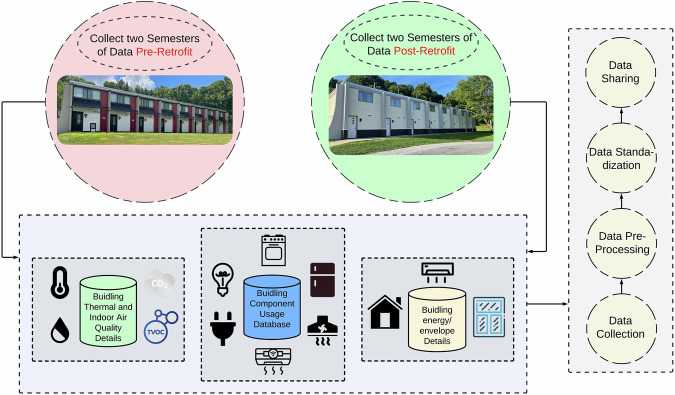
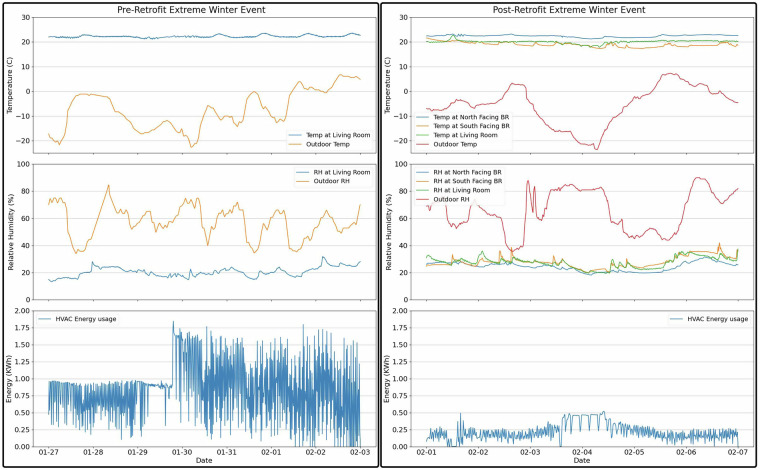
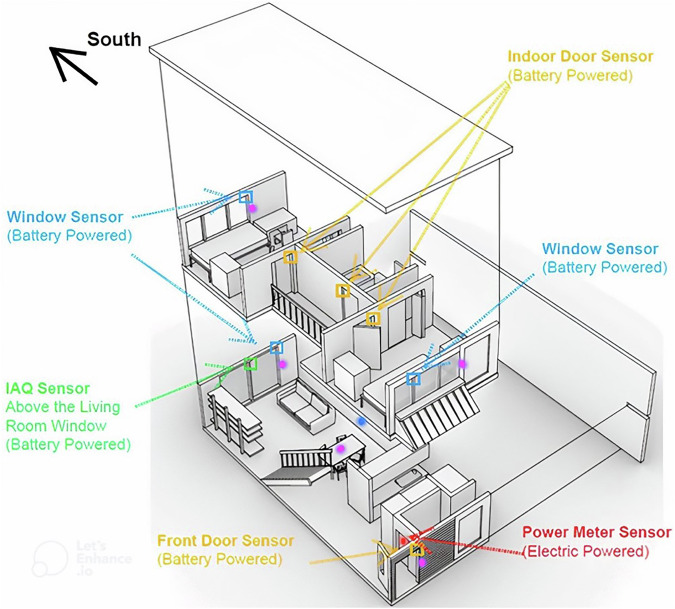
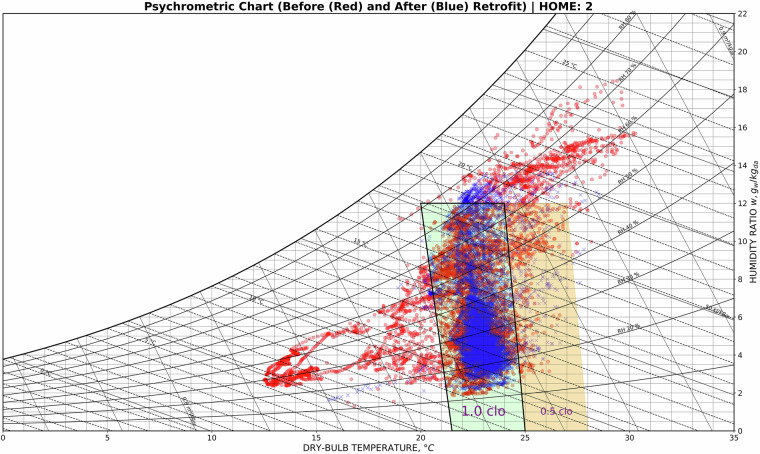
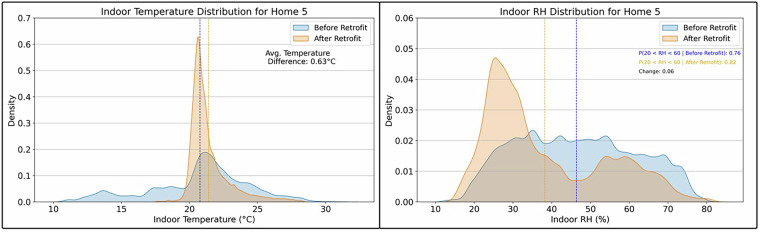
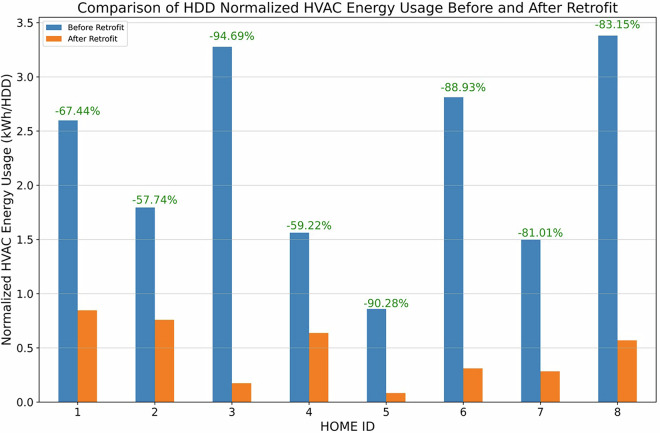
This paper presents a comprehensive 2-year-long dataset capturing Occupant Behavior (OB) of students living in residential dorms, collected both before and after a complete building envelope and energy retrofit. The dataset is categorized into three data sets: OB, Indoor Environmental Quality (IEQ), and detailed energy usage. OB data includes window and door status, while IEQ data comprises measurements of indoor CO₂, Total Volatile Organic Compounds (TVOC), temperature, relative humidity, and lighting levels. Energy data spans 16 electrical channels in the building, covering stove usage, exhaust hood, lights, refrigerator, plug loads, HVAC (Heating, Ventilation and Air Conditioning) energy consumption by zone, water heater, and Heat Recovery Ventilation (HRV) units (post-retrofit). The study revealed a 77.81% reduction in total HVAC energy usage, 57.70% decrease in infiltration Air Changes per Hour (ACH), and 57.78% reduction in average TVOC concentration. Enhanced thermal comfort during the late summer and early fall transition period led to a 12.33% decrease in window opening frequency and a 34.51% reduction in window opening duration. The building resilience improved significantly as the 'Extreme Caution' hours were reduced by 93.00%. This dataset offers significant value by enabling researchers to quantify key relationships among OB, building energy efficiency, and IEQ, acknowledging the influence of behavior on these outcomes.
本文展示了一个为期两年的综合数据集,该数据集记录了居住在学生宿舍的人员行为(OB),这些数据是在建筑围护结构和能源进行全面改造前后收集的。该数据集分为三个数据集:人员行为(OB)、室内环境质量(IEQ)和详细的能源使用情况。人员行为数据包括门窗状态,而室内环境质量数据包括室内二氧化碳、总挥发性有机化合物(TVOC)、温度、相对湿度和光照水平的测量值。能源数据涵盖了建筑物内的16个电气通道,包括炉灶使用情况、排气罩、灯光、冰箱、插头负载、按区域划分的暖通空调(HVAC,即供暖、通风和空调)能耗、热水器以及热回收通风(HRV)装置(改造后)。研究表明,暖通空调总能耗降低了77.81%,每小时的渗透换气次数(ACH)减少了57.70%,平均TVOC浓度降低了57.78%。夏末秋初过渡期间增强的热舒适度导致窗户开启频率降低了12.33%,窗户开启时长减少了34.51%。随着“极度谨慎”时间减少了93.00%,建筑恢复力显著提高。该数据集具有重要价值,它使研究人员能够量化人员行为、建筑能源效率和室内环境质量之间的关键关系,认识到行为对这些结果的影响。