Cornejo-Granados Fernanda, Gallardo-Becerra Luigui, Romero-Hidalgo Sandra, Lopez-Zavala Alonso A, Cota-Huízar Andrés, Cervantes-Echeverría Melany, Sotelo-Mundo Rogerio R, Ochoa-Leyva Adrian
Departamento de Microbiología Molecular, Instituto de Biotecnología (IBT), Universidad Nacional Autónoma de México (UNAM), Av. Universidad 2001, Col. Chamilpa, 62210, Cuernavaca, Morelos, México.
Departamento de Genómica Computacional, Instituto Nacional de Medicina Genómica, Secretaría de Salud (INMEGEN), Periférico Sur No. 4809, 14610, México, DF, México.
Anim Microbiome. 2025 May 22;7(1):50. doi: 10.1186/s42523-025-00414-y.
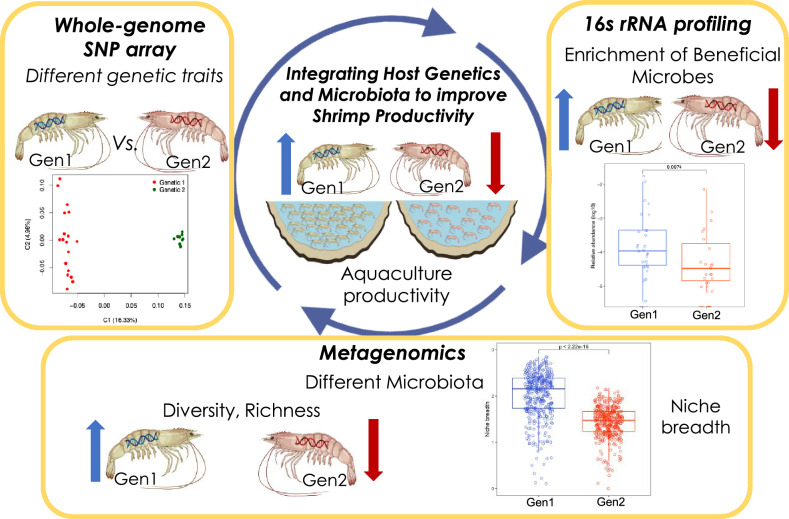
Pacific Whiteleg shrimp (Litopenaeus vannamei) is an important model for breeding programs to improve global aquaculture productivity. However, the interaction between host genetics and microbiota in enhancing productivity remains poorly understood. We investigated the effect of two shrimp genetic lines, Fast-Growth (Gen1) and Disease-Resistant (Gen2), on the microbiota of L. vannamei.
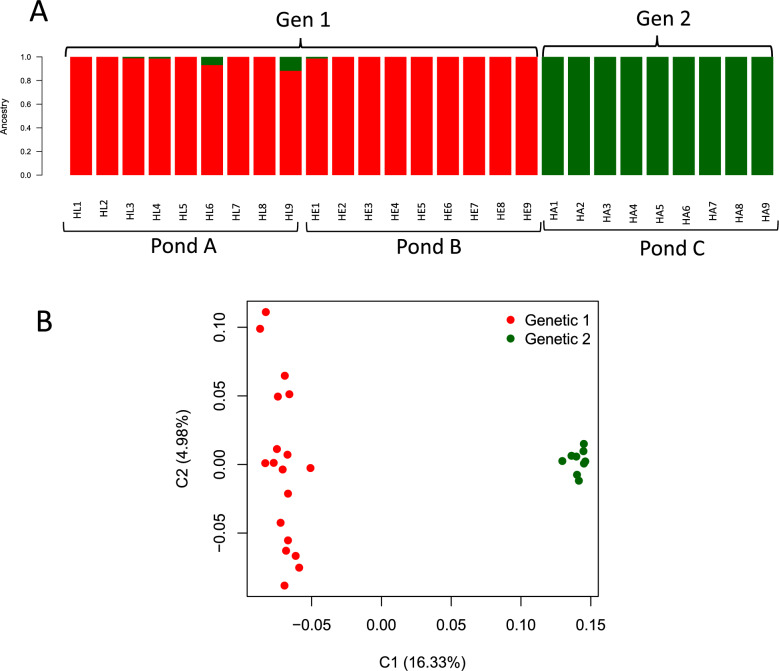
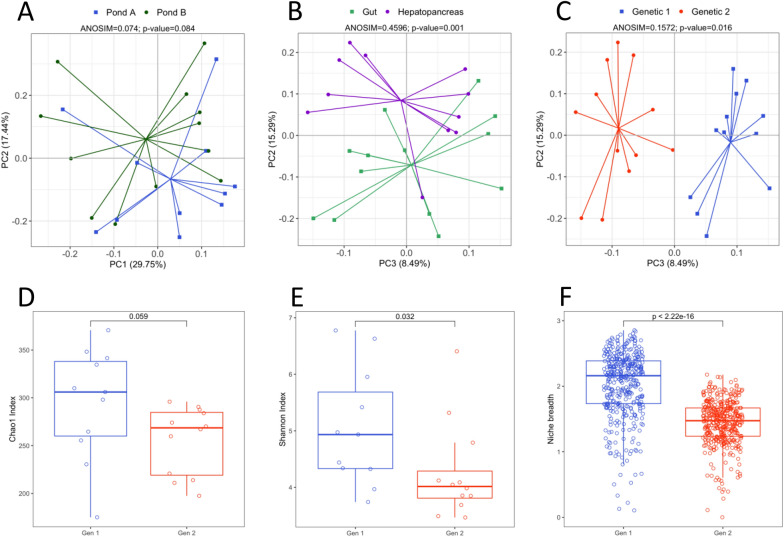
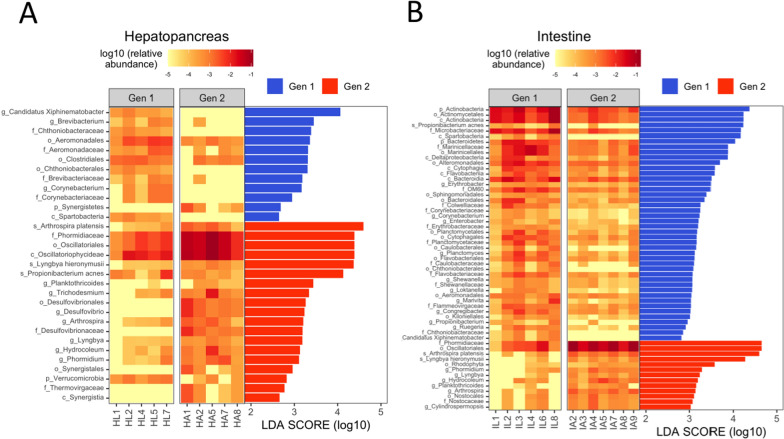
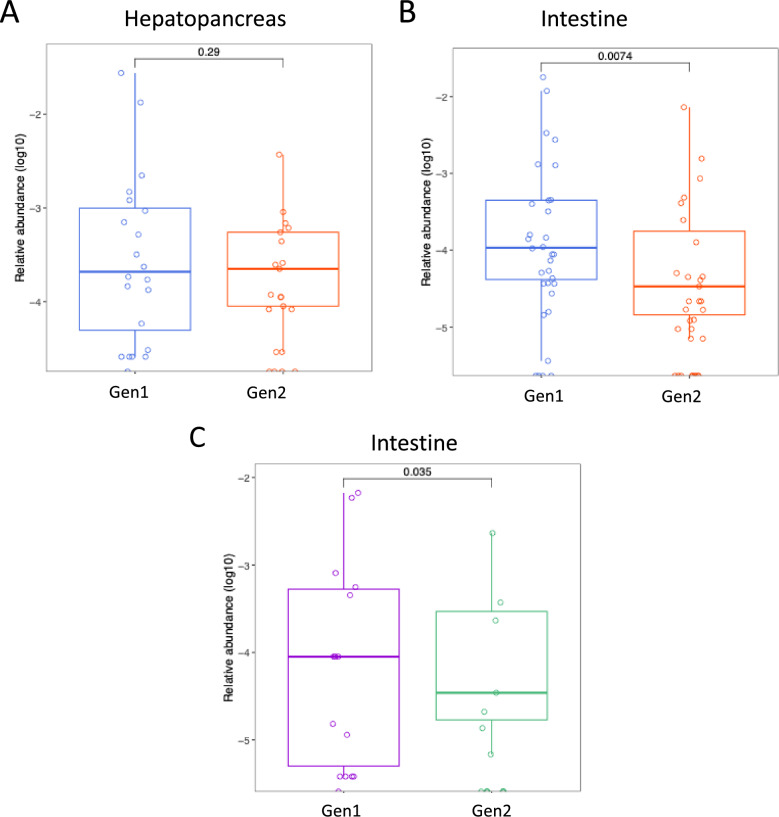
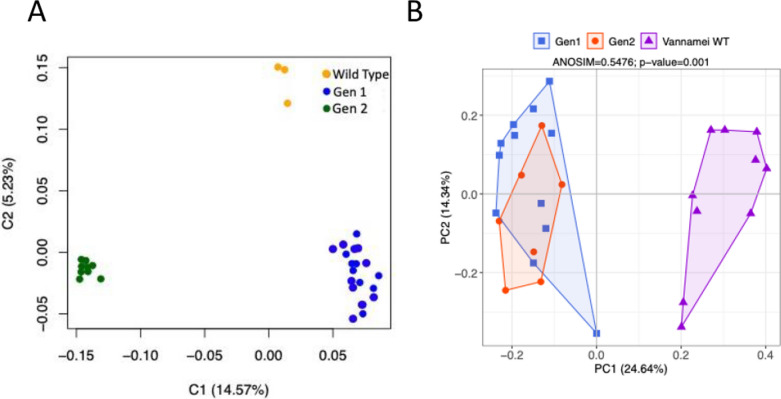
Using genome-wide SNP microarray analysis, we confirmed that Gen1 and Gen2 represented distinct genetic populations. After confirming that the rearing pond did not significantly influence the microbiota composition, we determined that genetic differences explained 15.8% of the microbiota variability, with a stronger selective pressure in the hepatopancreas than in the intestine. Gen1, which exhibited better farm productivity, fostered a microbiota with greater richness, diversity, and resilience than Gen2, along with a higher abundance of beneficial microbes. Further, we demonstrated that a higher abundance of beneficial microbes was associated with healthier shrimp vs. diseased specimens, suggesting that Gen1 could improve shrimp's health and productivity by promoting beneficial microbes. Finally, we determined that the microbiota of both genetic lines was significantly different from their wild-type counterparts, suggesting farm environments and selective breeding programs strongly alter the natural microbiome.
This study highlights the importance of exploring the hologenome perspective, where integrating host genetics and microbiome composition can enhance breeding programs and farming practices.
南美白对虾(凡纳滨对虾)是提高全球水产养殖生产力育种计划的重要模型。然而,宿主遗传学与微生物群之间在提高生产力方面的相互作用仍知之甚少。我们研究了两个对虾遗传品系,快速生长品系(Gen1)和抗病品系(Gen2),对凡纳滨对虾微生物群的影响。
通过全基因组SNP微阵列分析,我们证实Gen1和Gen2代表不同的遗传群体。在确认养殖池塘对微生物群组成没有显著影响后,我们确定遗传差异解释了15.8%的微生物群变异性,肝胰腺中的选择压力比肠道中的更强。表现出更好养殖生产力的Gen1,其微生物群的丰富度、多样性和恢复力比Gen2更高,有益微生物的丰度也更高。此外,我们证明有益微生物的丰度较高与健康对虾而非患病对虾相关,这表明Gen1可以通过促进有益微生物来改善对虾的健康和生产力。最后,我们确定两个遗传品系的微生物群与其野生型对应物有显著差异,这表明养殖环境和选择性育种计划强烈改变了自然微生物组。
本研究强调了从全基因组角度进行探索的重要性,即将宿主遗传学和微生物组组成整合起来可以加强育种计划和养殖实践。