Choudhury Hedaythul, Barri Muruj, Osborn Kay, Rajasekaran Mohan, Popova Marina, Wells Owen S, Stevens Edward B, Murrell-Lagnado Ruth D
School of Life Sciences, University of Sussex, Brighton BN1 9QG, UK.
Metrion Biosciences, Building 2 Granta Centre, Granta Park, Cambridge CB21 6AL, UK.
Biomedicines. 2025 May 6;13(5):1119. doi: 10.3390/biomedicines13051119.
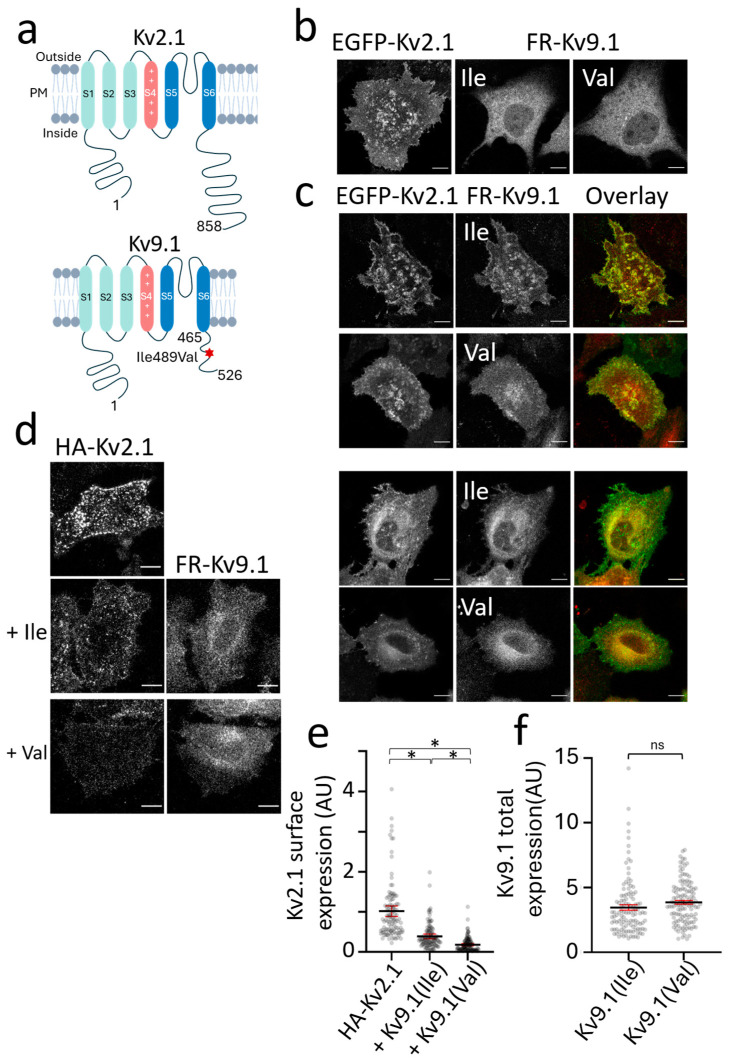
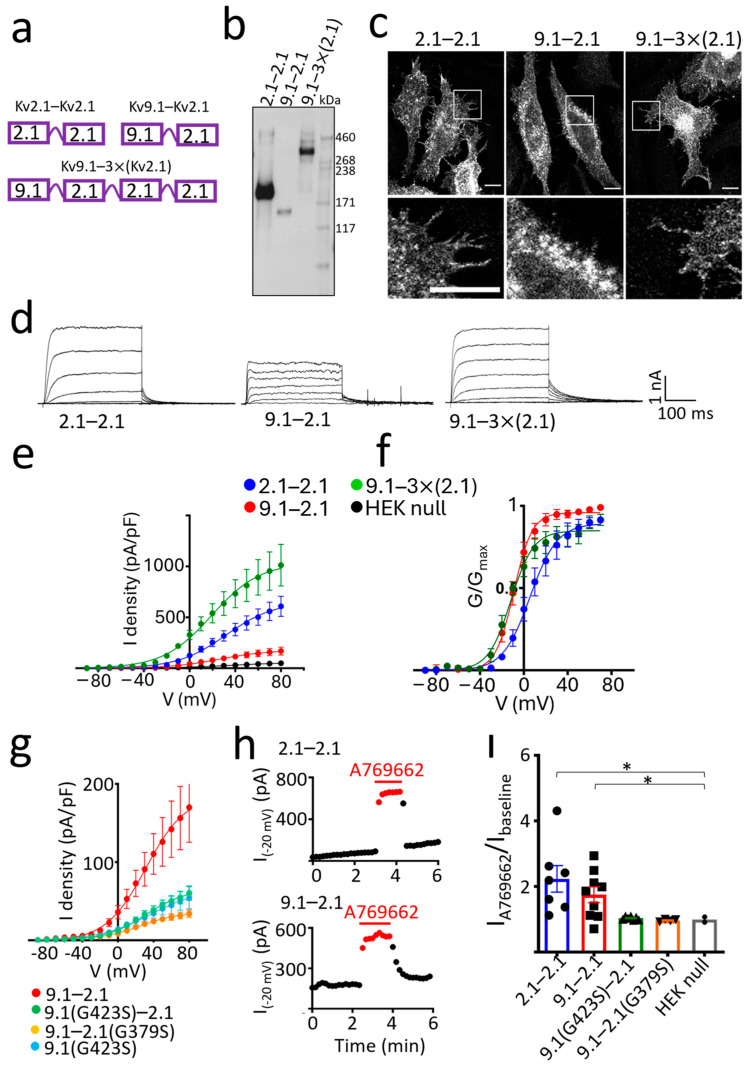
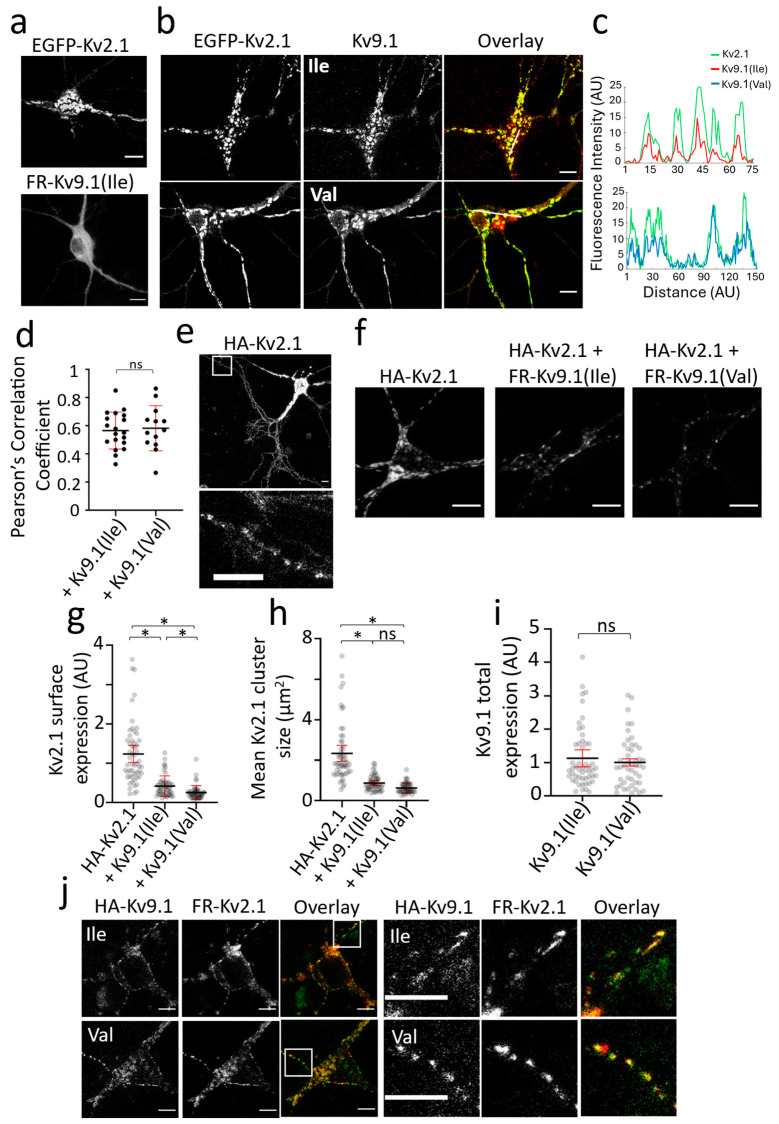
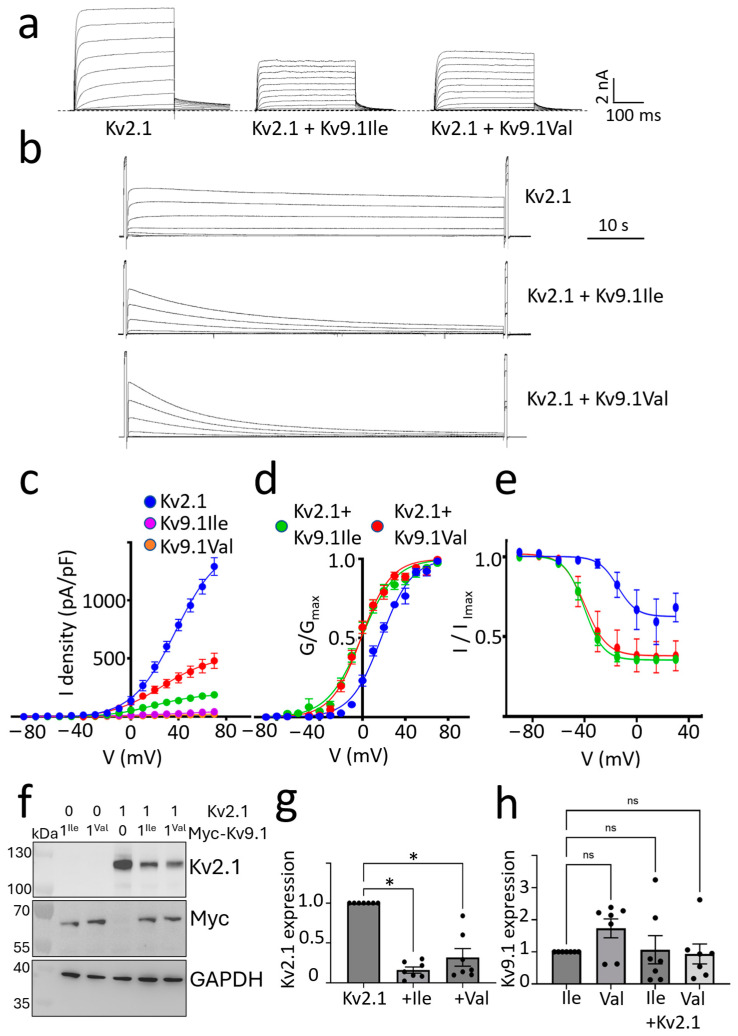
Kv2 channels have important conducting and nonconducting functions and are regulated by their co-assembly with 'silent' Kv subunits, including Kv9.1. Kv9.1 is co-expressed with Kv2 channels in sensory neurons, and a common allele that changes Ile489 to Val in human Kv9.1 is associated with pain hypersensitivity in patients. The mechanism responsible for this association remains unknown, but we hypothesise that these two variants differ in their regulation of Kv2.1 properties, and this is what we set out to test. Expression was carried out using HEK293 cells, OHeLa cells, and primary cultures of hippocampal neurons, and the biophysical and trafficking properties of homomeric and heteromeric channels were assessed by confocal fluorescence microscopy and patch clamp analysis. Both Kv9.1Ile and Kv9.1Val were retained within the endoplasmic reticulum when expressed individually, but when co-expressed with Kv2.1, they co-localised with Kv2.1 within the surface clusters. Both variants reduced the surface expression of Kv2.1 channels and the size of channel clusters, with Kv9.1Val producing a greater reduction in surface expression in both the HeLa cells and neurons. They both caused a similar hyperpolarising shift in the voltage dependence of channel activation and inactivation. Concatamers of Kv2.1 and Kv9.1 suggested that both 3:1 and 2:2 ratios of Kv2.1 to Kv9.1 were permitted, although 2:2 resulted in lower surface expression and function. The Ile489Val substitution in Kv9.1 does not disrupt its ability to co-assemble with Kv2 channels, nor its effects on the voltage-dependence of channel gating, but it did produce a greater reduction in the Kv2.1 surface expression, suggesting that this underlies its association with pain hypersensitivity.
Kv2通道具有重要的传导和非传导功能,并通过与包括Kv9.1在内的“沉默”Kv亚基共同组装来进行调节。Kv9.1在感觉神经元中与Kv2通道共同表达,人类Kv9.1中导致异亮氨酸489变为缬氨酸的常见等位基因与患者的疼痛超敏反应相关。这种关联的机制尚不清楚,但我们推测这两种变体在对Kv2.1特性的调节上存在差异,这正是我们打算测试的内容。使用HEK293细胞、OHeLa细胞和海马神经元原代培养物进行表达,并通过共聚焦荧光显微镜和膜片钳分析评估同型和异型通道的生物物理和运输特性。单独表达时,Kv9.1Ile和Kv9.1Val均保留在内质网中,但与Kv2.1共表达时,它们与Kv2.1在表面簇中共定位。两种变体均降低了Kv2.1通道的表面表达和通道簇的大小,其中Kv9.1Val在HeLa细胞和神经元中均使表面表达的降低幅度更大。它们都在通道激活和失活的电压依赖性方面引起了类似的超极化偏移。Kv2.1和Kv9.1的串联体表明,Kv2.1与Kv9.1的3:1和2:2比例都是允许的,尽管2:2导致较低的表面表达和功能。Kv9.1中的异亮氨酸489缬氨酸取代并不破坏其与Kv2通道共同组装的能力,也不影响其对通道门控电压依赖性的作用,但它确实使Kv2.1表面表达的降低幅度更大,这表明这是其与疼痛超敏反应相关的基础。