Moyadee Wassamon, Roytrakul Sittiruk, Jaresitthikunchai Janthima, Phaonakrop Narumon, Choowongkomon Kiattawee, Ploypetch Sekkarin, Tansakul Natthasit, Rattanasrisomporn Amonpun, Rattanasrisomporn Jatuporn
Graduate Program in Animal Health and Biomedical Sciences, Faculty of Veterinary Medicine, Kasetsart University, Bangkok, Thailand.
Department of Companion Animal Clinical Sciences, Faculty of Veterinary Medicine, Kasetsart University, Bangkok, Thailand.
Sci Rep. 2025 May 29;15(1):18899. doi: 10.1038/s41598-025-03108-2.
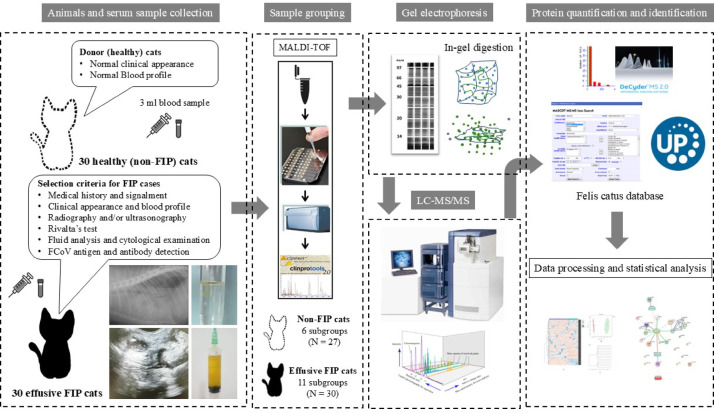
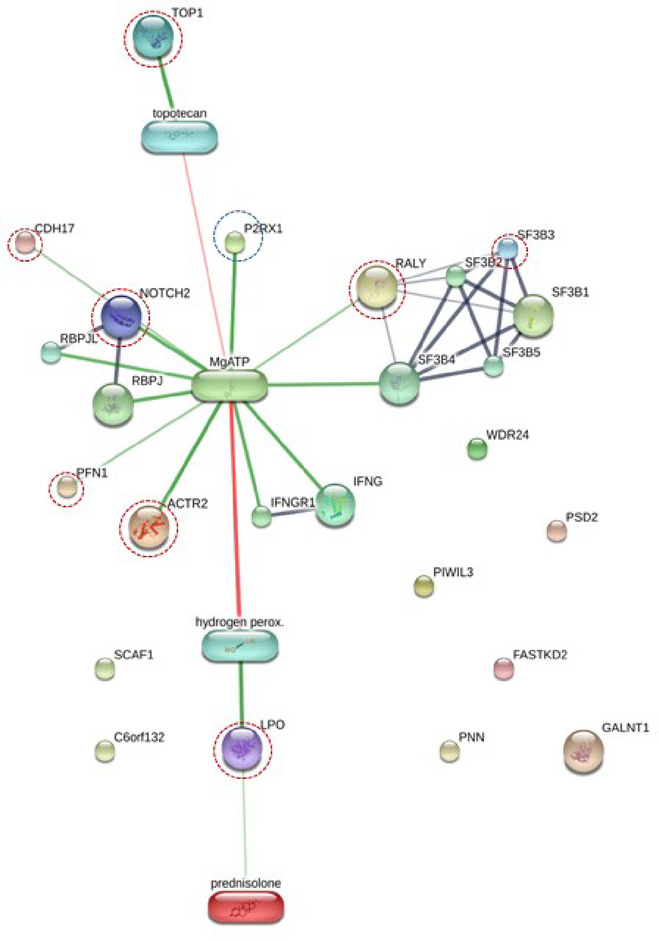
Feline infectious peritonitis (FIP) is a lethal, viral-induced immune-mediated disease that remains a challenge for diagnosis and treatment in cats. Proteomic profiling, which analyzes the protein content of biological samples, offers the potential to identify novel biomarkers that could improve the diagnosis and management of FIP. This study aims to assess the serum proteome and identify proteins that differentiate healthy cats from cats diagnosed with effusive FIP using liquid chromatography coupled with tandem mass spectrometry (LC-MS/MS). A total of 30 cats diagnosed with effusive FIP and 27 clinically normal cats were enrolled. Twenty-three proteins were significantly (p < 0.01, ≥ fivefold change in abundance) differentially expressed between cats with effusive FIP and controls. Among these, the P2X purinoceptor, DNA topoisomerase, Notch receptor 2, and cadherin-17 were identified as key proteins of interest in cats with effusive FIP. Our findings suggest that these differentially expressed proteins could serve as potential diagnostic biomarkers and therapeutic targets for FIP. However, further studies are needed to validate these findings and explore their potential applications.
猫传染性腹膜炎(FIP)是一种由病毒引起的致命性免疫介导疾病,对猫的诊断和治疗仍然是一项挑战。蛋白质组分析可分析生物样品中的蛋白质含量,为识别可能改善FIP诊断和管理的新型生物标志物提供了可能。本研究旨在通过液相色谱-串联质谱联用(LC-MS/MS)评估血清蛋白质组,并识别可区分健康猫与诊断为渗出性FIP的猫的蛋白质。共纳入30只诊断为渗出性FIP的猫和27只临床正常的猫。在渗出性FIP猫和对照组之间,有23种蛋白质存在显著差异表达(p < 0.01,丰度变化≥5倍)。其中,P2X嘌呤受体、DNA拓扑异构酶、Notch受体2和钙黏蛋白-17被确定为渗出性FIP猫中感兴趣的关键蛋白质。我们的研究结果表明,这些差异表达的蛋白质可能作为FIP的潜在诊断生物标志物和治疗靶点。然而,需要进一步研究来验证这些发现并探索其潜在应用。