Li Yaqin, Liu Yaqian, Leung Angela Ym, Montayre Jed
School of Nursing, Hong Kong Polytechnic University, Hong Kong, China (Hong Kong).
JMIR Serious Games. 2025 Jun 3;13:e67250. doi: 10.2196/67250.
Age-related physiological changes in older adults involve a rapid decline in motor exercise ability; some older adults may also experience difficulties in maintaining focus, memory loss, and a decline in reaction time, which consequently impair their ability to perform dual tasks. Motor-cognitive training (MCT) refers to a blend of motor activity and cognitive training that occurs simultaneously and can assist older adults in enhancing their physical function, cognitive abilities, and dual-task performance. In recent years, the use of technology for delivering MCT has become increasingly popular in research. This has been achieved through various technologies that simplify MCT for older adults.
This study aimed to systematically examine the feasibility and effectiveness studies on technology-assisted MCT among older adults.
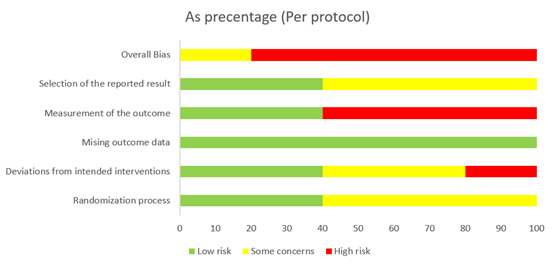
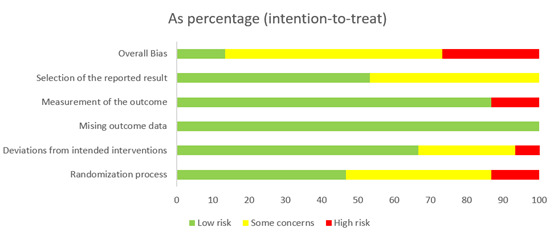
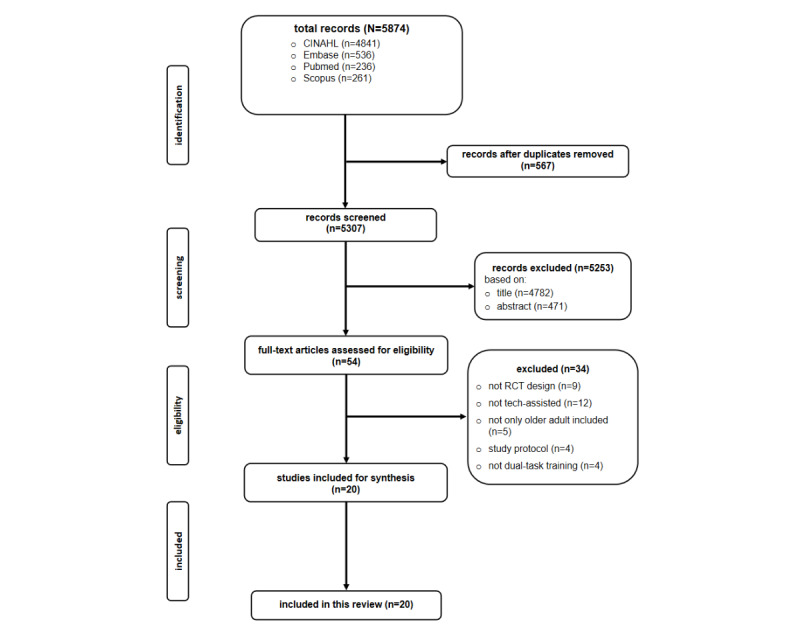
This rapid review was conducted following the updated PRISMA (Preferred Reporting Items for Systematic Reviews and Meta-Analyses) 2020 standards, and the Synthesis Without Meta-analysis (SWiM) in systematic reviews reporting guideline. Four databases were searched, including CINAHL, Embase, PubMed, and Scopus, from January 2013 to March 2025. Search strategies were constructed based on three main topics: (1) older adults, (2) MCT, and (3) technology. Inclusion criteria followed the population, intervention, comparator, outcome, and study design framework as follows: older adults (population); technology-assisted MCT (intervention); standard treatment control, active control, partial intervention control, placebo control, and dose-response control (comparator); various measures of physical, cognitive, and dual-task performance (outcome); and randomized controlled trials (RCTs) and pilot RCTs (study design). The Cochrane Risk of Bias Tool was applied for quality appraisal of the included studies. The feasibility of the included studies was assessed using completion rates and attrition rates. Descriptive statistics were used to describe the demographic and clinical characteristics of the groups, while narrative methods were used to categorize and synthesize their effectiveness.
In total, 20 studies were included, comprising 16 RCTs and 4 pilot RCTs, most of which were conducted within a 6-week period. Each session typically lasted between 10 and 30 minutes and was held 2 to 3 times per week. Feasibility analysis showed that technology-assisted MCT was generally feasible. While the workload was high, the perceived usability was also high, with a considerable amount of positive feedback and very few reported adverse events. The types of MCT varied in terms of components, duration, and frequency. The majority of studies (18/20, 90%) demonstrated statistically significant improvements in physical, cognitive, and dual-task performance because of technology-assisted MCT.
The feasibility of technology-assisted MCT among older adults was high regardless of the perceived high workload, and most studies showed statistical effectiveness in improving physical, cognitive, and dual-task performance.
Open Science Foundation (OSF) Registries 10.17605/OSF.IO/5SRCQ; https://osf.io/5srcq.
老年人与年龄相关的生理变化包括运动能力迅速下降;一些老年人在保持注意力、记忆力减退和反应时间下降方面也可能遇到困难,这进而损害了他们执行双重任务的能力。运动认知训练(MCT)是指同时进行的运动活动和认知训练的结合,可以帮助老年人提高身体功能、认知能力和双重任务表现。近年来,利用技术进行MCT在研究中越来越受欢迎。这是通过各种简化老年人MCT的技术实现的。
本研究旨在系统地考察技术辅助MCT在老年人中的可行性和有效性研究。
本快速综述按照2020年更新的PRISMA(系统评价和Meta分析的首选报告项目)标准以及系统评价报告指南中的非Meta分析综合法(SWiM)进行。检索了四个数据库(CINAHL、Embase、PubMed和Scopus),检索时间为2013年1月至2025年3月。基于三个主要主题构建检索策略:(1)老年人;(2)MCT;(3)技术。纳入标准遵循人群、干预措施、对照、结局和研究设计框架如下:老年人(人群);技术辅助MCT(干预措施);标准治疗对照、活性对照、部分干预对照、安慰剂对照和剂量反应对照(对照);身体、认知和双重任务表现的各种测量指标(结局);以及随机对照试验(RCT)和试验性RCT(研究设计)。采用Cochrane偏倚风险工具对纳入研究进行质量评估,并使用完成率和损耗率评估纳入研究的可行性。描述性统计用于描述各组人群的人口统计学和临床特征,而叙述性方法用于对其有效性进行分类和综合。
共纳入20项研究,包括16项RCT和,4项试验性RCT,其中大部分研究在6周内完成。每次训练通常持续10至30分钟,每周进行2至3次。可行性分析表明,技术辅助MCT总体上是可行的。虽然工作量较大,但感知可用性也较高,有大量积极反馈,且报告不良事件很少见。MCT类型在组成部分、持续时间和频率方面各不相同。大多数研究(18/20,90%)表明,技术辅助MCT使身体、认知和双重任务表现有统计学意义上显著改善。
无论工作量感知如何,技术辅助MCT在老年人中的可行性都很高,且大多数研究在改善身体、认知和双重任务表现方面具有统计学有效性。
开放科学基金会(OSF)注册库10.17605/OSF.IO/5SRCQ;https://osf.io/5srcq