Probst Silke I, Felder Florian D, Poltorak Victoria, Mewalal Ritesh, Blaby Ian K, Robinson Serina L
Department of Environmental Microbiology, Swiss Federal Institute of Aquatic Science and Technology (Eawag), Dübendorf 8600, Switzerland.
Department of Biology, Institute of Microbiology, ETH, Zürich, Zürich 8093, Switzerland.
Proc Natl Acad Sci U S A. 2025 Jun 17;122(24):e2504122122. doi: 10.1073/pnas.2504122122. Epub 2025 Jun 13.
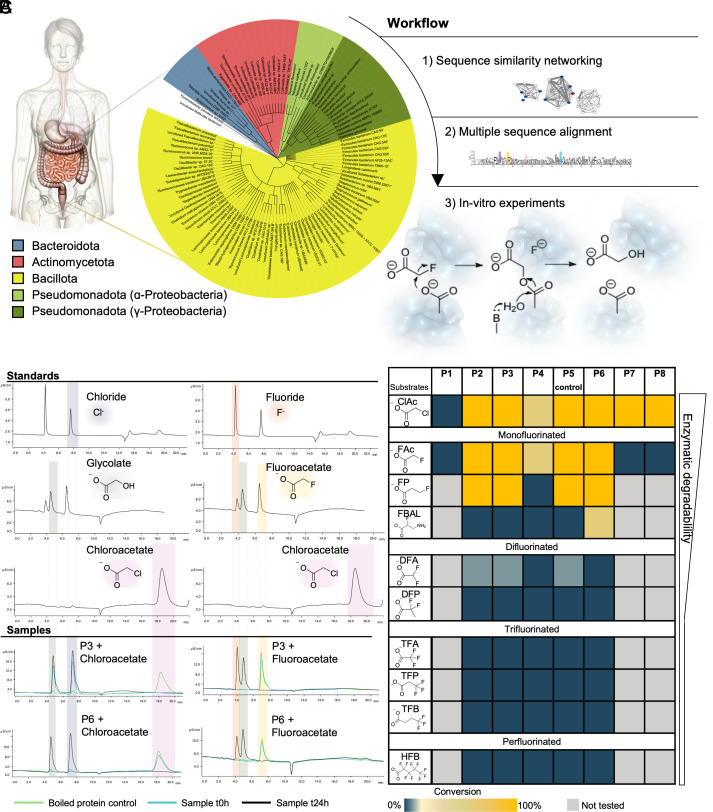
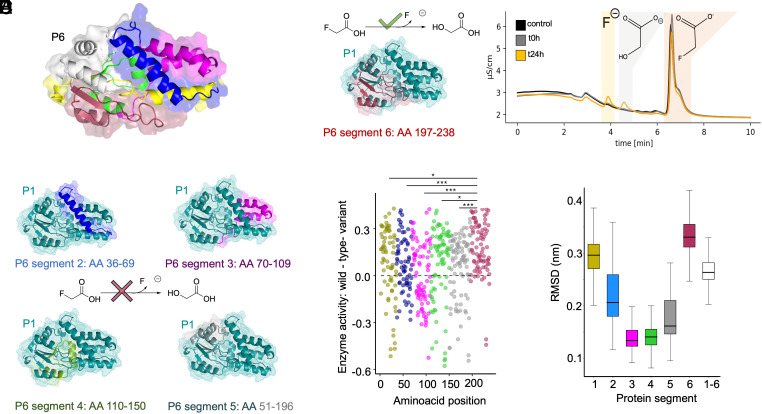
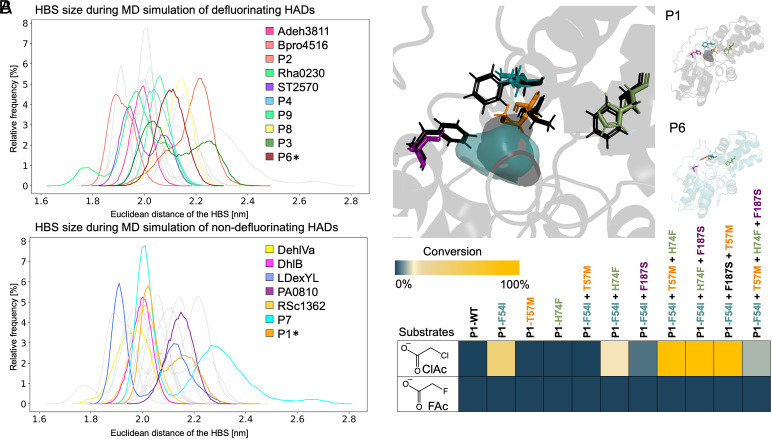
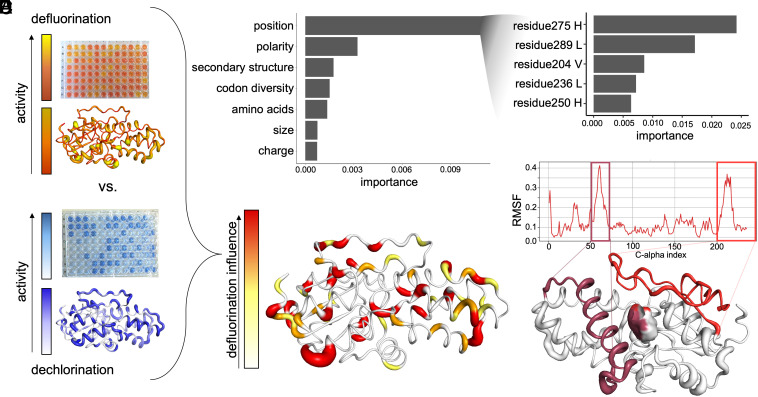
Fluorinated compounds are used for agrochemical, pharmaceutical, and numerous industrial applications, resulting in global contamination. In many molecules, fluorine is incorporated to enhance the half-life and improve bioavailability. Fluorinated compounds enter the human body through food, water, and xenobiotics including pharmaceuticals, exposing gut microbes to these substances. The human gut microbiota is known for its xenobiotic biotransformation capabilities, but it was not previously known whether gut microbial enzymes could break carbon-fluorine bonds, potentially altering the toxicity of these compounds. Here, through the development of a rapid, miniaturized fluoride detection assay for whole-cell screening, we identified active gut microbial defluorinases. We biochemically characterized enzymes from diverse human gut microbial classes including Clostridia, Bacilli, and Coriobacteriia, with the capacity to hydrolyze (di)fluorinated organic acids and a fluorinated amino acid. Whole-protein alanine scanning, molecular dynamics simulations, and chimeric protein design enabled the identification of a disordered C-terminal protein segment involved in defluorination activity. Domain swapping exclusively of the C-terminus conferred defluorination activity to a nondefluorinating dehalogenase. To advance our understanding of the structural and sequence differences between defluorinating and nondefluorinating dehalogenases, we trained machine learning models which identified protein termini as important features. Models trained on 41-amino acid segments from protein C termini alone predicted defluorination activity with 83% accuracy (compared to 95% accuracy based on full-length protein features). This work is relevant for therapeutic interventions and environmental and human health by uncovering specificity-determining signatures of fluorine biochemistry from the gut microbiome.
含氟化合物被用于农业化学品、制药及众多工业应用中,导致了全球污染。在许多分子中,氟的引入是为了延长半衰期并提高生物利用度。含氟化合物通过食物、水以及包括药物在内的外源性物质进入人体,使肠道微生物接触到这些物质。人类肠道微生物群以其对外源性物质的生物转化能力而闻名,但此前尚不清楚肠道微生物酶是否能够断裂碳氟键,从而可能改变这些化合物的毒性。在此,通过开发一种用于全细胞筛选的快速、小型化氟化物检测方法,我们鉴定出了具有活性的肠道微生物脱氟酶。我们对来自不同人类肠道微生物类群(包括梭菌属、芽孢杆菌属和柯里杆菌属)的酶进行了生化特性分析,这些酶具有水解(二)氟化有机酸和一种氟化氨基酸的能力。全蛋白丙氨酸扫描、分子动力学模拟和嵌合蛋白设计使得能够鉴定出参与脱氟活性的无序C端蛋白片段。仅C端的结构域交换赋予了一种非脱氟脱卤酶脱氟活性。为了加深我们对脱氟和非脱氟脱卤酶之间结构和序列差异的理解,我们训练了机器学习模型,这些模型将蛋白质末端识别为重要特征。仅基于蛋白质C端41个氨基酸片段训练的模型预测脱氟活性的准确率为83%(相比之下,基于全长蛋白质特征的准确率为95%)。这项工作通过揭示肠道微生物群中氟生物化学的特异性决定特征,对治疗干预以及环境和人类健康具有重要意义。