Luca Ioana, Albu Kaya Mădălina Georgiana, Titorencu Irina, Dinu-Pîrvu Cristina-Elena, Marin Maria Minodora, Popa Lăcrămioara, Rosca Ana-Maria, Antoniac Aurora, Anuta Valentina, Prisada Răzvan Mihai, Kaya Durmus Alpaslan, Ghica Mihaela Violeta
Faculty of Pharmacy, Department of Physical and Colloidal Chemistry, "Carol Davila" University of Medicine and Pharmacy, 6 Traian Vuia Street, 020956 Bucharest, Romania.
Innovative Therapeutic Structures Research and Development Center (InnoTher), "Carol Davila" University of Medicine and Pharmacy, 6 Traian Vuia Street, 020956 Bucharest, Romania.
ACS Polym Au. 2025 May 1;5(3):282-297. doi: 10.1021/acspolymersau.5c00010. eCollection 2025 Jun 11.
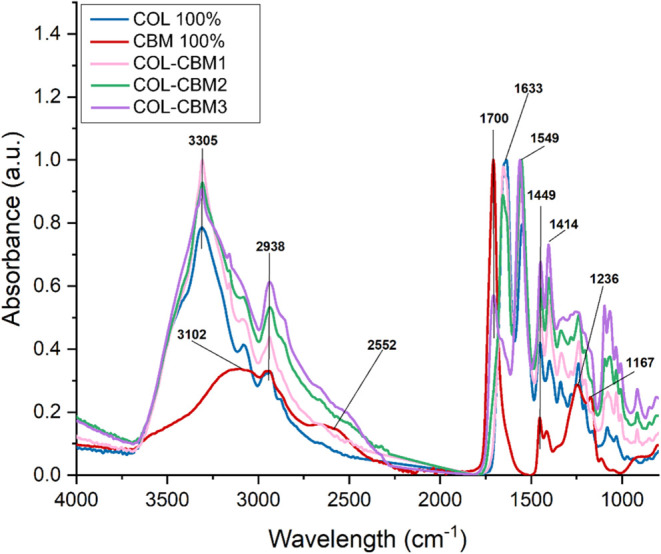
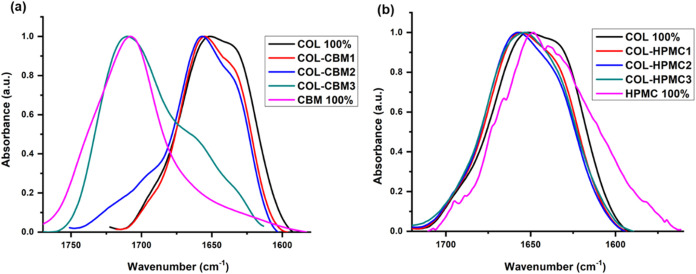
The aim of this study was to develop and characterize some freeze-dried wafers based on collagen and two mucoadhesive polymers, namely, hydroxypropyl methylcellulose (HPMC) and Carbomer 940 (CBM). The wafers were obtained by lyophilization of the corresponding hydrogels, which were evaluated by circular dichroism in order to investigate mucoadhesive polymers' influence on collagen's secondary structure. The obtained freeze-dried wafers were characterized by FT-IR spectroscopy, thermogravimetric analysis (TGA), scanning electron microscopy (SEM), contact angle measurements, and water uptake capacity. Furthermore, biocompatibility assessment was performed by evaluating the impact of freeze-dried wafer extracts on cell viability, morphology, and migration capacity. Circular dichroism showed more significant changes in the secondary structure of collagen associated with the addition of Carbomer 940. The FT-IR spectra displayed specific peaks for collagen and the two mucoadhesive polymers. SEM images illustrated a microporous structure for both collagen and Carbomer 940, while HPMC displayed a more sheet-like structure. The addition of HPMC increased the thermal stability of collagen, while Carbomer 940 had a negative impact on the samples' thermal stability. Contact angle measurements and water uptake capacity showed good hydrophilicity of the wafers. Except for CBM 100%, all samples supported the viability of human fibroblasts and did not have any inhibitory effect on cell migration capacity, demonstrating good biocompatibility, which is an essential attribute in developing drug delivery supports intended for mucosal applications.
本研究的目的是研发并表征一些基于胶原蛋白以及两种黏膜黏附聚合物(即羟丙基甲基纤维素(HPMC)和卡波姆940(CBM))的冻干薄片。这些薄片通过相应水凝胶的冻干获得,通过圆二色性对其进行评估,以研究黏膜黏附聚合物对胶原蛋白二级结构的影响。所获得的冻干薄片通过傅里叶变换红外光谱(FT-IR)、热重分析(TGA)、扫描电子显微镜(SEM)、接触角测量和吸水能力进行表征。此外,通过评估冻干薄片提取物对细胞活力、形态和迁移能力的影响来进行生物相容性评估。圆二色性显示,与添加卡波姆940相关的胶原蛋白二级结构变化更为显著。FT-IR光谱显示了胶原蛋白和两种黏膜黏附聚合物的特定峰。SEM图像显示胶原蛋白和卡波姆940均具有微孔结构,而HPMC呈现出更片状的结构。添加HPMC提高了胶原蛋白的热稳定性,而卡波姆940对样品的热稳定性有负面影响。接触角测量和吸水能力表明薄片具有良好的亲水性。除了100%的CBM外,所有样品均支持人成纤维细胞的活力,且对细胞迁移能力没有任何抑制作用,表明具有良好的生物相容性,这是开发用于黏膜应用的药物递送载体的一个重要属性。