Zhao Haonan, Wang Qingfang, Chen Zhang, Zhu Wenxia
Department of Neurology, Shanghai East Hospital, Tongji University School of Medicine, Shanghai, China.
Department of Cardiothoracic Surgery, Shanghai East Hospital, Tongji University School of Medicine, Shanghai, China.
Front Neurol. 2025 Jun 6;16:1585512. doi: 10.3389/fneur.2025.1585512. eCollection 2025.
Migraine, a prevalent neurological disorder, significantly impacts quality of life across populations. Although various demographic groups are impacted, existing research has focused predominantly on the general population, women, and adolescents, with insufficient emphasis on the burden experienced by men. This study aims to analyze data from the Global Burden of Disease (GBD) study spanning from 1990 to 2021, with the objective of elucidating the global prevalence, incidence, and disability-adjusted life years (DALYs) associated with migraine in males aged 10-59 years. Our investigation seeks to provide insights into this underexplored aspect of migraine's impact over three decades. Epidemiological Transition refers to a shift in the burden of disease from communicable diseases to chronic non-communicable diseases, which in this study is reflected in the rising relative burden of migraine among men. Secondary Prevention (Secondary Prevention) reduces the frequency of migraine attacks through early diagnosis and intervention, e.g., use of prophylactic medications; Tertiary Prevention (Tertiary Prevention): reduces the degree of disability in diagnosed patients, e.g., cognitive-behavioral therapy.
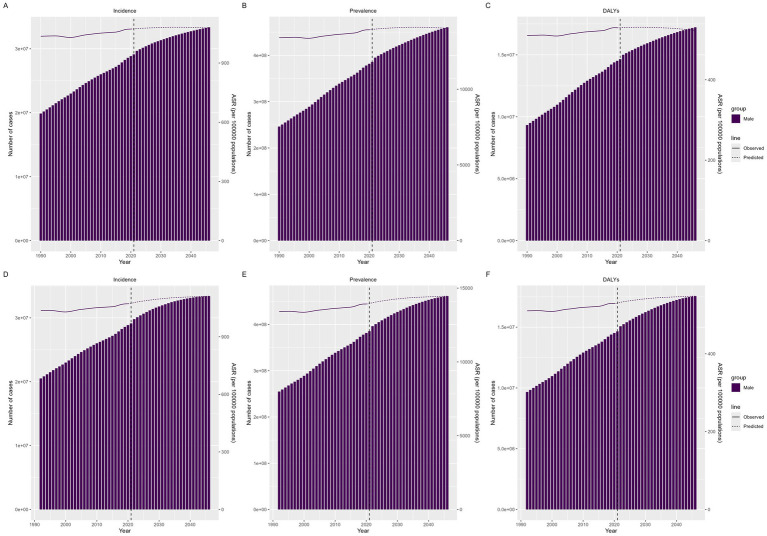
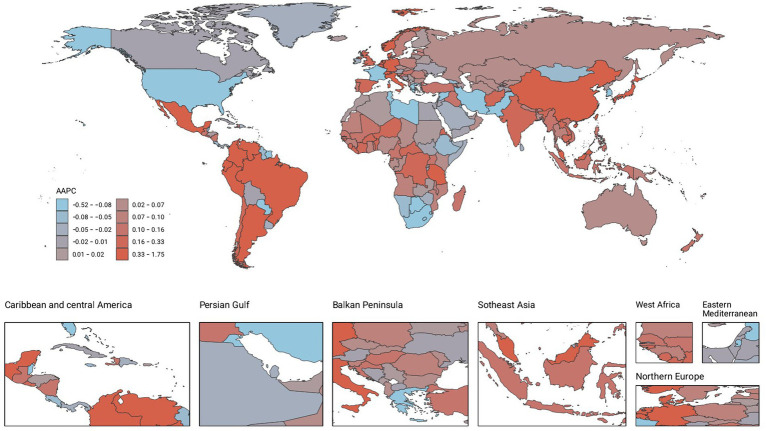
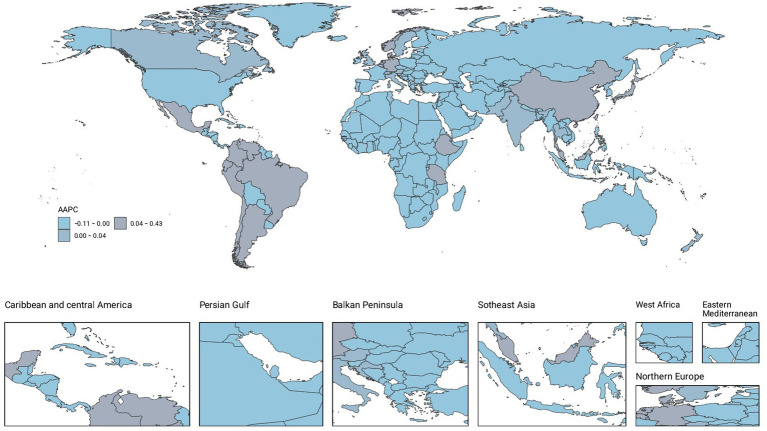
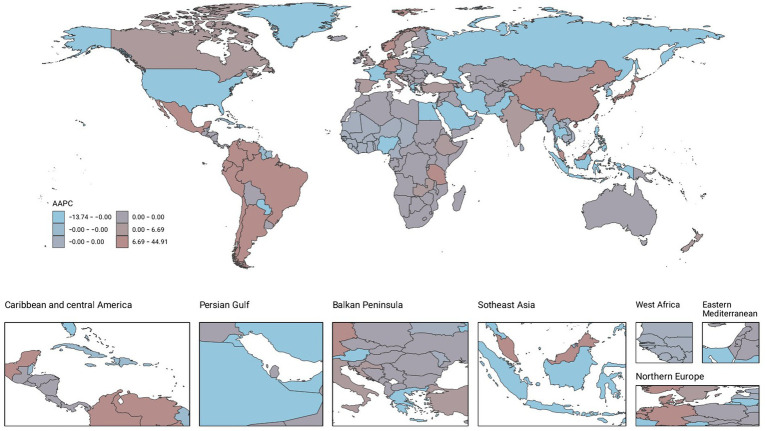
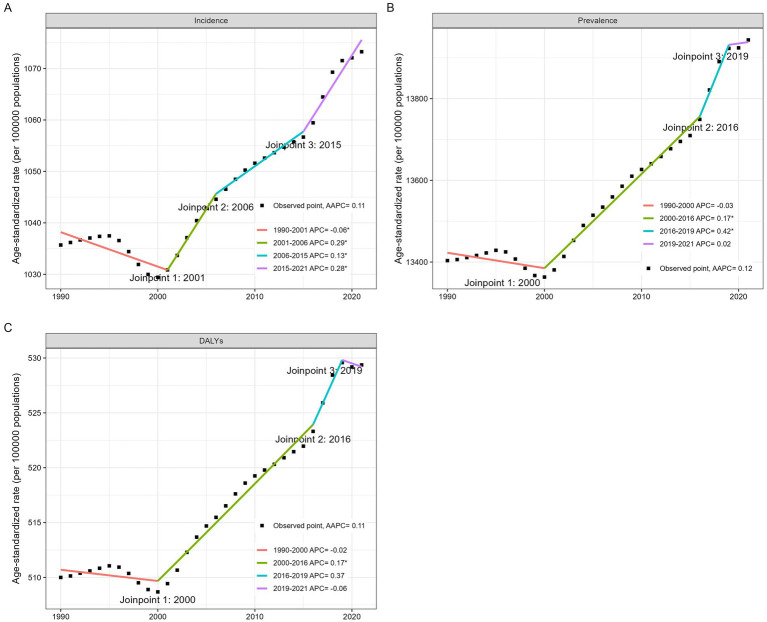
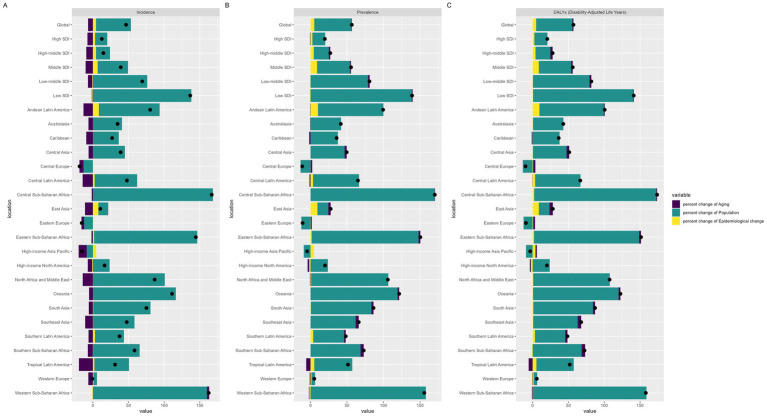
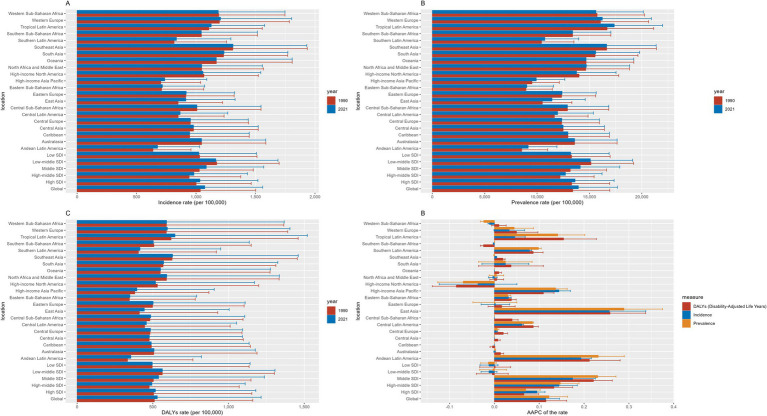
From 1990 to 2021, there was a significant increase in the burden of migraine among males aged 10-59 years worldwide. The number of incident cases rose by 46.55%, the number of prevalent cases rose by 56.54%, and the number of DALYs increased by 56.95%. The middle-SDI region showed the fastest burden growth. At the country level, Belgium had the highest prevalence and DALYs, whereas Indonesia and the Philippines had the highest incidence. Age-period-cohort analysis revealed a peak incidence in the 10-14 years age group, with the prevalence and DALYs peaking in the 30-44 years age range. Population growth was the primary driver of increased burdens in most regions. Projections suggest a continued increase in migraine burden among this population in the future.
This paper is the first to systematically analyze the age-period-cohort effect of migraine in men and to reveal a unique upward trend in the burden of migraine among men in the high-income Asia-Pacific region (in contrast to the trend among women). From 1990 to 2021, the migraine burden among males aged 10-59 years has generally increased and is expected to continue rising. Notably, the incidence is highest among adolescents (10-14 years), whereas the prevalence and DALYs peak in the middle-aged group (30-44 years). To address this, we should focus on primary prevention in adolescents and implement secondary and tertiary prevention strategies for the middle-aged population to reduce the overall migraine burden in males. Additionally, in the high-income Asia-Pacific region, the increasing trend in migraine burden differs from previous research findings.
偏头痛是一种常见的神经系统疾病,对不同人群的生活质量有显著影响。尽管各个不同人群都受到影响,但现有研究主要集中在普通人群、女性和青少年,对男性所承受负担的关注不足。本研究旨在分析1990年至2021年全球疾病负担(GBD)研究的数据,目的是阐明10至59岁男性中与偏头痛相关的全球患病率、发病率和伤残调整生命年(DALYs)。我们的调查旨在深入了解偏头痛在三十年里这一未被充分探索的影响方面。流行病学转变是指疾病负担从传染病向慢性非传染病的转变,在本研究中表现为男性偏头痛相对负担的上升。二级预防通过早期诊断和干预(例如使用预防性药物)降低偏头痛发作频率;三级预防降低已确诊患者的残疾程度(例如认知行为疗法)。
1990年至2021年,全球10至59岁男性的偏头痛负担显著增加。发病病例数增加了46.55%,患病病例数增加了56.54%,伤残调整生命年增加了56.95%。中等社会人口指数(SDI)地区的负担增长最快。在国家层面,比利时的患病率和伤残调整生命年最高,而印度尼西亚和菲律宾的发病率最高。年龄-时期-队列分析显示,10至14岁年龄组发病率最高,患病率和伤残调整生命年在30至44岁年龄范围达到峰值。人口增长是大多数地区负担增加的主要驱动因素。预测表明,未来这一人群的偏头痛负担将持续增加。
本文首次系统分析了男性偏头痛的年龄-时期-队列效应,并揭示了高收入亚太地区男性偏头痛负担独特的上升趋势(与女性趋势相反)。1990年至2021年,10至59岁男性的偏头痛负担总体上有所增加,预计还将继续上升。值得注意的是,发病率在青少年(10至14岁)中最高,而患病率和伤残调整生命年在中年组(30至44岁)达到峰值。为解决这一问题,我们应关注青少年的一级预防,并对中年人群实施二级和三级预防策略,以减轻男性偏头痛的总体负担。此外,在高收入亚太地区,偏头痛负担的上升趋势与以往研究结果不同。