• 文献检索
  • 文档翻译
  • 深度研究
  • 学术资讯
  • Suppr Zotero 插件Zotero 插件
  • 邀请有礼
  • 套餐&价格
  • 历史记录
应用&插件
Suppr Zotero 插件Zotero 插件浏览器插件Mac 客户端Windows 客户端微信小程序
定价
高级版会员购买积分包购买API积分包
服务
文献检索文档翻译深度研究API 文档MCP 服务
关于我们
关于 Suppr公司介绍联系我们用户协议隐私条款
关注我们

Suppr 超能文献

核心技术专利:CN118964589B侵权必究
粤ICP备2023148730 号-1Suppr @ 2026

文献检索

告别复杂PubMed语法,用中文像聊天一样搜索,搜遍4000万医学文献。AI智能推荐,让科研检索更轻松。

立即免费搜索

文件翻译

保留排版,准确专业,支持PDF/Word/PPT等文件格式,支持 12+语言互译。

免费翻译文档

深度研究

AI帮你快速写综述,25分钟生成高质量综述,智能提取关键信息,辅助科研写作。

立即免费体验

1990年至2021年全球及中国男性不育症的疾病负担分析。

Analysis of the burden of disease for male infertility globally and in China from 1990 to 2021.

作者信息

Shan Zujuan, Chen Shun, Zhou Wenju, Yang Yingwei, Zhang Guifu, Zhao Jinquan

机构信息

Department of Scientific Research Management, Honghe Hospital Affiliated to Kunming Medical University (Southern Yunnan Central Hospital), Honghe, China.

Department of Endocrinology, Honghe Hospital Affiliated to Kunming Medical University (Southern Yunnan Central Hospital), Honghe, China.

出版信息

Transl Androl Urol. 2025 May 30;14(5):1363-1378. doi: 10.21037/tau-2025-44. Epub 2025 May 27.

DOI:10.21037/tau-2025-44
PMID:40529032
原文链接:https://pmc.ncbi.nlm.nih.gov/articles/PMC12170198/
Abstract

BACKGROUND

Infertility affects one in six couples globally, with male infertility contributing to 50% of cases. Despite its high prevalence, male infertility is underexplored in some regions due to cultural and societal factors. Epidemiological data remain sparse and inconsistent. This study uses Global Burden of Disease (GBD) 2021 data to assess the global and Chinese burden of male infertility and project future trends.

METHODS

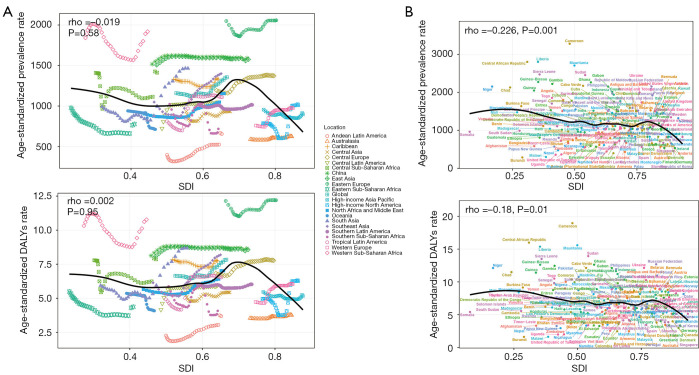
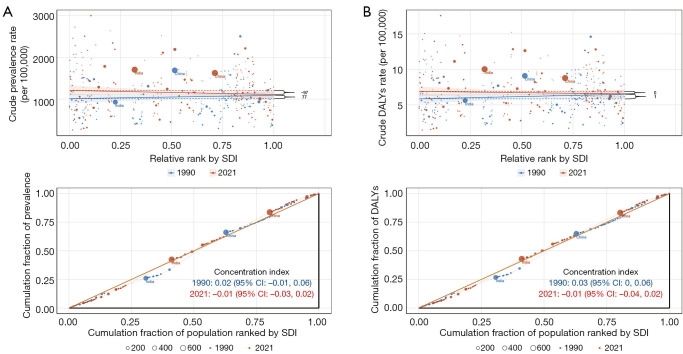
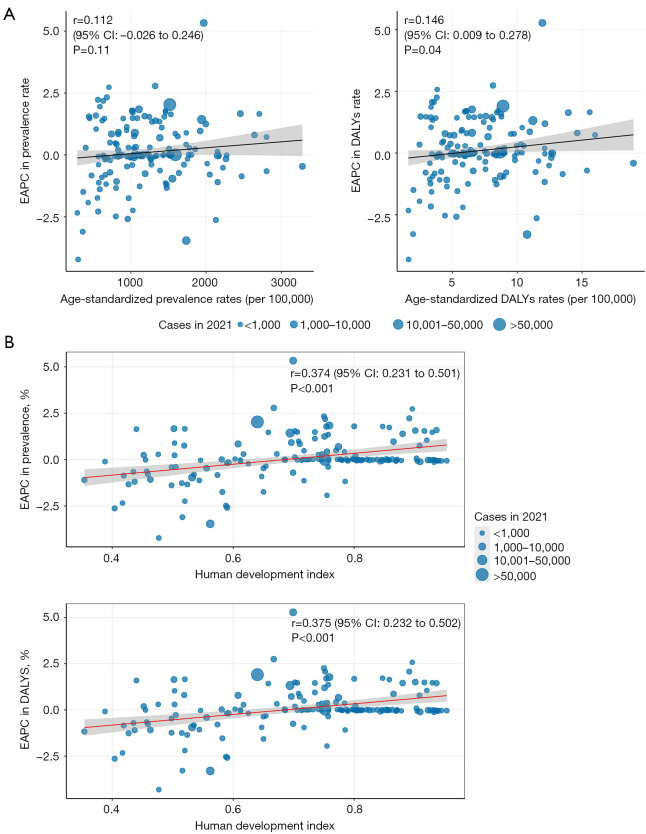
Using the GBD 2021 dataset, we analyze global male infertility trends from 1990 to 2021 across different subgroups (age, region, and country), focusing on prevalence, disability-adjusted life years (DALYs), and their corresponding age-standardized rates (ASRs), and compare these trends with China. We examine the correlation between the Socio-Demographic Index (SDI) and the burden of male infertility at national and regional levels. Spearman's rank correlation assesses the relationship between ASRs and SDI. Decomposition analysis identifies drivers of the growing male infertility burden globally, in China, and across SDI regions. The slope index of inequality (SII) and the concentration index (CII) quantify global health inequalities, and the Bayesian-Aperiodic-People-Cohort (BAPC) model predicts future trends in male infertility prevalence and DALYs globally and in China.

RESULTS

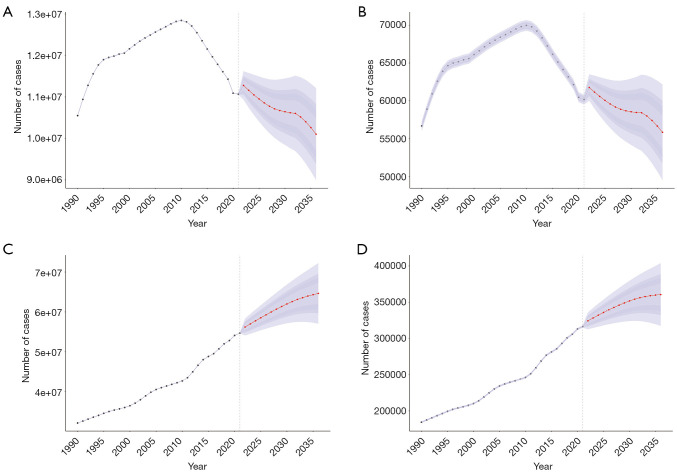
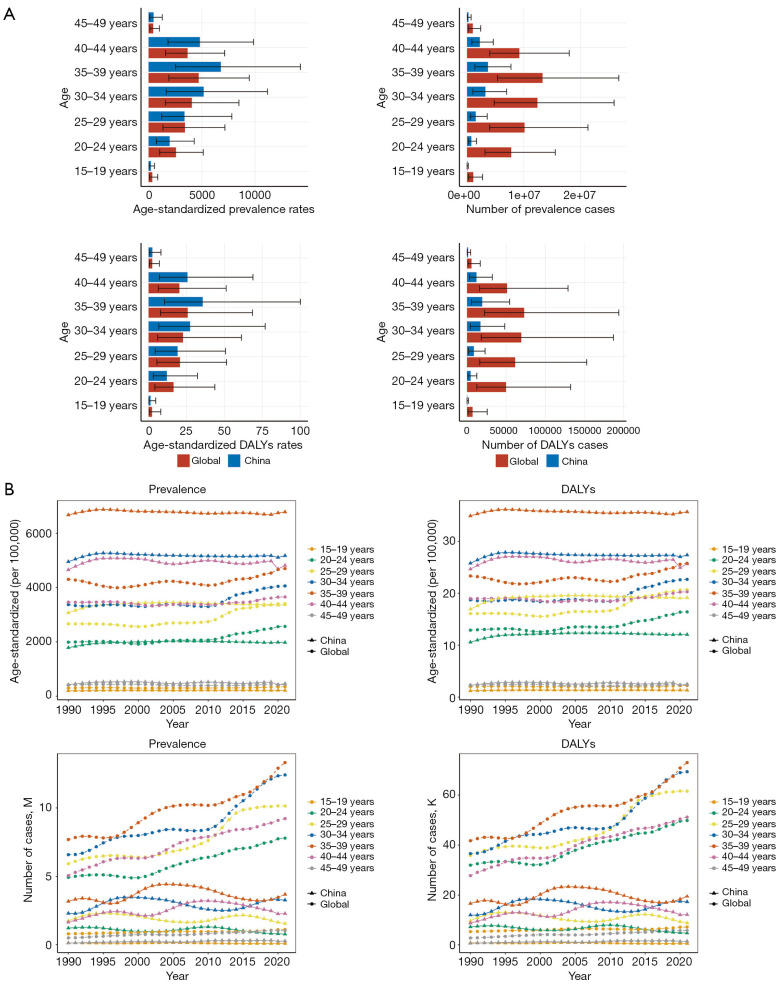
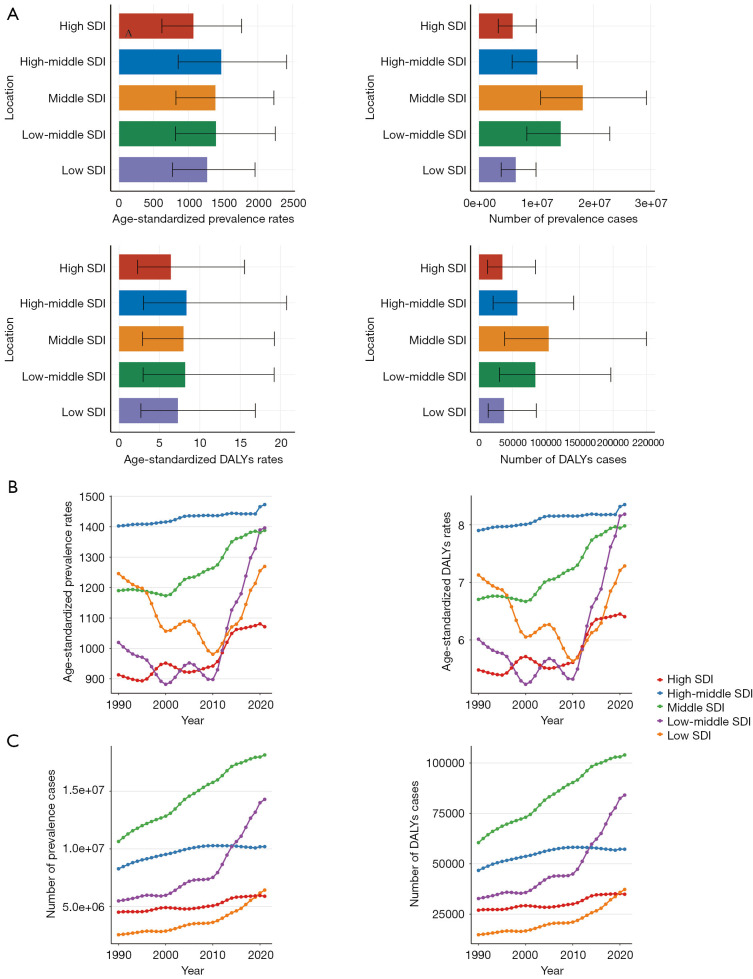
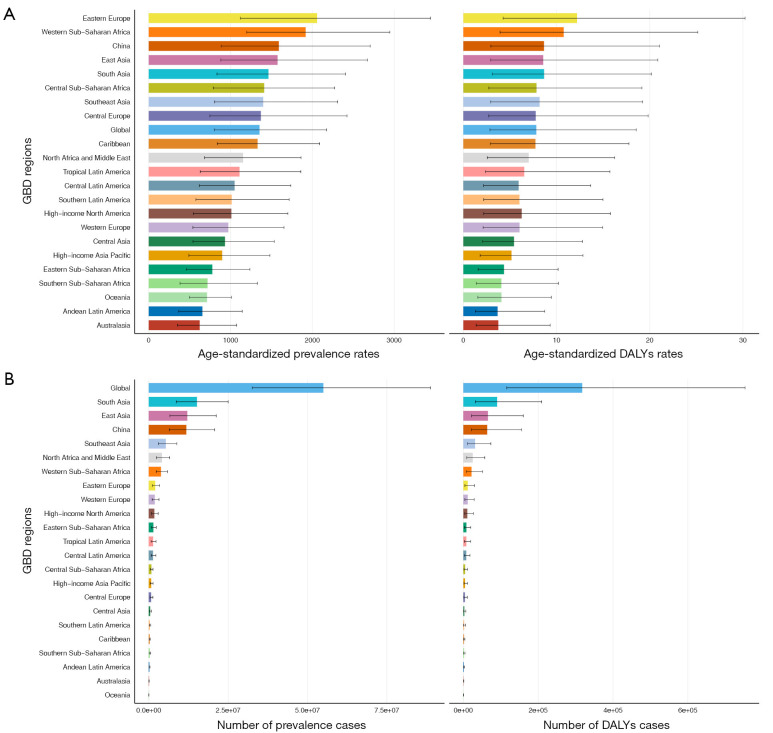
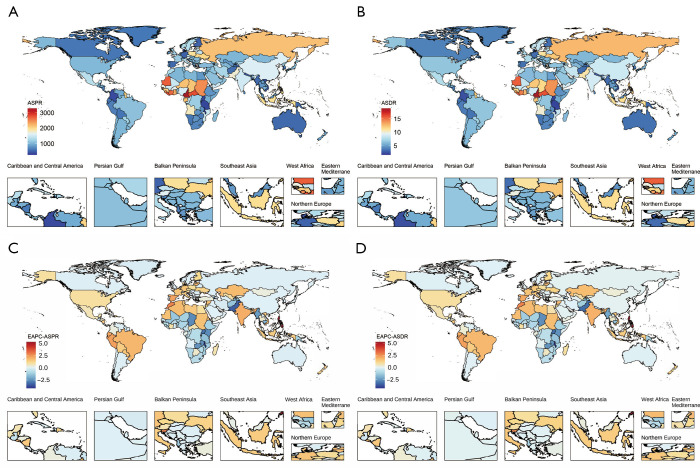
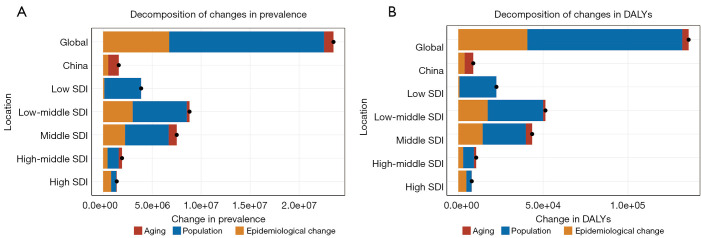
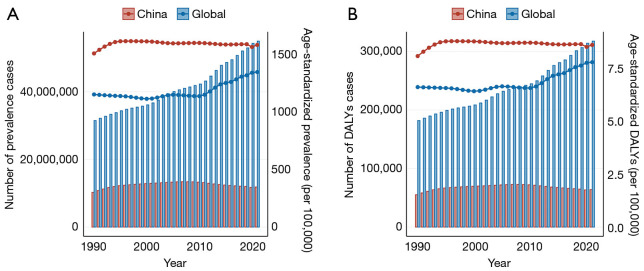
In 2021, the global prevalence of male infertility surpassed 55 million cases, with over 300,000 DALYs. China accounted for approximately 20% of the global burden, with ASRs significantly exceeding the global average. Globally, male infertility prevalence and DALYs increased steadily from 1990 to 2021, particularly in low and low-middle SDI regions, such as South Asia, Southeast Asia, and Latin America. In contrast, China exhibited a stable trend with a gradual decline after 2008. Population growth was identified as the primary driver of global prevalence increases, while age-related factors played a more significant role in China. South and East Asia reported the highest absolute numbers of prevalence cases and DALYs, contributing to half of the global burden. However, the highest ASRs for prevalence and DALYs were recorded in Eastern Europe and Western Sub-Saharan Africa, reaching 1.5 times the global average.

CONCLUSIONS

This study underscores the increasing global burden of male infertility, accompanied by pronounced disparities across regions and socioeconomic groups. While the burden in China shows signs of decline, low and low-middle SDI regions continue to face rising prevalence and DALYs. Official attention, along with a comprehensive approach to managing environmental factors, lifestyle changes, and sexually transmitted diseases (STDs), is essential to address these disparities and mitigate the growing global burden of male infertility.

摘要

背景

全球六对夫妇中就有一对受到不孕不育问题的影响,其中男性不育占所有病例的50%。尽管男性不育的患病率很高,但由于文化和社会因素,在一些地区对其研究不足。流行病学数据仍然稀少且不一致。本研究使用《2021年全球疾病负担》(GBD 2021)数据来评估全球和中国男性不育的负担,并预测未来趋势。

方法

使用GBD 2021数据集,我们分析了1990年至2021年不同亚组(年龄、地区和国家)的全球男性不育趋势,重点关注患病率、伤残调整生命年(DALYs)及其相应的年龄标准化率(ASRs),并将这些趋势与中国进行比较。我们在国家和地区层面研究了社会人口指数(SDI)与男性不育负担之间的相关性。Spearman等级相关性评估ASRs与SDI之间的关系。分解分析确定了全球、中国以及不同SDI地区男性不育负担增加的驱动因素。不平等斜率指数(SII)和集中指数(CII)量化了全球健康不平等情况,贝叶斯非周期性人群队列(BAPC)模型预测了全球和中国男性不育患病率和DALYs的未来趋势。

结果

2021年,全球男性不育患病率超过5500万例,伤残调整生命年超过30万。中国约占全球负担的20%,年龄标准化率显著超过全球平均水平。在全球范围内,1990年至2021年男性不育患病率和伤残调整生命年稳步上升,特别是在低和中低SDI地区,如南亚、东南亚和拉丁美洲。相比之下,中国呈现出稳定趋势,2008年后逐渐下降。人口增长被确定为全球患病率上升的主要驱动因素,而在中国,与年龄相关的因素起了更重要的作用。南亚和东亚报告的患病率病例和伤残调整生命年的绝对数量最高,占全球负担的一半。然而,东欧和撒哈拉以南非洲西部地区的患病率和伤残调整生命年的年龄标准化率最高,达到全球平均水平的1.5倍。

结论

本研究强调了全球男性不育负担日益加重,同时各地区和社会经济群体之间存在明显差异。虽然中国的负担有下降迹象,但低和中低SDI地区的患病率和伤残调整生命年仍在上升。官方的关注以及应对环境因素、生活方式改变和性传播疾病(STD)的综合方法对于解决这些差异和减轻全球日益增长的男性不育负担至关重要。
https://cdn.ncbi.nlm.nih.gov/pmc/blobs/0a5b/12170198/c9e04915a6dd/tau-14-05-1363-f10.jpg
https://cdn.ncbi.nlm.nih.gov/pmc/blobs/0a5b/12170198/57e4b1478f51/tau-14-05-1363-f1.jpg
https://cdn.ncbi.nlm.nih.gov/pmc/blobs/0a5b/12170198/3894914de833/tau-14-05-1363-f2.jpg
https://cdn.ncbi.nlm.nih.gov/pmc/blobs/0a5b/12170198/1661e19ba9da/tau-14-05-1363-f3.jpg
https://cdn.ncbi.nlm.nih.gov/pmc/blobs/0a5b/12170198/b3a3f0c9aef9/tau-14-05-1363-f4.jpg
https://cdn.ncbi.nlm.nih.gov/pmc/blobs/0a5b/12170198/53991e134a4a/tau-14-05-1363-f5.jpg
https://cdn.ncbi.nlm.nih.gov/pmc/blobs/0a5b/12170198/236f5dcd075b/tau-14-05-1363-f6.jpg
https://cdn.ncbi.nlm.nih.gov/pmc/blobs/0a5b/12170198/25c003702c75/tau-14-05-1363-f7.jpg
https://cdn.ncbi.nlm.nih.gov/pmc/blobs/0a5b/12170198/2b3c3fb9d0fd/tau-14-05-1363-f8.jpg
https://cdn.ncbi.nlm.nih.gov/pmc/blobs/0a5b/12170198/4812031f9b9e/tau-14-05-1363-f9.jpg
https://cdn.ncbi.nlm.nih.gov/pmc/blobs/0a5b/12170198/c9e04915a6dd/tau-14-05-1363-f10.jpg
https://cdn.ncbi.nlm.nih.gov/pmc/blobs/0a5b/12170198/57e4b1478f51/tau-14-05-1363-f1.jpg
https://cdn.ncbi.nlm.nih.gov/pmc/blobs/0a5b/12170198/3894914de833/tau-14-05-1363-f2.jpg
https://cdn.ncbi.nlm.nih.gov/pmc/blobs/0a5b/12170198/1661e19ba9da/tau-14-05-1363-f3.jpg
https://cdn.ncbi.nlm.nih.gov/pmc/blobs/0a5b/12170198/b3a3f0c9aef9/tau-14-05-1363-f4.jpg
https://cdn.ncbi.nlm.nih.gov/pmc/blobs/0a5b/12170198/53991e134a4a/tau-14-05-1363-f5.jpg
https://cdn.ncbi.nlm.nih.gov/pmc/blobs/0a5b/12170198/236f5dcd075b/tau-14-05-1363-f6.jpg
https://cdn.ncbi.nlm.nih.gov/pmc/blobs/0a5b/12170198/25c003702c75/tau-14-05-1363-f7.jpg
https://cdn.ncbi.nlm.nih.gov/pmc/blobs/0a5b/12170198/2b3c3fb9d0fd/tau-14-05-1363-f8.jpg
https://cdn.ncbi.nlm.nih.gov/pmc/blobs/0a5b/12170198/4812031f9b9e/tau-14-05-1363-f9.jpg
https://cdn.ncbi.nlm.nih.gov/pmc/blobs/0a5b/12170198/c9e04915a6dd/tau-14-05-1363-f10.jpg

相似文献

1
Analysis of the burden of disease for male infertility globally and in China from 1990 to 2021.1990年至2021年全球及中国男性不育症的疾病负担分析。
Transl Androl Urol. 2025 May 30;14(5):1363-1378. doi: 10.21037/tau-2025-44. Epub 2025 May 27.
2
Global epidemiological trends in prostate cancer burden: a comprehensive analysis from Global Burden of Disease Study 2021.前列腺癌负担的全球流行病学趋势:来自《2021年全球疾病负担研究》的综合分析
Transl Androl Urol. 2025 May 30;14(5):1238-1252. doi: 10.21037/tau-2025-103. Epub 2025 May 27.
3
The global burden and epidemiological trends of gout, particularly cases attributable to high Body Mass Index (BMI) in adolescents and young adults (aged 15-39 years): a secondary analysis from global burden of disease study 2021.痛风的全球负担及流行病学趋势,尤其是青少年和青年(15-39岁)中归因于高体重指数(BMI)的病例:来自2021年全球疾病负担研究的二次分析
Clin Rheumatol. 2025 Jun 18. doi: 10.1007/s10067-025-07494-w.
4
Rising incidence and clinical impact of kidney cancer in China and worldwide: a call for targeted prevention, early diagnosis, and equitable treatment.中国及全球肾癌发病率上升及其临床影响:呼吁进行针对性预防、早期诊断和公平治疗。
Transl Androl Urol. 2025 May 30;14(5):1391-1407. doi: 10.21037/tau-2024-750. Epub 2025 May 27.
5
Global trends and regional disparities in the burden of headache disorders, 1990-2021: a comprehensive analysis of the global burden of disease study.1990 - 2021年头痛疾病负担的全球趋势与区域差异:全球疾病负担研究的综合分析
Front Neurol. 2025 Jun 5;16:1575705. doi: 10.3389/fneur.2025.1575705. eCollection 2025.
6
[Disease burden and future trend predictions of age-related hearing loss in China and worldwide from 1990 to 2021].[1990年至2021年中国及全球年龄相关性听力损失的疾病负担及未来趋势预测]
Beijing Da Xue Xue Bao Yi Xue Ban. 2025 Jun 18;57(3):545-553. doi: 10.19723/j.issn.1671-167X.2025.03.019.
7
Global, regional, and national burden of IHD attributable to PM pollution aged 70 and above: an age-period-cohort modeling and frontiers analysis study.70岁及以上人群中因细颗粒物污染导致的缺血性心脏病的全球、区域和国家负担:一项年龄-时期-队列建模与前沿分析研究
Front Public Health. 2025 Jun 4;13:1573599. doi: 10.3389/fpubh.2025.1573599. eCollection 2025.
8
Global burden and trend of stroke attributable to metabolic risks among young adults (20-39 years old) from 1990 to 2021.1990年至2021年期间,20至39岁年轻成年人中代谢风险所致中风的全球负担及趋势。
Front Cardiovasc Med. 2025 Jun 2;12:1561052. doi: 10.3389/fcvm.2025.1561052. eCollection 2025.
9
Trends and levels of the global, regional, and national burden of appendicitis between 1990 and 2021: findings from the Global Burden of Disease Study 2021.全球、区域和国家阑尾炎负担的趋势和水平:2021 年全球疾病负担研究的发现。
Lancet Gastroenterol Hepatol. 2024 Sep;9(9):825-858. doi: 10.1016/S2468-1253(24)00157-2. Epub 2024 Jul 17.
10
Global burden of disease changes related to high red meat diets and breast cancer from 1990 to 2021 and its prediction up to 2030.1990年至2021年与高红肉饮食和乳腺癌相关的全球疾病负担变化及其至2030年的预测。
Front Nutr. 2025 Jun 4;12:1586299. doi: 10.3389/fnut.2025.1586299. eCollection 2025.

本文引用的文献

1
The Association Between Male Viral Infections and Infertility: A Systematic Review and Meta-Analysis.男性病毒感染与不孕不育的关联:系统评价与荟萃分析。
Rev Med Virol. 2024 Nov;34(6):e70002. doi: 10.1002/rmv.70002.
2
How can China tackle its declining fertility rate?中国如何应对生育率下降问题?
BMJ. 2024 Aug 30;386:e078635. doi: 10.1136/bmj-2023-078635.
3
Global age-sex-specific mortality, life expectancy, and population estimates in 204 countries and territories and 811 subnational locations, 1950-2021, and the impact of the COVID-19 pandemic: a comprehensive demographic analysis for the Global Burden of Disease Study 2021.
204 个国家和地区及 811 个次国家级行政单位 1950 年至 2021 年的全球年龄、性别特异性死亡率、预期寿命和人口估计,以及 COVID-19 大流行的影响:2021 年全球疾病负担研究的综合人口分析。
Lancet. 2024 May 18;403(10440):1989-2056. doi: 10.1016/S0140-6736(24)00476-8. Epub 2024 Mar 11.
4
Global, regional and national burden of male infertility in 204 countries and territories between 1990 and 2019: an analysis of global burden of disease study.全球、区域和国家 1990 年至 2019 年男性不育症负担:疾病负担研究全球分析。
BMC Public Health. 2023 Nov 8;23(1):2195. doi: 10.1186/s12889-023-16793-3.
5
Infertility Affects 1 in 6 People Globally.全球六分之一的人受不孕症影响。
JAMA. 2023 May 2;329(17):1443. doi: 10.1001/jama.2023.6251.
6
Incidence Trends of Five Common Sexually Transmitted Infections Excluding HIV From 1990 to 2019 at the Global, Regional, and National Levels: Results From the Global Burden of Disease Study 2019.1990年至2019年全球、区域和国家层面排除艾滋病毒的五种常见性传播感染的发病率趋势:2019年全球疾病负担研究结果
Front Med (Lausanne). 2022 Mar 2;9:851635. doi: 10.3389/fmed.2022.851635. eCollection 2022.
7
Susceptibility to tobacco use and associated factors among youth in five central and eastern European countries.五国中青少年对烟草使用的易感性及相关因素。
BMC Public Health. 2022 Jan 11;22(1):72. doi: 10.1186/s12889-022-12493-6.
8
Provokes Seminal Inflammation among Infertile Males.可诱发男性不育患者的精囊炎。
Int J Mol Sci. 2021 Dec 15;22(24):13467. doi: 10.3390/ijms222413467.
9
Global burden and trends of sexually transmitted infections from 1990 to 2019: an observational trend study.1990年至2019年性传播感染的全球负担及趋势:一项观察性趋势研究。
Lancet Infect Dis. 2022 Apr;22(4):541-551. doi: 10.1016/S1473-3099(21)00448-5. Epub 2021 Dec 20.
10
Male fertility as a marker for health.男性生育力作为健康的标志物。
Reprod Biomed Online. 2022 Jan;44(1):131-144. doi: 10.1016/j.rbmo.2021.09.023. Epub 2021 Oct 6.