Potash James B, McClanahan Alex, Davidson Jay, Butler William, Carroll Nathan, Ruble Anne, Yaden Mary, King Darlene, Torous John, Zandi Peter P, Kennedy Katherine G, Smith Thomas E, Waghray Arpan, Trestman Robert, Wills Marketa
Department of Psychiatry and Behavioral Sciences Johns Hopkins University School of Medicine Baltimore Maryland USA.
Department of Psychiatry and Behavioral Sciences Medical University of South Carolina Charleston South Carolina USA.
Psychiatr Res Clin Pract. 2025 Mar 27;7(2):80-90. doi: 10.1176/appi.prcp.20240130. eCollection 2025 Summer.
The American Psychiatric Association (APA) issued a 2023 report on the future of psychiatry, focusing on how the organization should position itself in relation to coming developments over the next 10 years. Here, we follow up with a discussion of how the psychiatrist's role needs to evolve to adapt to the changes ahead.
We drew on senior experts and junior trainees within the APA's Council on Healthcare Systems and Financing, along with additional content experts, to choose areas of focus and discuss their interrelationships. Literature review focused on publications with implications of these areas for future training and practice.
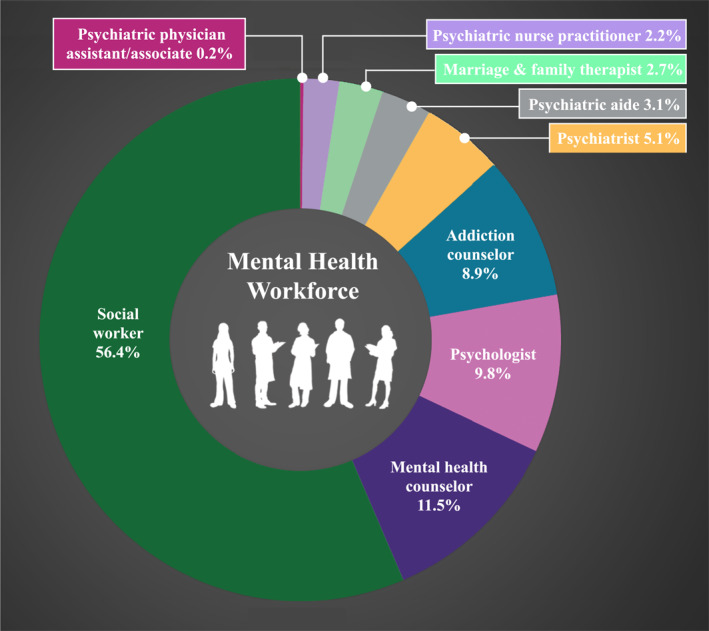
We are only ∼5% of the mental health work force, and we have unique strengths, including training providing us the ability to discern the varied factors contributing to distress, and direct and apply interventions across all available modalities. Psychiatrists make best use of our capabilities when we lead the process of comprehensively formulating patients' problems and generating a multi-faceted treatment approach. We have chosen six areas where we envision new developments impacting how psychiatrists will practice and residents should train: digital data and precision medicine, measurement-based care, artificial intelligence (AI), psychotherapy, integrated care, and care for the seriously mentally ill. We provide suggestions regarding next steps that will allow us to make the best use of our training and expand access to high quality diagnosis and care.
We will need to handle the most challenging cases: the most psychiatrically complex, medically complex, and treatment-resistant. We must preserve our skill, unique among physicians, in psychotherapeutic approaches, even as we manage psychiatric illness. We must also adapt and become more tech-savvy, as digital data, mobile and computer-based treatments, electronic medical records, and AI algorithms take on increasing prominence in our field.
美国精神病学协会(APA)发布了一份关于精神病学未来的2023年报告,重点关注该组织在未来10年应如何应对即将到来的发展。在此,我们接着讨论精神病医生的角色需要如何演变以适应未来的变化。
我们借鉴了APA医疗保健系统与融资委员会的资深专家和初级学员,以及其他内容专家的意见,以确定重点领域并讨论它们之间的相互关系。文献综述聚焦于对这些领域对未来培训和实践有影响的出版物。
我们仅占心理健康劳动力的约5%,且我们具有独特优势,包括培训赋予我们辨别导致痛苦的各种因素的能力,以及在所有可用方式中直接应用干预措施的能力。当我们主导全面制定患者问题并生成多方面治疗方法的过程时,精神病医生能充分发挥我们的能力。我们选定了六个领域,预计新发展将影响精神病医生的执业方式以及住院医师的培训方式:数字数据与精准医学、基于测量的护理、人工智能(AI)、心理治疗、综合护理以及对严重精神疾病患者的护理。我们提供了关于后续步骤的建议,这将使我们能够充分利用培训,并扩大获得高质量诊断和护理的机会。
我们将需要处理最具挑战性的病例:精神科最复杂、医学上最复杂以及最难治疗的病例。即使在管理精神疾病时,我们也必须保留我们在心理治疗方法方面独特的医生技能。随着数字数据、移动和基于计算机的治疗、电子病历以及AI算法在我们领域中日益突出,我们还必须适应并变得更精通技术。