Lopez Axl, Gil-Lievana Elvi, Gutierrez Ranier
Laboratory Neurobiology of Appetite, Department of Pharmacology, Centro de Investigación y de Estudios Avanzados, Mexico City, México.
Laboratory Neurobiology of Appetite, Centro de Investigación sobre el Envejecimiento (CIE), Centro de Investigación y de Estudios Avanzados sede sur, Mexico City, México.
PLoS One. 2025 Jun 24;20(6):e0325067. doi: 10.1371/journal.pone.0325067. eCollection 2025.
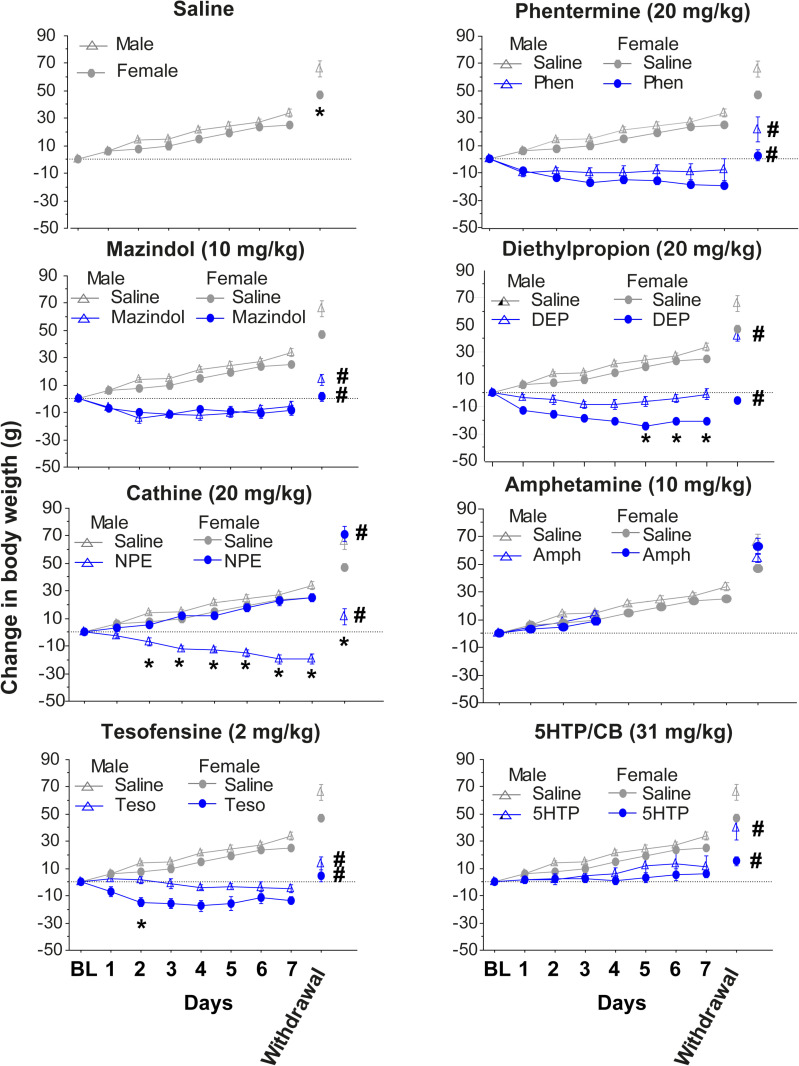
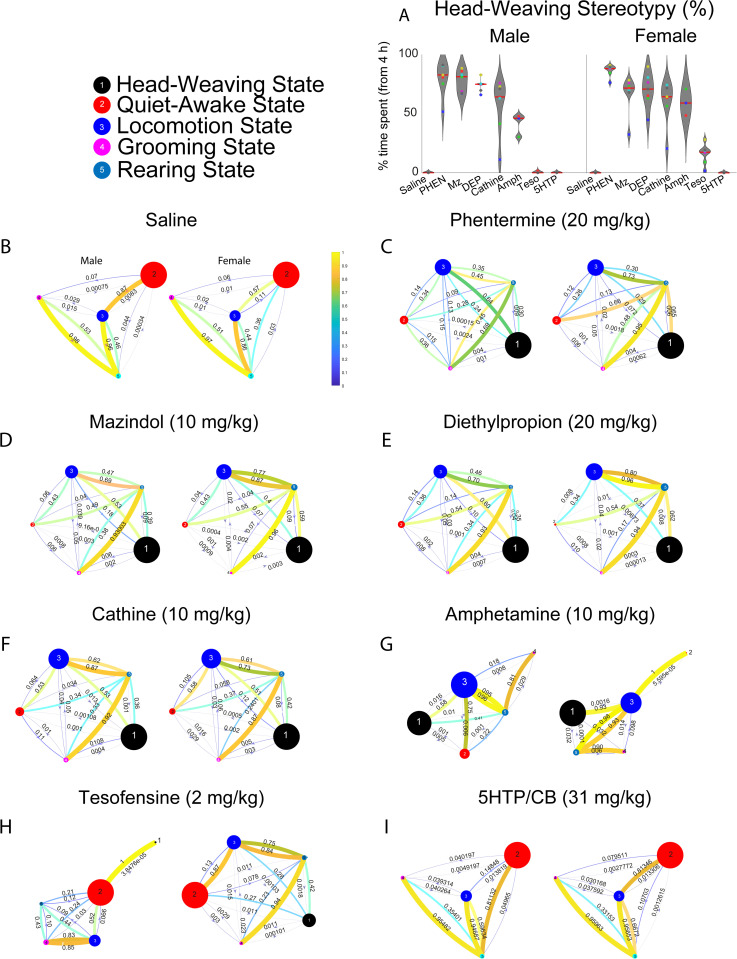
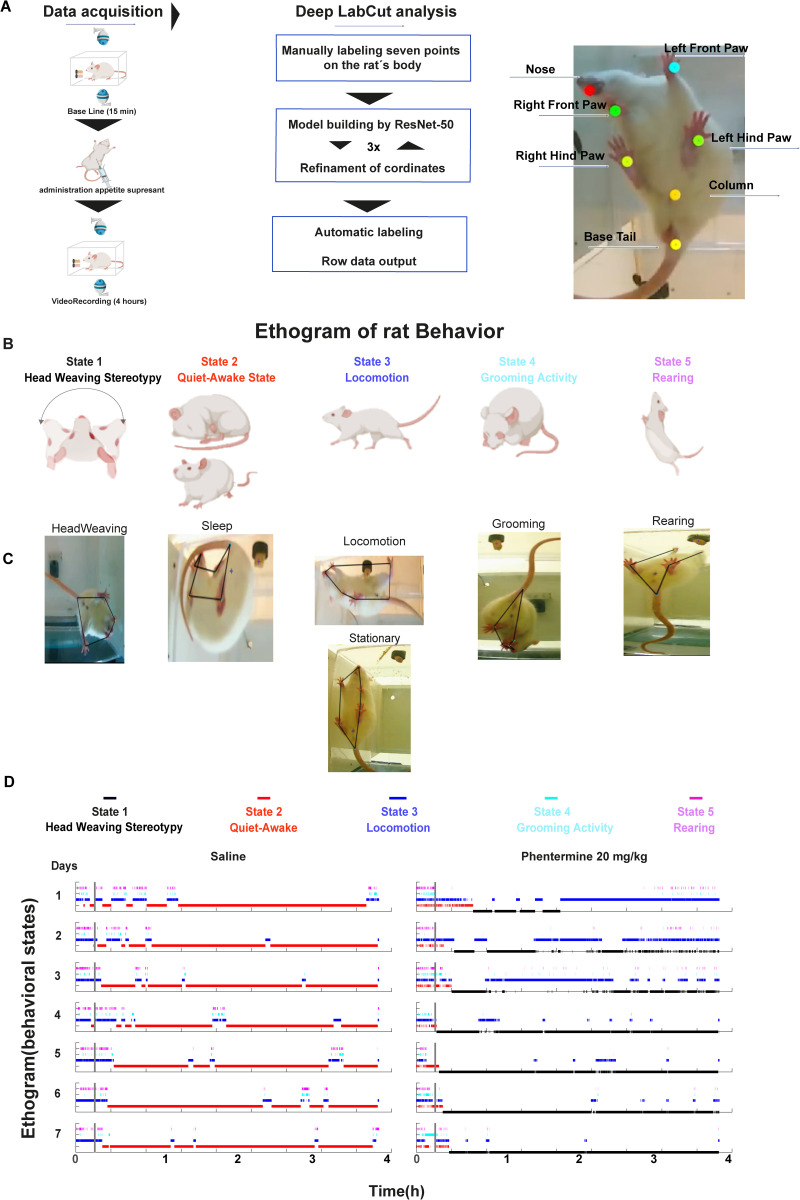
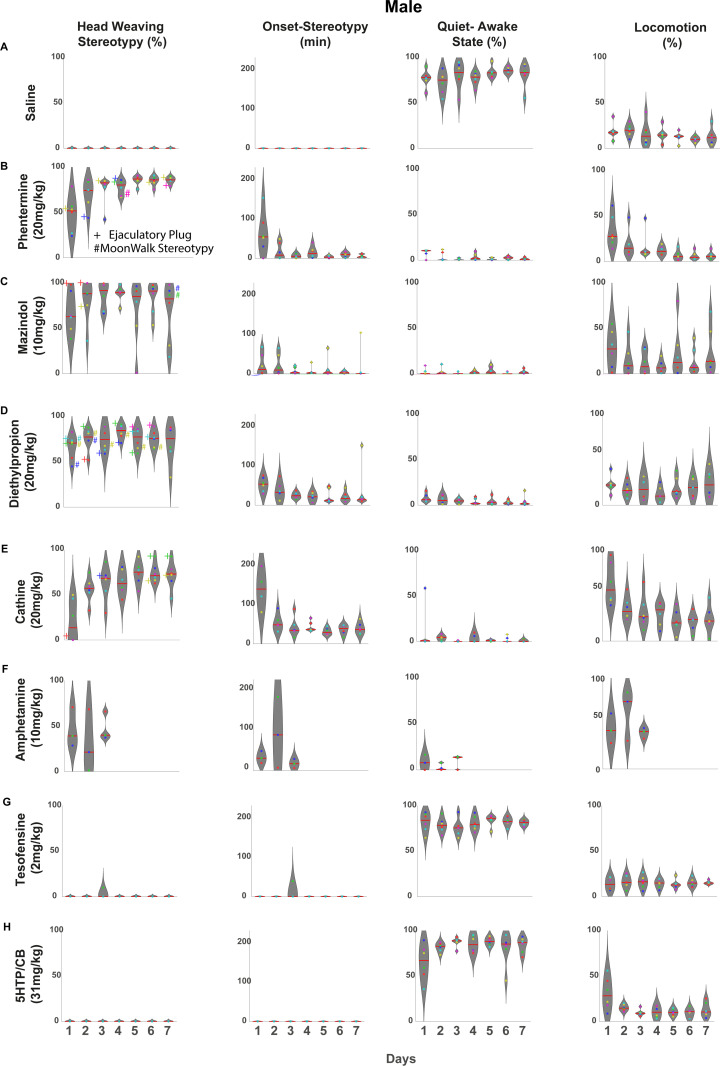
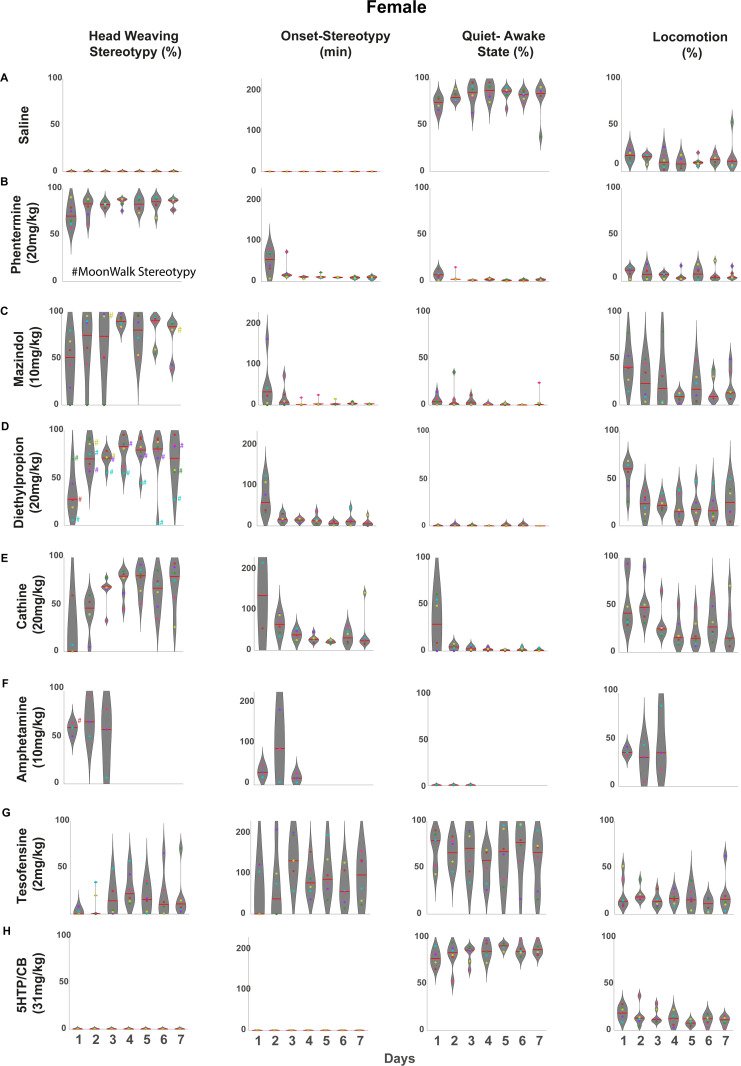
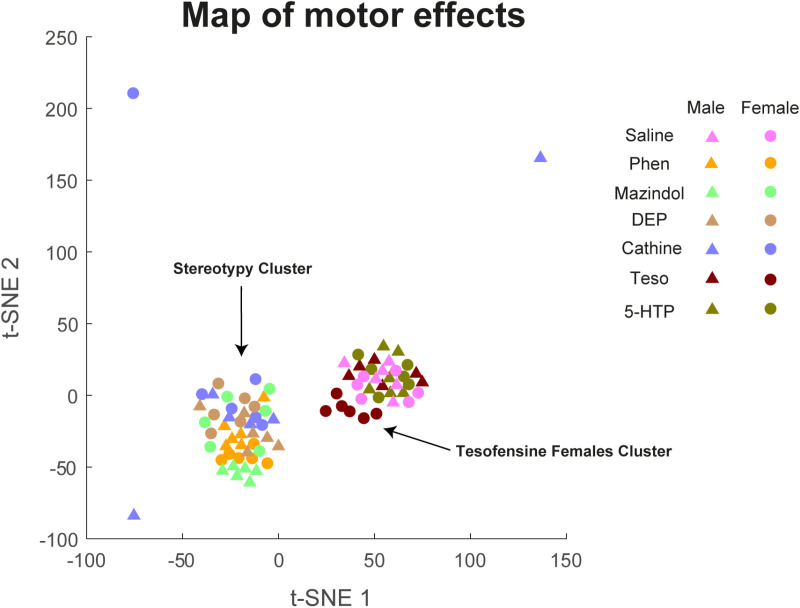
This study investigated the sex-specific effects of commonly prescribed appetite suppressants on body weight and the manifestation of motor side effects, specifically stereotypy. Employing video recordings and DeepLabCut (DLC) for precise behavioral quantification, we analyzed stereotypy, defined as purposeless, repetitive motor behaviors, in male and female rats. Under control (saline) conditions, male rats exhibited a greater propensity for weight gain compared to females. However, in contrast, female rats demonstrated greater and more homogenous weight loss than males following the administration of diethylpropion and tesofensine. Phentermine and mazindol induced comparable weight loss in both sexes, whereas cathine elicited weight reduction exclusively in males. 5-HTP and d-amphetamine administration only prevented weight gain relative to controls. Analysis of motor side effects revealed that drugs primarily targeting dopamine pathways - specifically, phentermine, mazindol, diethylpropion, cathine, and d-amphetamine - induced pronounced stereotypies, particularly head-weaving, in both sexes. Interestingly, tesofensine elicited head-weaving behavior exclusively in female subjects, albeit to a lesser extent than that observed with other dopaminergic agents; conversely, tesofensine was most frequently associated with orolingual dyskinesia. Male subjects treated with these same drugs exhibited an unexpected effect: spontaneous ejaculations, potentially attributable to the combined effects on dopamine and serotonin signaling in brain regions regulating sexual function. Network analysis and Markov transition matrices revealed distinct behavioral profiles associated with head-weaving, which emerged as the dominant attractor state, suggesting potential mechanistic differences among these drugs. Collectively, this study provides a valuable database characterizing the behavioral side effects of appetite suppressants.
本研究调查了常用食欲抑制剂对体重的性别特异性影响以及运动副作用(特别是刻板行为)的表现。我们利用视频记录和DeepLabCut(DLC)进行精确的行为量化,分析了雄性和雌性大鼠中被定义为无目的、重复性运动行为的刻板行为。在对照(生理盐水)条件下,雄性大鼠比雌性大鼠表现出更大的体重增加倾向。然而,相比之下,在给予二乙胺苯丙酮和替诺芬辛后,雌性大鼠比雄性大鼠表现出更大且更均匀的体重减轻。苯丁胺和马吲哚在两性中引起的体重减轻相当,而去甲伪麻黄碱仅在雄性中引起体重减轻。给予5-羟色氨酸和d-苯丙胺仅相对于对照组预防了体重增加。对运动副作用的分析表明,主要靶向多巴胺途径的药物——特别是苯丁胺、马吲哚、二乙胺苯丙酮、去甲伪麻黄碱和d-苯丙胺——在两性中均诱发了明显的刻板行为,尤其是头部摆动。有趣的是,替诺芬辛仅在雌性受试者中引发头部摆动行为,尽管程度低于其他多巴胺能药物;相反,替诺芬辛最常与口面部运动障碍相关。用这些相同药物治疗的雄性受试者表现出意想不到的效果:自发射精,这可能归因于对调节性功能的脑区中多巴胺和血清素信号的综合影响。网络分析和马尔可夫转移矩阵揭示了与头部摆动相关的不同行为特征,头部摆动成为主要的吸引子状态,表明这些药物之间存在潜在的机制差异。总的来说,本研究提供了一个宝贵的数据库,描述了食欲抑制剂的行为副作用。