Kalaydzhiev Petar, Velikova Tsvetelina, Davidkova Yanitsa, Voynova Gergana, Borizanova Angelina, Spasova Natalia, Georgieva Neli, Ilieva Radostina, Kinova Elena, Goudev Assen
Department of Emergency Medicine, Medical University-Sofia, 1000 Sofia, Bulgaria.
Cardiology Department, University Hospital "Tsaritsa Yoanna-ISUL", 1000 Sofia, Bulgaria.
Biomedicines. 2025 Jun 14;13(6):1474. doi: 10.3390/biomedicines13061474.
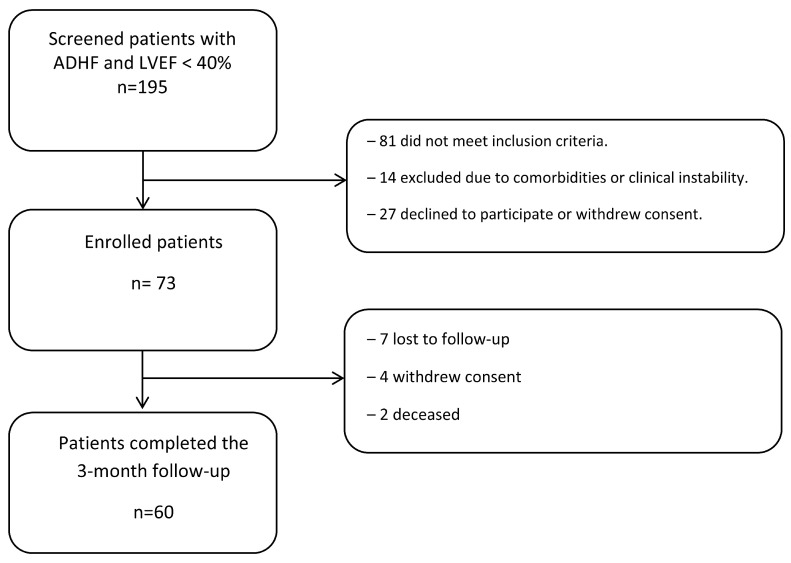
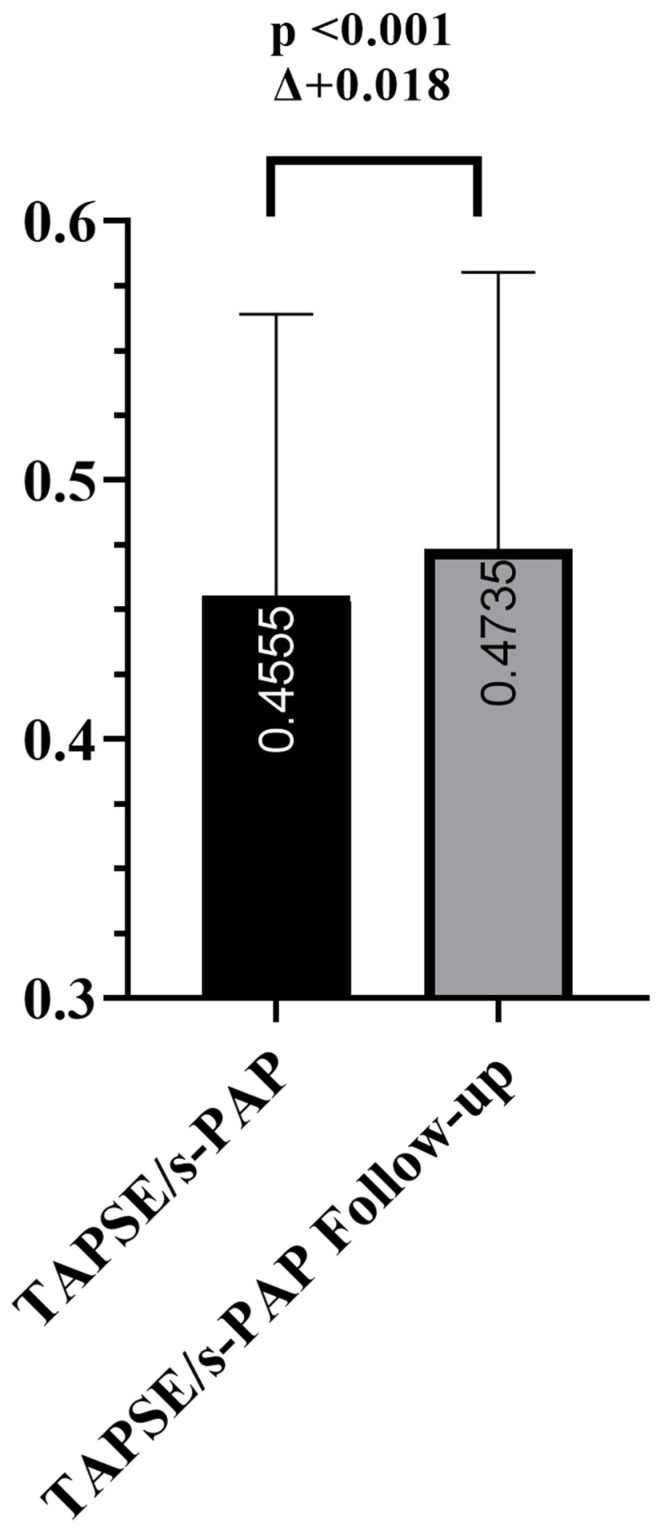
Sleep-disordered breathing (SDB), particularly Cheyne-Stokes respiration (CSR), is highly prevalent among patients hospitalized with acute decompensated heart failure (ADHF) and is associated with worse clinical outcomes. Sodium-glucose cotransporter-2 inhibitors (SGLT2i) have demonstrated cardiorenal benefits in heart failure, but their effects on nocturnal respiratory parameters remain underexplored. This study aims to evaluate the impact of SGLT2i therapy on key respiratory and cardiac indices including CSR burden, oxygenation, and right heart function in patients with ADHF and reduced left ventricular ejection fraction. In this single-center prospective cohort study, 60 patients with ADHF, LVEF < 40%, and a baseline apnea-hypopnea index (AHI) > 5 were assessed before and three months after the initiation of SGLT2i therapy. Sleep respiratory parameters were measured using home polygraphy (ApneaLink), while cardiac and renal indices were evaluated by echocardiography, NT-proBNP, and the estimated glomerular filtration rate (eGFR). Structural and functional echocardiographic changes were analyzed both at baseline and following the 3-month treatment period. Patient-reported outcomes were assessed using the Epworth Sleepiness Scale (ESS) and Kansas City Cardiomyopathy Questionnaire (KCCQ). After 3 months of SGLT2i therapy, significant improvements were observed in daytime sleepiness (ESS: -2.68 points; < 0.001), CSR index (-5.63 events/h; < 0.001), AHI (-3.07 events/h; < 0.001), ODI (-6.11 events/h; < 0.001), and mean nocturnal SpO (+1.95%; < 0.001). KCCQ scores increased by 9.16 points ( < 0.001), indicating improved quality of life. Cardiac assessments revealed reductions in NT-proBNP (-329.6 pg/mL; < 0.001) and E/e' ratio (-1.08; < 0.001), with no significant change in LVEF or chamber dimensions. Right ventricular function improved, as evidenced by the increased TAPSE/sPAP ratio (+0.018; < 0.001). Renal function remained stable, with a non-significant upward trend in eGFR. This exploratory study suggests that SGLT2 inhibitors may be associated with the attenuation of Cheyne-Stokes respiration and an improvement in right heart function in patients with ADHF, warranting further investigation in controlled trials. These findings highlight the potential of SGLT2is to address overlapping cardio-respiratory dysfunction in this high-risk population.
睡眠呼吸障碍(SDB),尤其是潮式呼吸(CSR),在急性失代偿性心力衰竭(ADHF)住院患者中极为普遍,且与更差的临床结局相关。钠-葡萄糖协同转运蛋白2抑制剂(SGLT2i)已在心力衰竭中显示出心肾益处,但其对夜间呼吸参数的影响仍未得到充分研究。本研究旨在评估SGLT2i治疗对ADHF且左心室射血分数降低患者的关键呼吸和心脏指标的影响,包括CSR负担、氧合和右心功能。在这项单中心前瞻性队列研究中,对60例ADHF、左心室射血分数<40%且基线呼吸暂停低通气指数(AHI)>5的患者在开始SGLT2i治疗前及治疗三个月后进行评估。使用家庭多导睡眠监测仪(ApneaLink)测量睡眠呼吸参数,同时通过超声心动图、NT-脑钠肽和估算肾小球滤过率(eGFR)评估心脏和肾脏指标。在基线和3个月治疗期后分析超声心动图的结构和功能变化。使用爱泼华嗜睡量表(ESS)和堪萨斯城心肌病问卷(KCCQ)评估患者报告的结局。SGLT2i治疗3个月后,日间嗜睡(ESS:-2.68分;<0.001)、CSR指数(-5.63次/小时;<0.001)、AHI(-3.07次/小时;<0.001)、氧减指数(ODI,-6.11次/小时;<0.001)和夜间平均血氧饱和度(SpO,+1.95%;<0.001)均有显著改善。KCCQ评分增加了9.16分(<0.001),表明生活质量得到改善。心脏评估显示NT-脑钠肽(-329.6 pg/mL;<0.001)和E/e'比值(-1.