Fariñas-Guerrero Fernando, Villatoro Antonio J, Martinez-Manzanares Eduardo, López-Gigosos Rosa
Institute of Clinical Immunology and Infectious Diseases, 29010 Málaga, Spain.
Cátedra One Health. Málaga University and Official College of Veterinarians, 29010 Málaga, Spain.
Vet World. 2024 Dec;17(12):2719-2724. doi: 10.14202/vetworld.2024.2719-2724. Epub 2024 Dec 6.
and are common colonizing pathogens in companion animals. These opportunistic pathogens can cause infections of varying frequency and severity in humans and pets. Studies on colonization in veterinarians are scarce. This study aimed to investigate the colonization of the nostrils and hands by , and among healthy clinical practice veterinarians in the province of Malaga (Spain), with a particular focus on their potential antibiotic resistance.
A request for voluntary participation was extended to professionals from the Official College of Veterinarians of Malaga. Nasal and hand swabs were collected by two trained technicians in January 2024, and all samples were delivered to the laboratory within 24 h. Gram staining, catalase, oxidase, and coagulase tests were performed. The susceptibility of the isolated bacteria to 11 antibiotics was evaluated.
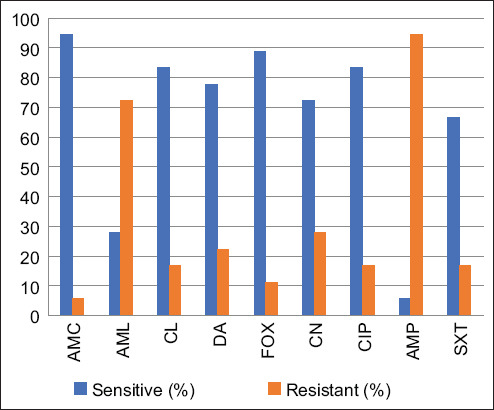
A total of 50 clinical practice veterinarians were enrolled in the study, comprising 36 women and 14 men from 31 veterinary clinics across Málaga province. A total of 32% of the nasal samples yielded , whereas 64% were found to contain . In total, 30% of the hand samples yielded and 30% yielded . The participants did not exhibit any strains of in their nasal samples or hands. Two strains (11.1%) of methicillin-resistant were isolated from 18 strains isolated from nostrils. Furthermore, a high prevalence of strains resistant to ampicillin (94.4%) and amoxicillin (72.2%) was observed.
The colonization profiles of veterinary professionals were similar to those observed in the general population. Further research is required among veterinary professionals, companion animals, and their owners to better understand the colonization processes and the pet-human interface within a "One Health" approach.
[具体细菌名称1]和[具体细菌名称2]是伴侣动物中常见的定植病原体。这些机会性病原体可在人类和宠物中引起频率和严重程度各异的感染。关于兽医中[具体细菌名称1]定植情况的研究较少。本研究旨在调查西班牙马拉加省健康临床执业兽医鼻腔和手部中[具体细菌名称1]、[具体细菌名称2]和[具体细菌名称3]的定植情况,特别关注其潜在的抗生素耐药性。
向马拉加官方兽医协会的专业人员发出自愿参与邀请。2024年1月,由两名经过培训的技术人员采集鼻腔和手部拭子,所有样本均在24小时内送达实验室。进行革兰氏染色、过氧化氢酶、氧化酶和凝固酶试验。评估分离出的细菌对11种抗生素的敏感性。
共有50名临床执业兽医参与了本研究,其中包括来自马拉加省31家兽医诊所的36名女性和14名男性。总共32%的鼻腔样本检出[具体细菌名称1],而64%的样本中发现含有[具体细菌名称2]。手部样本中,分别有30%检出[具体细菌名称1]和30%检出[具体细菌名称2]。参与者的鼻腔样本或手部均未检出[具体细菌名称3]菌株。从18株从鼻孔分离出的菌株中,分离出两株耐甲氧西林[具体细菌名称1](11.1%)。此外,观察到对氨苄西林(94.4%)和阿莫西林(72.2%)耐药的[具体细菌名称1]菌株的高流行率。
兽医专业人员的定植情况与普通人群中观察到的情况相似。需要在兽医专业人员、伴侣动物及其主人中进行进一步研究,以更好地理解“同一健康”方法中的定植过程和宠物 - 人类界面。