Murugesan Arul, Li Huanhuan, Shoaib Muhammad
School of Food and Biological Engineering, Jiangsu University, Zhenjiang 212013, China.
Foods. 2025 Jun 11;14(12):2060. doi: 10.3390/foods14122060.
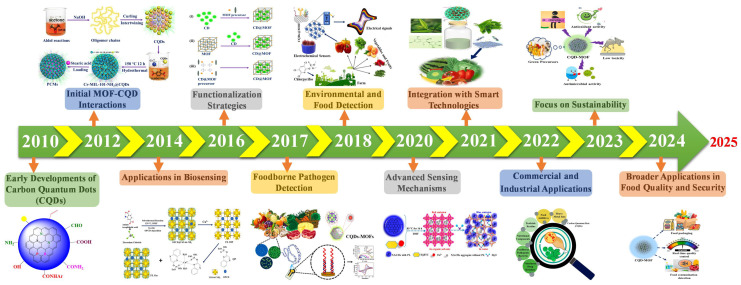
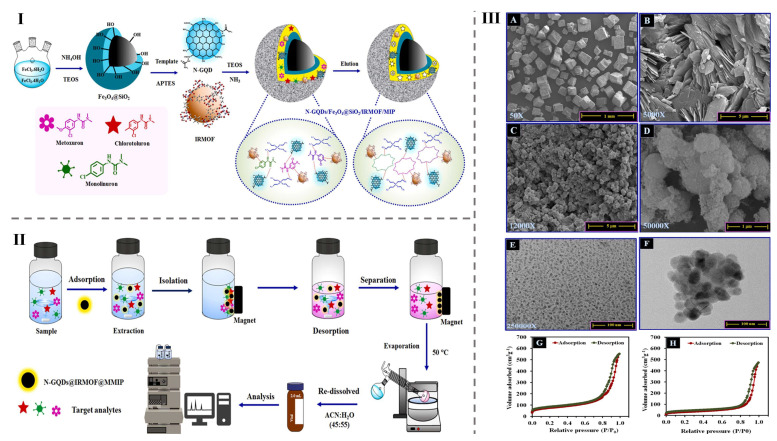
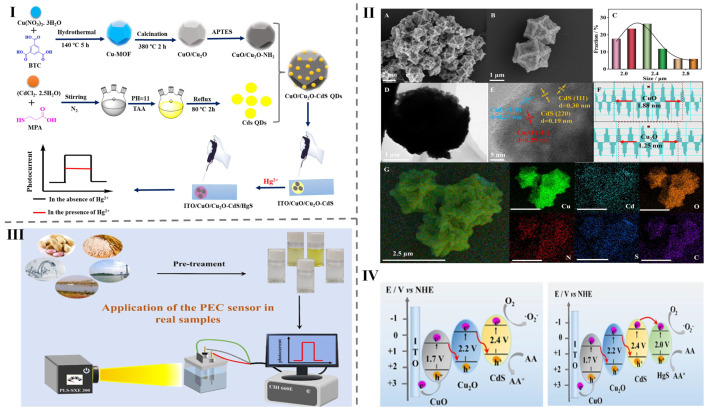
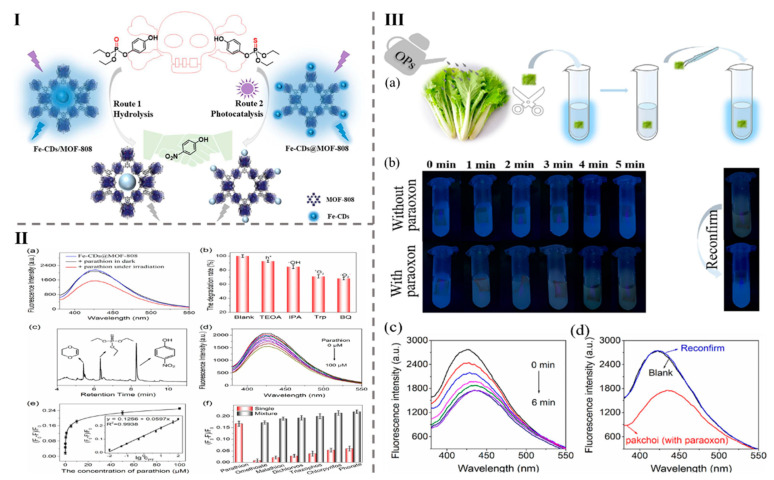
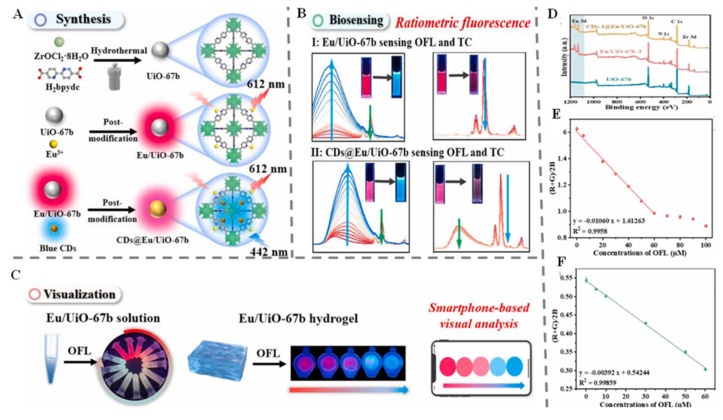
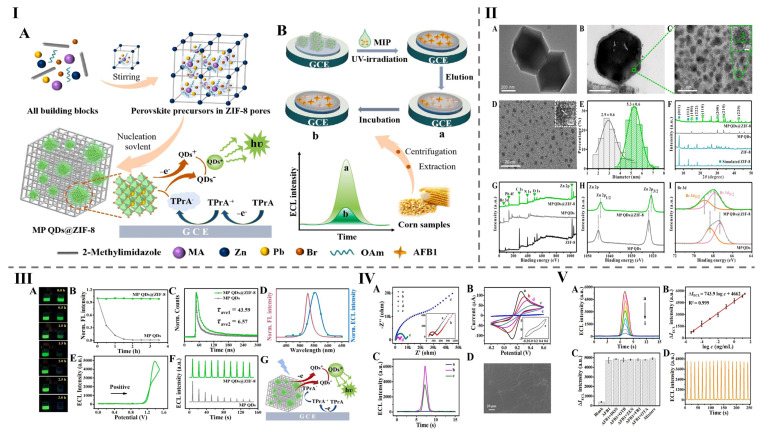
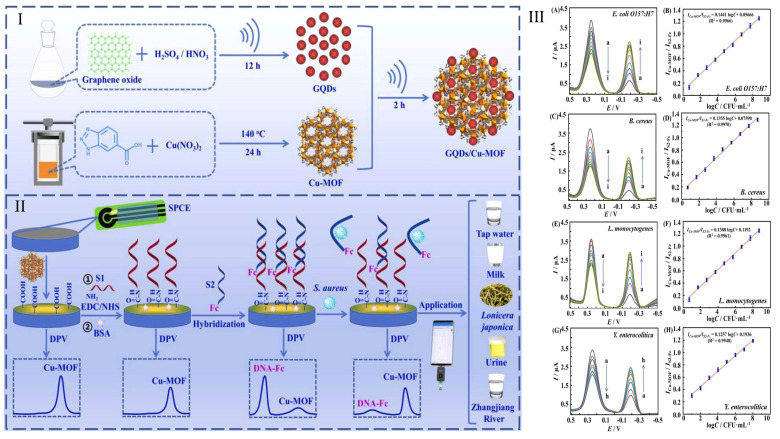
Carbon quantum dots (CQDs), with their excellent photoluminescence, tunable surface chemistry, and low toxicity, have emerged as versatile nanomaterials in sensing technologies. Meanwhile, metal-organic frameworks (MOFs) possess exceptionally porous architectures and extensive surface areas, and tunable functionalities ideal for molecular recognition and analyte enrichment. The synergistic integration of CQDs and MOFs has significantly expanded the potential of hybrid materials with enhanced selectivity, sensitivity, and multifunctionality. While several reviews have addressed QD/MOF systems broadly, this review offers a focused and updated perspective on CQDs@MOFs composites specifically tailored for food safety and environmental sensing applications. This review provides a comprehensive analysis of recent advances in the design, synthesis, and surface functionalization of these hybrids, emphasizing the mechanisms of interaction, photophysical behavior, and performance advantages over conventional sensors. Special attention is given to their use in detecting food contaminants such as heavy metals, pesticides, antibiotics, mycotoxins, pathogens, and aromatic compounds. Key strategies to enhance stability, selectivity, and detection limits are highlighted, and current challenges and future directions for practical deployment are critically discussed.
碳量子点(CQDs)凭借其出色的光致发光性能、可调节的表面化学性质和低毒性,已成为传感技术中用途广泛的纳米材料。同时,金属有机框架(MOFs)具有异常多孔的结构和巨大的表面积,以及适用于分子识别和分析物富集的可调节功能。CQDs与MOFs的协同整合显著扩展了具有更高选择性、灵敏度和多功能性的混合材料的潜力。虽然已有几篇综述广泛探讨了量子点/金属有机框架体系,但本综述专门针对为食品安全和环境传感应用量身定制的CQDs@MOFs复合材料提供了重点且更新的观点。本综述全面分析了这些复合材料在设计、合成和表面功能化方面的最新进展,强调了相互作用机制、光物理行为以及相对于传统传感器的性能优势。特别关注了它们在检测食品污染物(如重金属、农药、抗生素、霉菌毒素、病原体和芳香化合物)方面的应用。突出了提高稳定性、选择性和检测限的关键策略,并对实际应用中的当前挑战和未来方向进行了批判性讨论。