
用于电催化的单原子工程:基础与应用
Single Atom Engineering for Electrocatalysis: Fundamentals and Applications.
作者信息
Urso Mario, Ju Xiaohui, Nittoor-Veedu Radhika, Lee Hyesung, Zaoralová Dagmar, Otyepka Michal, Pumera Martin
机构信息
Dipartimento di Fisica e Astronomia "Ettore Majorana", Università di Catania, Via Santa Sofia 64, 95123 Catania, Italy.
CNR-IMM, Via Santa Sofia 64, 95123 Catania, Italy.
出版信息
ACS Catal. 2025 Jun 20;15(13):11617-11663. doi: 10.1021/acscatal.4c08027. eCollection 2025 Jul 4.
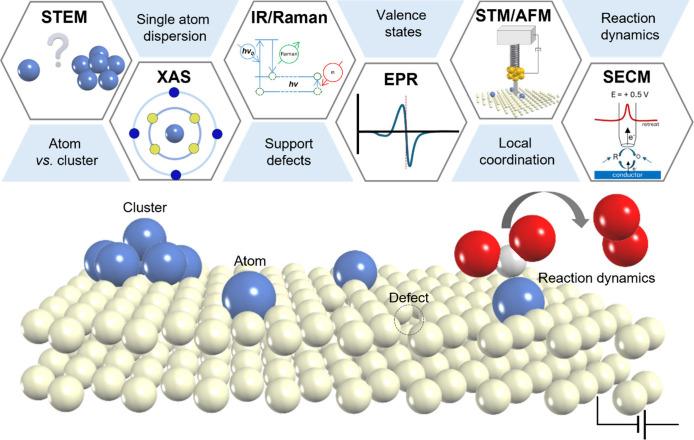
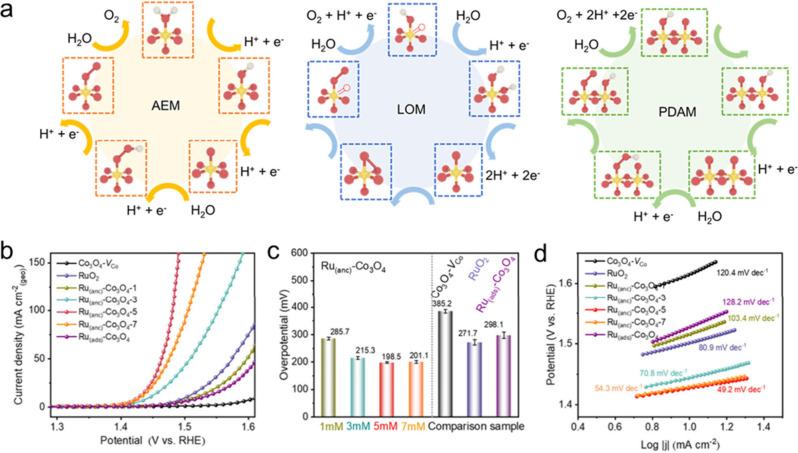
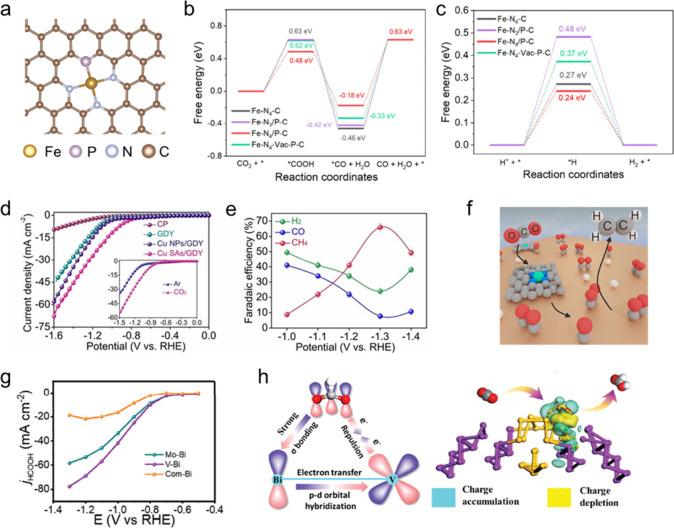
The global transition to sustainable energy production revolves around innovations in electrocatalysis, the cornerstone of energy conversion technologies. Over the years, catalysts have evolved from bulk materials to nanoparticles (NPs) and nanoclusters (NCs), culminating in single-atom catalysts (SACs), which represent the peak of catalyst engineering. SACs have revolutionized electrocatalytic processes by maximizing atom efficiency and offering tunable electronic properties, lowering the energy barrier associated with the absorption and desorption of key reaction intermediates, thus promoting specific reaction pathways. This review delves into the synthesis, characterization, and theoretical modeling of SACs, offering a comprehensive analysis of state-of-the-art methodologies. It highlights recent breakthroughs in diverse electrocatalytic reactions, including the hydrogen evolution reaction (HER) and oxygen evolution reaction (OER) in water splitting, the oxygen reduction reaction (ORR) for Zn-air batteries and fuel cells, the CO reduction reaction (CORR), and green ammonia synthesis. The discussion emphasizes the unique mechanisms that drive the exceptional performance of SACs, shedding light on their unparalleled activity, selectivity, and stability. By integrating experimental insights with computational advances, this work outlines a path for the rational design of next-generation SACs tailored to a broad spectrum of electrocatalytic applications. While summarizing the current landscape of electrocatalysis by SACs, it also outlines future directions to address the energy challenges of tomorrow, serving as a valuable resource for advancing the field.
全球向可持续能源生产的转型围绕着电催化创新展开,电催化是能量转换技术的基石。多年来,催化剂已从块状材料发展到纳米颗粒(NPs)和纳米团簇(NCs),最终发展为单原子催化剂(SACs),单原子催化剂代表了催化剂工程的巅峰。单原子催化剂通过最大化原子效率并提供可调节的电子特性,彻底改变了电催化过程,降低了与关键反应中间体吸附和解吸相关的能垒,从而促进了特定的反应途径。本综述深入探讨了单原子催化剂的合成、表征和理论建模,对当前最先进的方法进行了全面分析。它突出了在各种电催化反应中的最新突破,包括水分解中的析氢反应(HER)和析氧反应(OER)、锌空气电池和燃料电池的氧还原反应(ORR)、CO还原反应(CORR)以及绿色氨合成。讨论强调了驱动单原子催化剂卓越性能的独特机制,揭示了它们无与伦比的活性、选择性和稳定性。通过将实验见解与计算进展相结合,这项工作勾勒出了一条合理设计适用于广泛电催化应用的下一代单原子催化剂的路径。在总结单原子催化剂当前的电催化现状时,它还概述了应对未来能源挑战的未来方向,为推动该领域发展提供了宝贵资源。







 Zotero 插件