Hanayama Hiromi, Tada Jun, Terashi Hiroto
Department of Plastic and Aesthetic Surgery, Kobe Hokuto Hospital, Kobe, Japan.
Department of Plastic Surgery and Aesthetic Surgery, Kobe University Graduate School of Medicine, Kobe, Japan.
J Plast Reconstr Surg. 2024 Nov 8;4(2):75-80. doi: 10.53045/jprs.2023-0057. eCollection 2025 Apr 27.
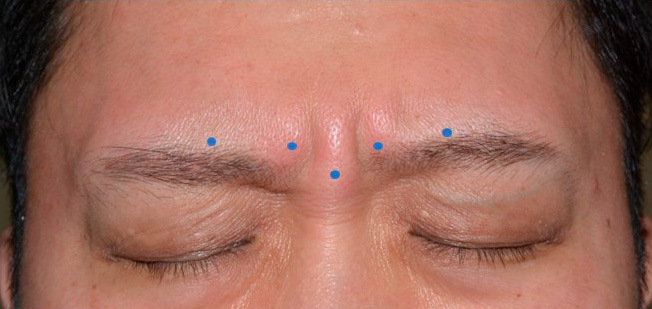
Facial wrinkle treatment using botulinum toxin A (BT-A) is an extremely popular aesthetic procedure. Many studies have been conducted on the improvement of the mental states of depressive patients whose glabellar lines were treated with BT-A. It could be caused by afferent effects derived from the proprioception of related facial muscles, which is known as facial feedback hypothesis. This study highlights the impact of BT-A injections into the glabellar region on the emotional states of participants who have specifically no mental disorders.
A total of 47 Asian participants (42 women and 5 men) without mental disorders completed the Japanese version of the Brief, Momentary Mood Checklist (BMC-J) before and 2 weeks after receiving the treatment for glabellar lines with BT- A injections.
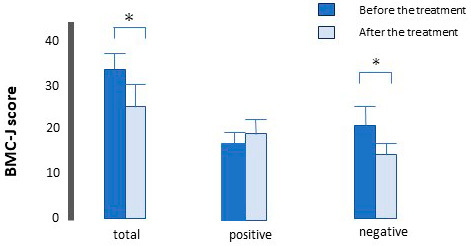
Based on BMC-J scores reported by the participants, their emotional states statistically improved after treatment ( = 0.008), particularly in the concurrent decrease in negative emotions ( = 0.003).
To our knowledge, this is the first study of the statistically significant effect of the BT-A treatment on the emotional state of subjects without mental disorders. The experiences of emotions derived from the motions of the frown muscles, which may be caused by the modulation of the amygdala activity, are not so complicated but extremely primitive, such as pleasure and unpleasure. This might be the reason why our results of BMC-J, which is used to measure basic emotions, indicated more clearly that negative emotions reduced compared with positive ones, in contrast to the finding of previous published reports that measured more complicated emotions such as feelings.
使用A型肉毒杆菌毒素(BT-A)治疗面部皱纹是一种极其流行的美容手术。许多研究已针对用BT-A治疗眉间纹的抑郁症患者的心理状态改善情况展开。这可能是由相关面部肌肉本体感觉产生的传入效应引起的,这被称为面部反馈假说。本研究着重探讨向眉间区域注射BT-A对特定无精神障碍参与者情绪状态的影响。
共有47名无精神障碍的亚洲参与者(42名女性和5名男性)在接受BT-A注射治疗眉间纹之前和之后2周完成了日文版的简短瞬时情绪检查表(BMC-J)。
根据参与者报告的BMC-J分数,他们的情绪状态在治疗后有统计学上的改善(P = 0.008),特别是负面情绪同时有所下降(P = 0.003)。
据我们所知,这是第一项关于BT-A治疗对无精神障碍受试者情绪状态具有统计学显著影响的研究。由皱眉肌运动产生的情绪体验,可能是由杏仁核活动的调节引起的,并不那么复杂但极其原始,比如愉悦和不愉悦。这可能就是为什么我们用于测量基本情绪的BMC-J结果更清楚地表明负面情绪比正面情绪减少,这与之前发表的测量更复杂情绪(如情感)的报告结果形成对比的原因。