Lee Su Jin, Kim Yeonji, Choi Sun A, Ahn Keun Seung, Lee Se Young, Zheng Xinghua, Kim Do Soon, Kim Wonjun, Shin Yongwoo, Kim So-Jeong, Choi Sua, Tark Dongseob, Moon Seong Cheol, Jheong Weonhwa, Sur Jung Hyang
Central Research and Development Institute, Komipharm International Co., Ltd., 17 Gyeongje-ro, Siheung-si, Gyeonggi-do 15094, Republic of Korea.
National Institute of Wildlife Disease Control and Prevention Wildlife Disease Response Team, Ministry of Environment, Songam-gil 1, Gwangsan-gu, Gwangju 62407, Republic of Korea.
Transbound Emerg Dis. 2025 Jul 13;2025:8007143. doi: 10.1155/tbed/8007143. eCollection 2025.
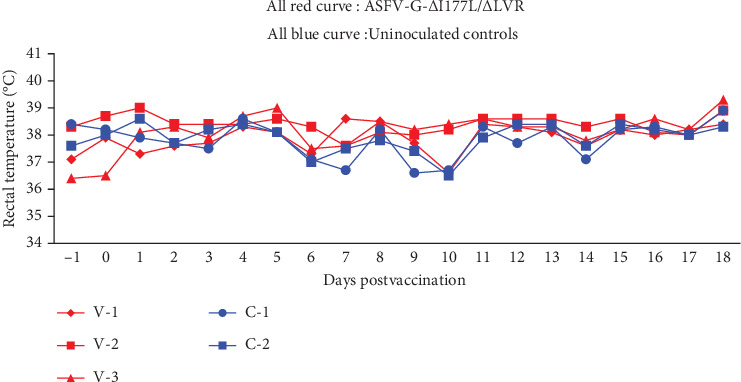
African swine fever (ASF) causes severe disease in domestic pigs and wild boars and often results in 100% mortality. The use of attenuated strains in ASF vaccine development, based on the most recently studied ASF virus (ASFV)-Georgia (ASFV-G) strain, has proven effective. In July 2023, Vietnam became the first country in the world to have two indigenously developed ASF vaccines approved for commercial sale locally. In this study, we evaluated the immunogenicity and safety of the live attenuated vaccine (LAV) ASFV-G-ΔI177L/ΔLVR derived from ASFV-G-ΔI177L in five pregnant sows and a control group. The ASFV-G-ΔI177L replicates efficiently in a stable swine cell line. Therefore, the pregnant sows were used to validate the vaccine. Fundamental assessments of clinical symptoms (vaccine safety), parturition performance, vertical transmission presence after birth, and maternal antibodies were conducted before and after colostrum intake following the vaccination with ASF-G-ΔI177L/ΔLVR. The vaccination had no adverse effects and induced a high level of antibody production. Normal delivery was also confirmed without miscarriages. Furthermore, ASF antibodies and the P72 gene were detected in the blood of most piglets that consumed colostrum from vaccinated sows, and transplacental transmission was confirmed in piglets following vaccination. While these results will influence vaccine development and play an important role in preventing lethal ASFV infections, they also highlight the potential of ASFV-G-ΔI177L/ΔLVR to protect even high-risk groups such as pregnant sows and emphasize the importance of continued vigilance and investigation of vaccine safety parameters such as viral shedding, genetic stability, and reproductive efficacy.
非洲猪瘟(ASF)会导致家猪和野猪患上严重疾病,常常造成100%的死亡率。基于最近研究的非洲猪瘟病毒(ASFV)-格鲁吉亚(ASFV-G)毒株开发减毒活疫苗用于ASF疫苗研发,已被证明是有效的。2023年7月,越南成为世界上第一个有两种本土研发的ASF疫苗获批在当地进行商业销售的国家。在本研究中,我们评估了源自ASFV-G-ΔI177L的减毒活疫苗(LAV)ASFV-G-ΔI177L/ΔLVR在五头怀孕母猪和一个对照组中的免疫原性和安全性。ASFV-G-ΔI177L能在一种稳定的猪细胞系中高效复制。因此,选用怀孕母猪来验证该疫苗。在用ASF-G-ΔI177L/ΔLVR疫苗接种后,在初乳摄入前后对临床症状(疫苗安全性)、分娩性能、出生后垂直传播情况以及母源抗体进行了基础评估。接种疫苗没有产生不良影响,并且诱导产生了高水平的抗体。还确认了正常分娩,没有流产情况。此外,在大多数食用了接种疫苗母猪初乳的仔猪血液中检测到了ASF抗体和P72基因,并且在接种疫苗后的仔猪中证实了经胎盘传播。虽然这些结果将影响疫苗研发,并在预防致命的ASFV感染中发挥重要作用,但它们也凸显了ASFV-G-ΔI177L/ΔLVR保护甚至是怀孕母猪等高风险群体的潜力,并强调了持续警惕以及调查病毒脱落、遗传稳定性和繁殖效力等疫苗安全参数的重要性。