Morales-Botello María-Luz, Betancort Moisés, Pérez-Chacón Manuela, Rodríguez-Jiménez Rosa-María, Chacón Antonio
Department of Computing and Technology, School of Architecture, Engineering, Science and Computing - STEAM, Universidad Europea de Madrid, Villaviciosa de Odón, Spain.
Department of Clinical Psychology, Psychobiology and Methodology, Universidad de La Laguna, La Laguna, Spain.
Front Psychol. 2025 Jul 8;16:1617089. doi: 10.3389/fpsyg.2025.1617089. eCollection 2025.
Sensory Processing Sensitivity (SPS) represents a personality trait characterised by heightened responsiveness to environmental stimuli, which can lead to both beneficial and adverse outcomes. Despite the exponential growth in knowledge about SPS in recent years, sociodemographic dimension related to this trait remains under-researched. The primary aim of this study was to analyse and provide deeper insights into the sociodemographic characteristics that may distinguish highly sensitive individuals. The present study was approached from the perspective of different sensitivity levels (low-SPS, medium-SPS and high-SPS).
To examine the sociodemographic expression of SPS, we pursued two main objectives. Firstly, by logistic regression analysis, we investigated the sociodemographic characteristics that predict high-SPS. Secondly, by analysis of variance and post hoc analysis, we investigated whether the relationship between SPS and sociodemographic variables depended on the SPS level. We conducted these analyses based on a large sample from the general population (9,447 participants were initially considered).
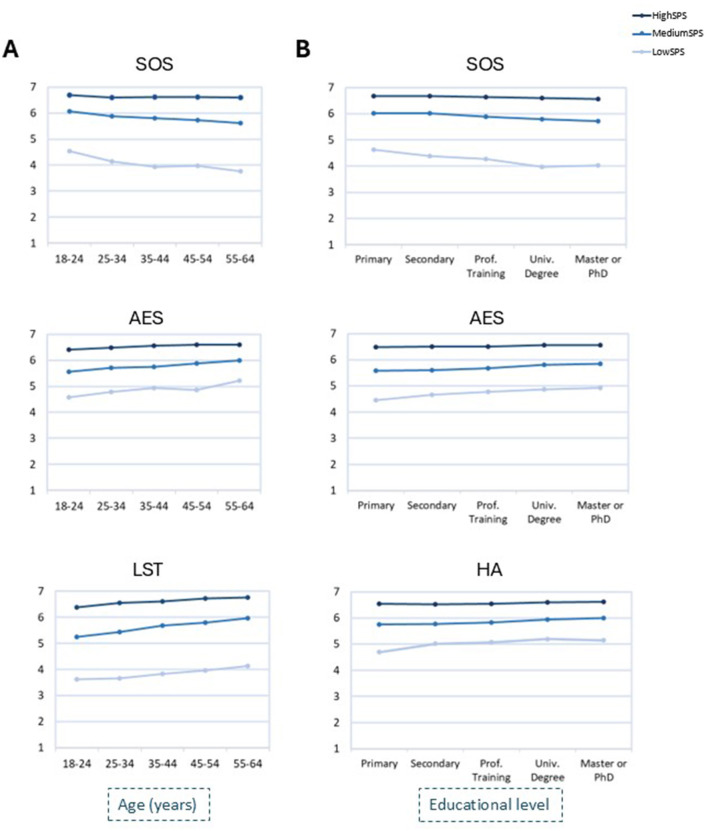
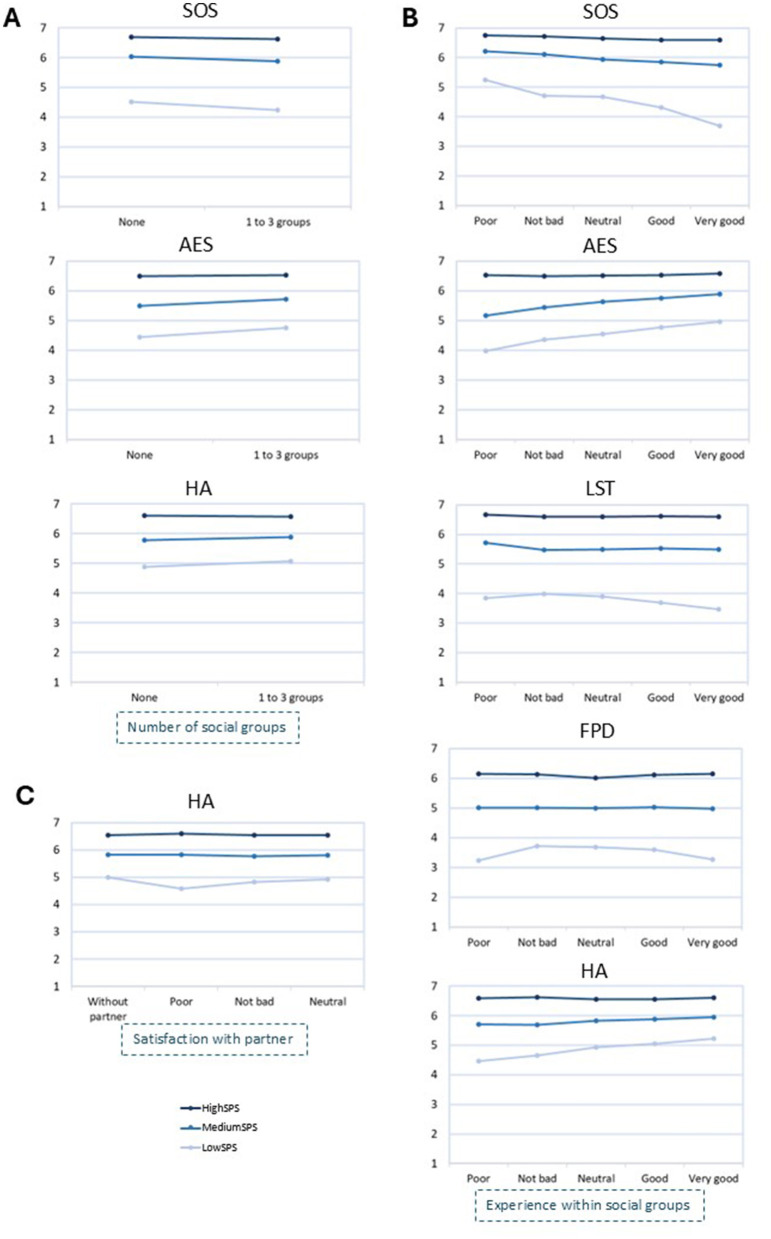
The logistic regression analysis identified significant predictors of high sensitivity, spanning demographic, social, and wellbeing-related variables. Specifically, gender, age, civil status, number of children and type of residence as demographic variables; number of social groups and satisfaction with partner as social variables; and practise of body awareness activities as a wellbeing variable significantly predicted high-SPS. Moreover, analysis of variance and post hoc analysis, evidenced that unlike low-SPS and medium-SPS, high-SPS (SPS trait) was relatively stable with respect to sociodemographic changes.
We discuss our findings within the context of SPS, personality traits, and their practical implications for clinical, educational, and occupational settings. We hope that this work will contribute to identifying those who may need greater support in developing their wellbeing.
感觉加工敏感性(SPS)是一种人格特质,其特征是对环境刺激反应增强,这可能导致有益和不利的结果。尽管近年来关于SPS的知识呈指数级增长,但与该特质相关的社会人口统计学维度仍未得到充分研究。本研究的主要目的是分析并更深入地了解可能区分高敏感个体的社会人口统计学特征。本研究从不同敏感性水平(低SPS、中SPS和高SPS)的角度进行探讨。
为了研究SPS的社会人口统计学表现,我们追求两个主要目标。首先,通过逻辑回归分析,我们研究了预测高SPS的社会人口统计学特征。其次,通过方差分析和事后分析,我们研究了SPS与社会人口统计学变量之间的关系是否取决于SPS水平。我们基于来自普通人群的大样本(最初考虑了9447名参与者)进行了这些分析。
逻辑回归分析确定了高敏感性的显著预测因素,涵盖人口统计学、社会和与幸福感相关的变量。具体而言,作为人口统计学变量的性别、年龄、婚姻状况、子女数量和居住类型;作为社会变量的社会群体数量和对伴侣的满意度;以及作为幸福感变量的身体意识活动实践显著预测了高SPS。此外,方差分析和事后分析表明,与低SPS和中SPS不同,高SPS(SPS特质)在社会人口统计学变化方面相对稳定。
我们在SPS、人格特质及其对临床、教育和职业环境的实际影响的背景下讨论我们的发现。我们希望这项工作将有助于识别那些在发展幸福感方面可能需要更多支持的人。