Lu Chaozheng, Xu Guangxin, Tian Yin, Yi Zhiwei, Tang Xixiang
Key Laboratory of Marine Genetic Resources, Third Institute of Oceanography, Ministry of Natural Resources, Xiamen 361005, China.
BioTech (Basel). 2025 Jun 23;14(3):51. doi: 10.3390/biotech14030051.
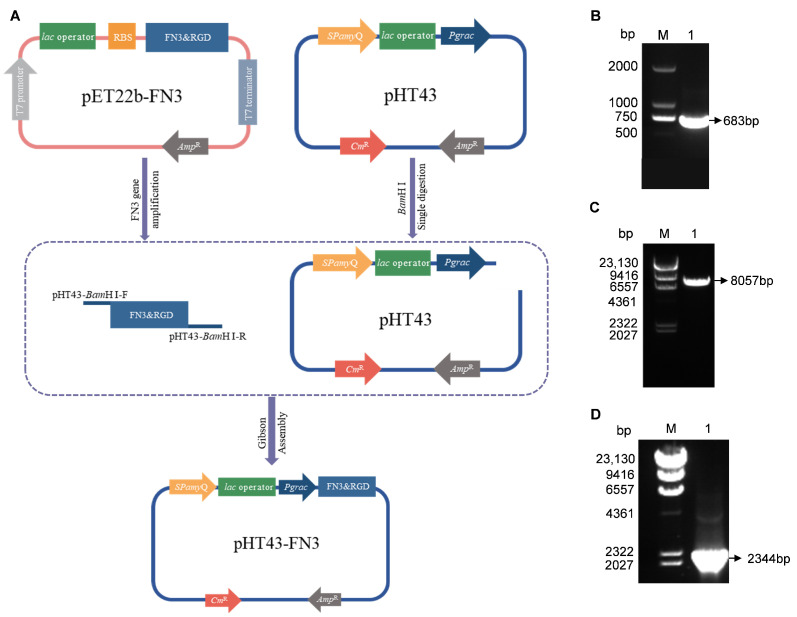
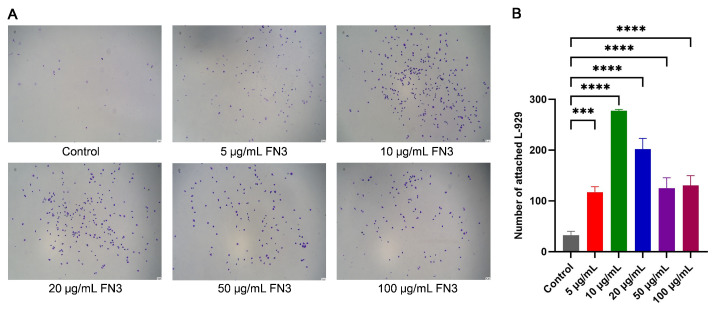
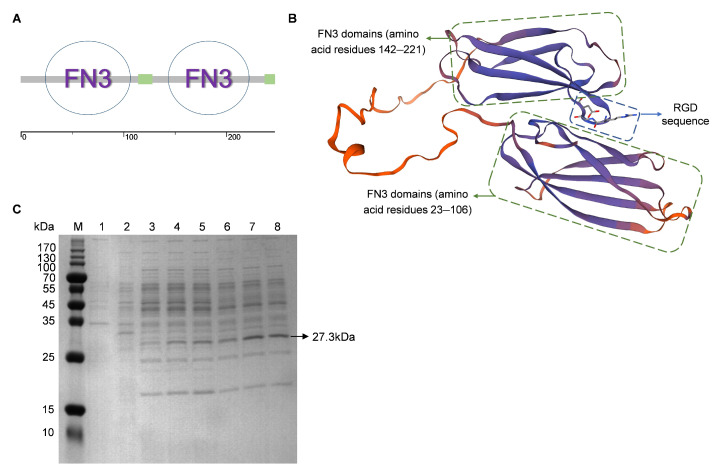
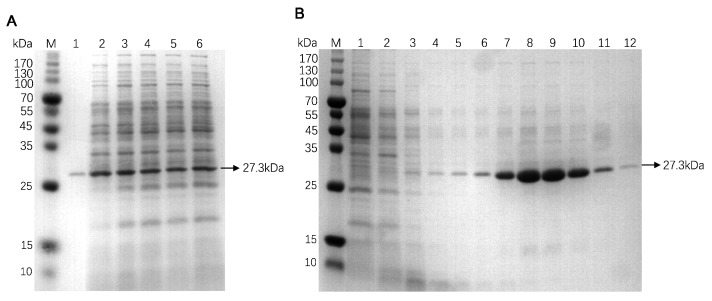
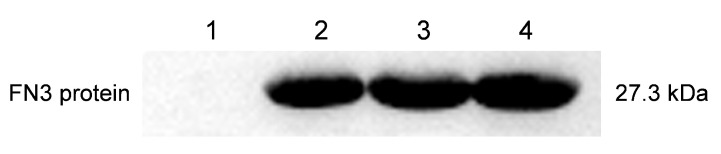
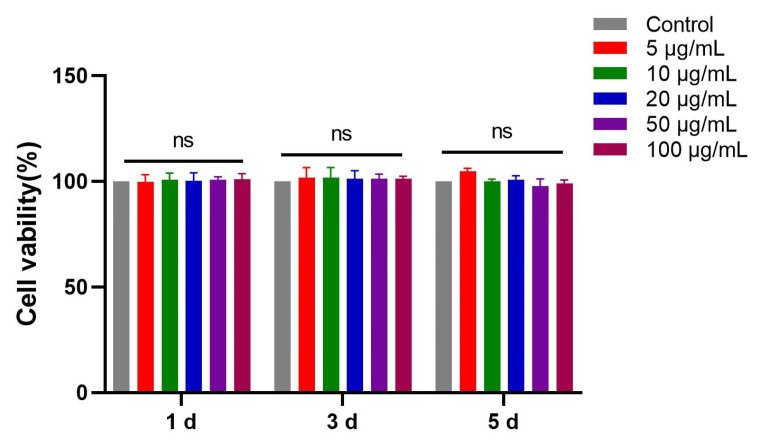
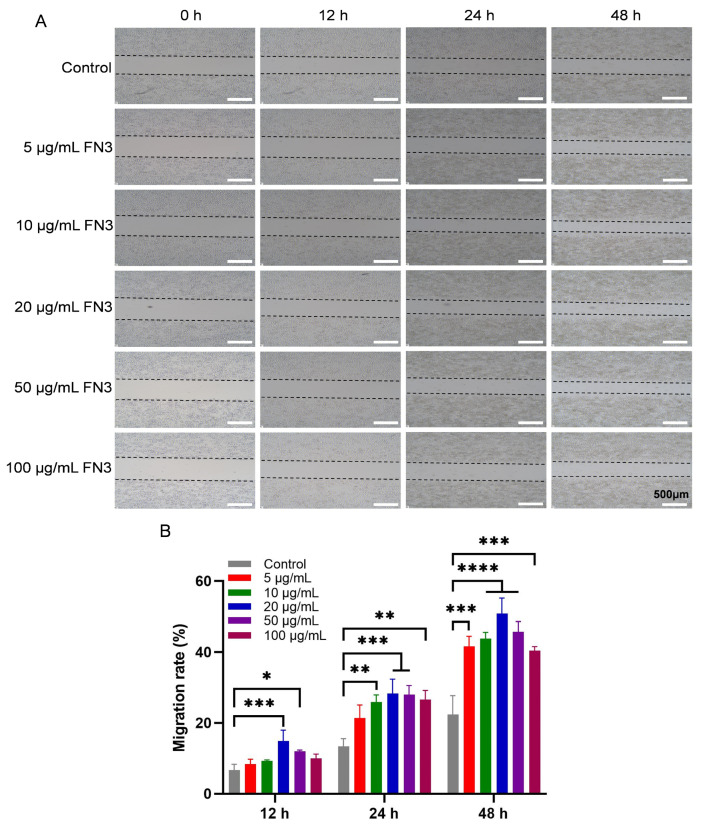
Fibronectin (FN), a primary component of the extracellular matrix (ECM), features multiple structural domains closely linked to various cellular behaviors, including migration, spreading, adhesion, and proliferation. The FN3 domain, which contains the RGD sequence, is critical in tissue repair because it enables interaction with integrin receptors on the cell surface. However, the large molecular weight of wild-type FN presents challenges for its large-scale production through heterologous expression. Therefore, this study focused on cloning the FN3 functional domain of full-length FN for expression and validation. This study selected as the expression host due to its prominent advantages, including efficient protein secretion, absence of endotoxins, and minimal codon bias. The recombinant vector pHT43-FN3 was successfully constructed through homologous recombination technology and transformed into WB800N. The FN3 protein was successfully expressed after induction with IPTG. Following purification of the recombinant FN protein using a His-tag nickel column, SDS-PAGE analysis showed that the molecular weight of FN3 was approximately 27.3 kDa. Western blot analysis confirmed the correct expression of FN3, and the BCA protein assay kit determined a protein yield of 5.4 mg/L. CCK8 testing demonstrated the good biocompatibility of FN3. In vitro cell experiments showed that FN3 significantly promoted cell migration at a 20 μg/mL concentration and enhanced cell adhesion at 10 μg/mL. In summary, this study successfully utilized to express the FN3 functional domain peptide from FN protein and has validated its ability to promote cell migration and adhesion. These findings not only provide a strategy for the expression of FN protein in , but also establish an experimental foundation for the potential application of FN3 protein in tissue repair fields such as cutaneous wound healing and cartilage regeneration.
纤连蛋白(FN)是细胞外基质(ECM)的主要成分,具有多个与多种细胞行为密切相关的结构域,包括迁移、铺展、黏附和增殖。包含RGD序列的FN3结构域在组织修复中至关重要,因为它能够与细胞表面的整合素受体相互作用。然而,野生型FN的大分子质量给通过异源表达进行大规模生产带来了挑战。因此,本研究聚焦于克隆全长FN的FN3功能结构域进行表达和验证。本研究选择[具体表达宿主]作为表达宿主,因其具有突出优势,包括高效的蛋白质分泌、无内毒素以及最小的密码子偏好性。通过同源重组技术成功构建了重组载体pHT43 - FN3,并将其转化到WB800N中。用IPTG诱导后成功表达了FN3蛋白。使用His标签镍柱纯化重组FN蛋白后,SDS - PAGE分析表明FN3的分子量约为27.3 kDa。Western blot分析证实了FN3的正确表达,BCA蛋白定量检测试剂盒测定蛋白质产量为5.4 mg/L。CCK8检测证明了FN3具有良好的生物相容性。体外细胞实验表明,FN3在浓度为20 μg/mL时显著促进细胞迁移,在10 μg/mL时增强细胞黏附。综上所述,本研究成功利用[具体表达宿主]表达了FN蛋白的FN3功能结构域肽,并验证了其促进细胞迁移和黏附的能力。这些发现不仅为在[具体表达宿主]中表达FN蛋白提供了一种策略,也为FN3蛋白在皮肤伤口愈合和软骨再生等组织修复领域的潜在应用奠定了实验基础。