Chen Xu, Huang Yuan, Jessney Benn, Sangha Jason, Gu Sophie, Schönlieb Carola-Bibiane, Bennett Martin, Roberts Michael
Department of Medicine, University of Cambridge, Puddicombe Way, Cambridge CB2 0AW, UK.
Department of Applied Mathematics and Theoretical Physics, University of Cambridge, Cambridge, UK.
Eur Heart J Digit Health. 2025 May 15;6(4):529-539. doi: 10.1093/ehjdh/ztaf053. eCollection 2025 Jul.
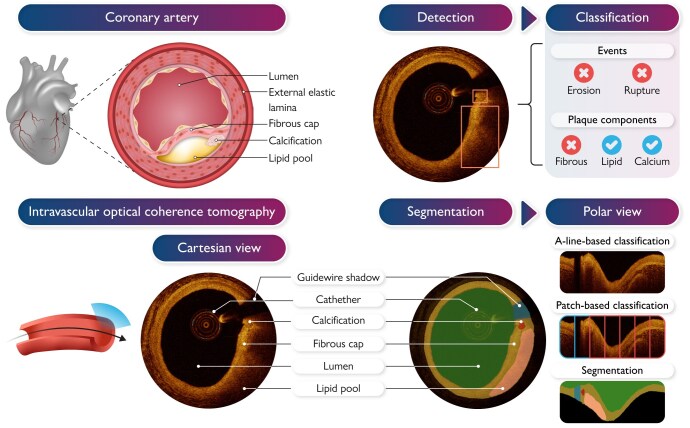
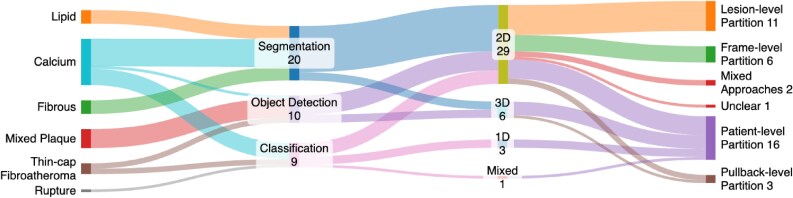
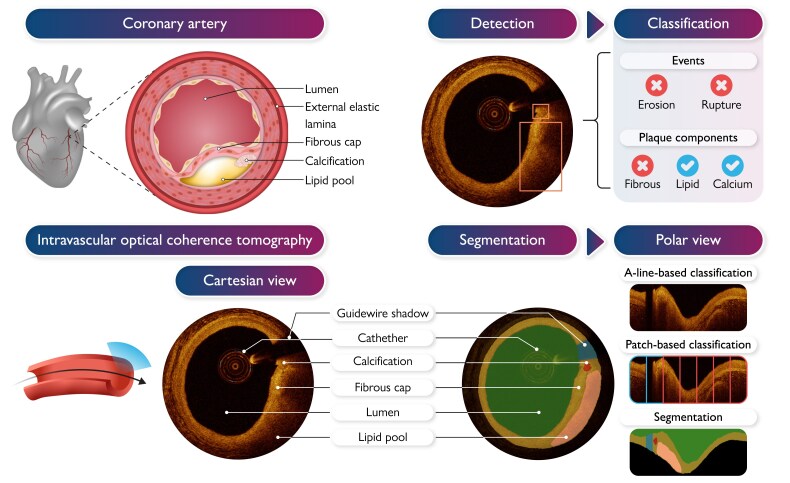
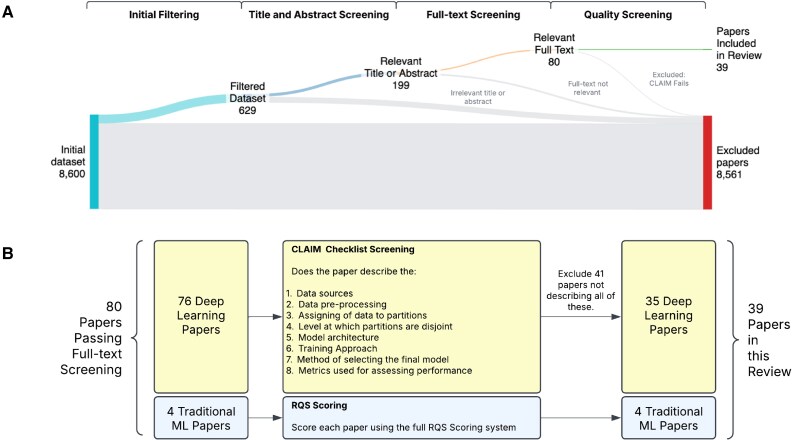
Artificial intelligence (AI) tools hold great promise for the rapid and accurate diagnosis of coronary artery disease (CAD) from intravascular optical coherent tomography (IVOCT) images. Numerous papers have been published describing AI-based models for different diagnostic tasks, yet it remains unclear, which models have potential clinical utility and have been properly validated. This systematic review considered published literature between January 2015 and December 2024 describing AI-based diagnosis of CAD using IVOCT. Our search identified 8600 studies, with 629 included after initial screening and 39 studies included in the final systematic review after quality screening. Our findings indicate that most of the identified models are not currently suitable for clinical use, primarily due to methodological flaws and underlying biases. To address these issues, we provide recommendations to improve model quality and research practices to enhance the development of clinically useful AI products.
人工智能(AI)工具在通过血管内光学相干断层扫描(IVOCT)图像快速准确诊断冠状动脉疾病(CAD)方面具有巨大潜力。已经发表了许多论文,描述了用于不同诊断任务的基于AI的模型,但尚不清楚哪些模型具有潜在的临床实用性并已得到适当验证。本系统评价考虑了2015年1月至2024年12月期间发表的描述使用IVOCT进行基于AI的CAD诊断的文献。我们的检索共识别出8600项研究,初步筛选后纳入629项,经过质量筛选后最终有39项研究纳入系统评价。我们的研究结果表明,大多数已识别的模型目前不适合临床使用,主要原因是方法学缺陷和潜在偏差。为解决这些问题,我们提供了一些建议,以提高模型质量和研究实践,从而促进具有临床实用性的AI产品的开发。