Sheng Matilda H-C, Baylink David J, Rundle Charles H, Lau Kin-Hing William
VA Loma Linda Healthcare System, Jerry L. Pettis Memorial VA Medical Center, Loma Linda, CA 92357, USA.
Departments of Medicine and Biochemistry, Loma Linda University School of Medicine, Loma Linda, CA 92354, USA.
Cells. 2025 Jul 11;14(14):1067. doi: 10.3390/cells14141067.
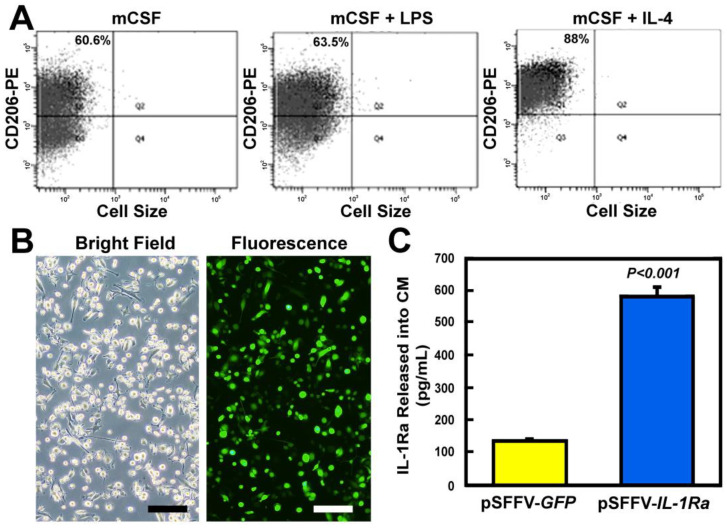
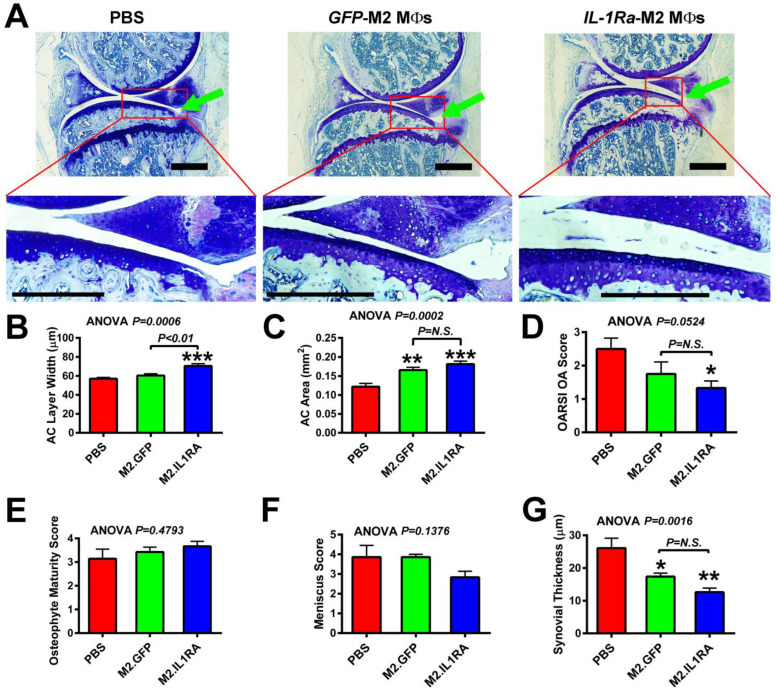
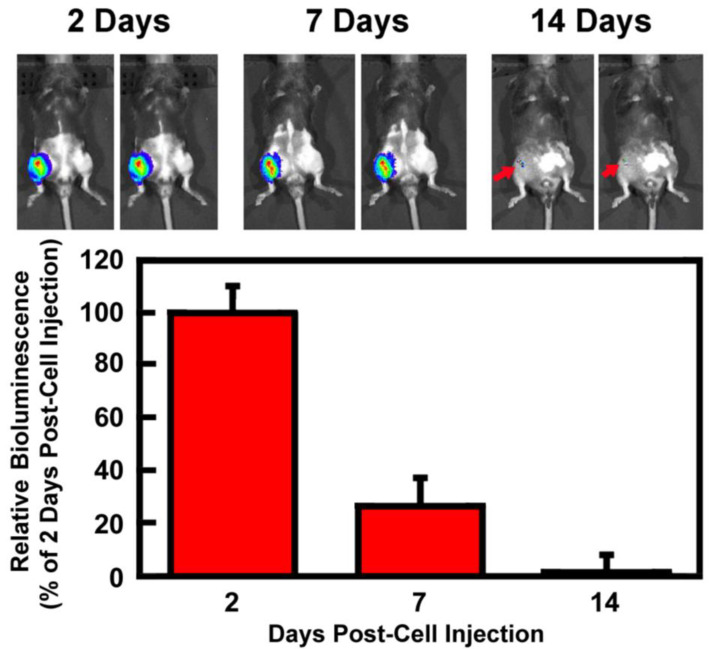
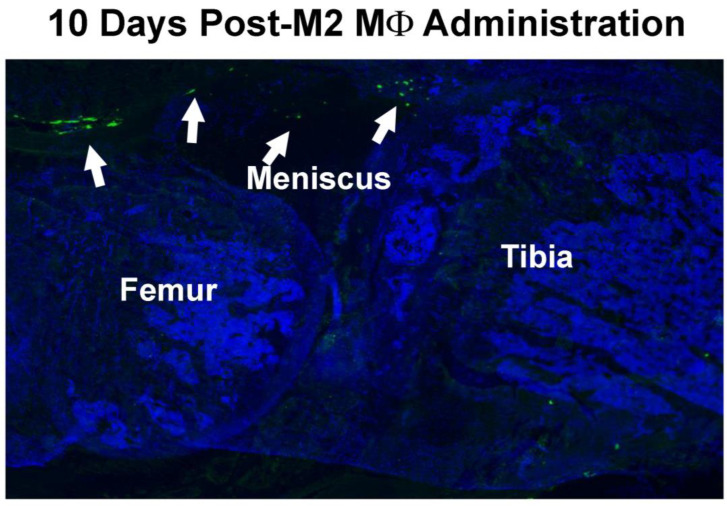
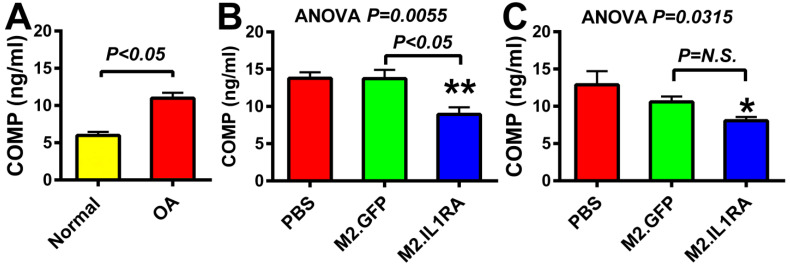
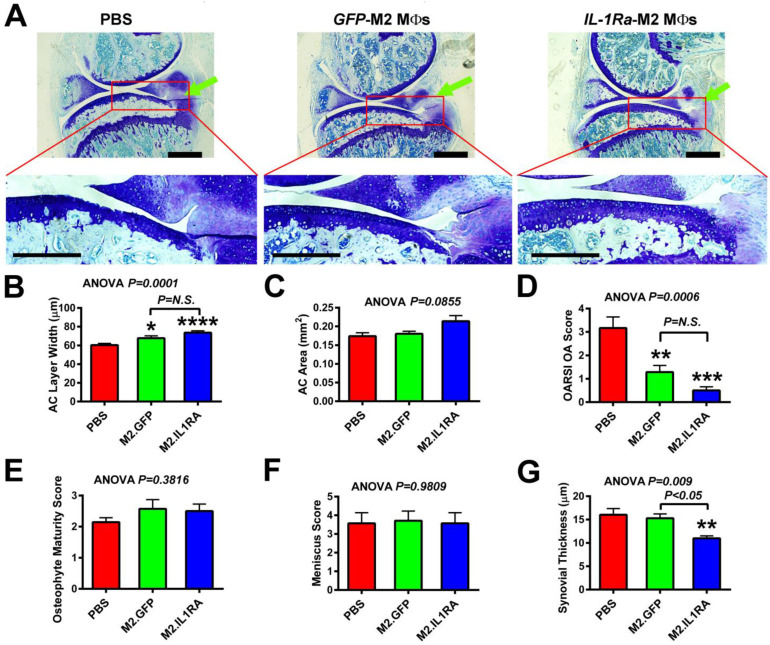
Current osteoarthritis (OA) therapies fail to yield long-term clinical benefits, due in part to the lack of a mechanism for the targeted and confined delivery of therapeutics to OA joints. This study evaluates if M2 macrophages are effective cell vehicles for the targeted and confined delivery of therapeutic genes to OA joints. CT bioluminescence in vivo cell tracing and fluorescent microscopy reveal that intraarticularly injected M2 macrophages were recruited to and retained at inflamed synovia. The feasibility of an M2 macrophage-based adoptive gene transfer strategy for OA was assessed using IL-1Ra as the therapeutic gene in a mouse tibial plateau injury model. Mouse M2 macrophages were transduced with lentiviral vectors expressing IL-1Ra or GFP. The transduced macrophages were intraarticularly injected into injured joints at 7 days post-injury and OA progression was monitored with plasma COMP and histology at 4 weeks. The IL-1Ra-expressing M2 macrophage treatment reduced plasma COMP, increased the area and width of the articular cartilage layer, decreased synovium thickness, and reduced the OARSI OA score without affecting the osteophyte maturity and meniscus scores when compared to the GFP-expressing M2 macrophage-treated or PBS-treated controls. When the treatment was given at 5 weeks post-injury, at which time OA should have developed, the IL-1Ra-M2 macrophage treatment also reduced plasma COMP, had a greater articular cartilage area and width, decreased synovial thickness, and reduced the OARSI OA score without an effect on the meniscus and osteophyte maturity scores at 8 weeks post-injury. In conclusion, the IL-1Ra-M2 macrophage treatment, given before or after OA was developed, delayed OA progression, indicating that the M2 macrophage-based adoptive gene transfer strategy for OA is tenable.
目前的骨关节炎(OA)治疗方法未能产生长期的临床益处,部分原因是缺乏将治疗药物靶向且局限地递送至OA关节的机制。本研究评估M2巨噬细胞是否是将治疗基因靶向且局限地递送至OA关节的有效细胞载体。CT生物发光体内细胞追踪和荧光显微镜检查显示,关节内注射的M2巨噬细胞被募集到炎症滑膜并在其中保留。在小鼠胫骨平台损伤模型中,以IL-1Ra作为治疗基因,评估基于M2巨噬细胞的过继性基因转移策略对OA的可行性。用表达IL-1Ra或GFP的慢病毒载体转导小鼠M2巨噬细胞。在损伤后7天将转导的巨噬细胞关节内注射到受伤关节中,并在4周时用血浆软骨寡聚基质蛋白(COMP)和组织学监测OA进展。与表达GFP的M2巨噬细胞处理组或PBS处理的对照组相比,表达IL-1Ra的M2巨噬细胞治疗降低了血浆COMP,增加了关节软骨层的面积和宽度,减小了滑膜厚度,并降低了骨关节炎研究学会(OARSI)OA评分,而不影响骨赘成熟度和半月板评分。当在损伤后5周给予治疗时,此时OA应该已经发展,IL-1Ra-M2巨噬细胞治疗也降低了血浆COMP,具有更大的关节软骨面积和宽度,减小了滑膜厚度,并在损伤后8周降低了OARSI OA评分,而对半月板和骨赘成熟度评分没有影响。总之,在OA发生之前或之后给予IL-1Ra-M2巨噬细胞治疗,均可延缓OA进展,表明基于M2巨噬细胞的过继性基因转移策略对OA是可行的。