Ntoumas Ilias, Karatzaferi Christina, Boubougiatzi Fotini, Manakou Nefeli, Aslanidi Artemis, Giannaki Christoforos D, Papanikolaou Fotini, Dardiotis Efthimios, Lavdas Eleftherios, Sakkas Giorgos K
Department of Physical Education and Sport Science, School of Physical Education, Sports and Dietetics, University of Thessaly, 42100, Karies, Trikala, Greece.
Department of Life Sciences, School of Life and Health Sciences, University of Nicosia, 2417, Nicosia, Cyprus.
BMC Complement Med Ther. 2025 Jul 28;25(1):290. doi: 10.1186/s12906-025-05022-6.
Daytime napping is used as a strategy to complement insufficient night-time sleep and improve daytime mental and physical performance. Massage can play a crucial role in promoting relaxation and wellness at various settings including the work place. The purpose of the present study was to investigate the effect of two different types of manual massage sessions on day-time napping in poor sleepers.
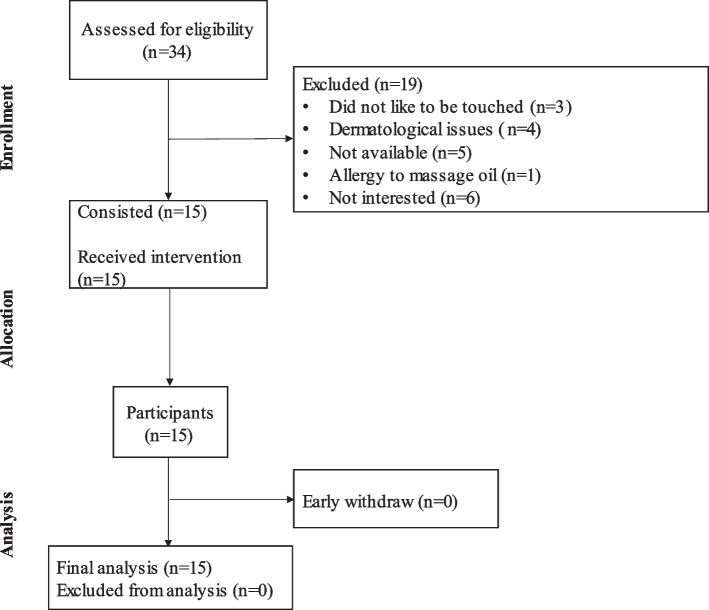
This was a randomized, single blind, placebo-controlled, three arm, interventional clinical trial. Fifteen participants (aged 21.6 ± 1.3 years) participated in three different conditions over one week apart: 1) 30-min Sports massage condition (ACT), 2) 30-min Relaxation massage condition (REL) and 3) control condition with no massage. Brain activity was monitored using a polysomnography EEG system, while vitals and relaxation/stress state were assessed by validated questionnaires and functional tests. The Pittsburgh Sleep Quality Index Score > 5 was used as cut off for distinguishing poor sleeper.
Results showed significant differences between the three conditions, with muscle tone to be reduced by 7.2% after ACT session (p = 0.000) and relaxation scores to be increased by 23.4% after REL session (p = 0.008). In addition, Sleep Latency N1 was improved only after the REL session compared to other two conditions (p = 0.037).
In conclusion, massage can positively impact the quality and quantity of daytime napping and may serve as a complementary intervention to enhance mental well-being, reduce work related stress, improve performance and promote overall a healthier living.
Retrospectively registered (registration date: 16/01/2025; trial registration number at ClinicalTrials.gov: NCT06780072).
白天小睡被用作一种补充夜间睡眠不足并改善白天身心表现的策略。按摩在包括工作场所在内的各种环境中促进放松和健康方面可以发挥关键作用。本研究的目的是调查两种不同类型的手法按摩对睡眠不佳者白天小睡的影响。
这是一项随机、单盲、安慰剂对照、三臂干预性临床试验。15名参与者(年龄21.6±1.3岁)在相隔一周的时间内参与三种不同的情况:1)30分钟的运动按摩情况(ACT),2)30分钟的放松按摩情况(REL),3)无按摩的对照情况。使用多导睡眠脑电图系统监测大脑活动,同时通过经过验证的问卷和功能测试评估生命体征以及放松/压力状态。匹兹堡睡眠质量指数得分>5被用作区分睡眠不佳者的临界值。
结果显示三种情况之间存在显著差异,ACT疗程后肌张力降低7.2%(p=0.000),REL疗程后放松得分提高23.4%(p=0.008)。此外,与其他两种情况相比,仅在REL疗程后睡眠潜伏期N1得到改善(p=0.037)。
总之,按摩可以对白天小睡的质量和时长产生积极影响,并可作为一种辅助干预措施来增强心理健康、减轻工作相关压力、提高表现并促进整体更健康的生活。
回顾性注册(注册日期:2025年1月16日;ClinicalTrials.gov上的试验注册号:NCT06780072)。