Dirir Amina M, Chokshi Kaumeel, Ali Abdelmoneim H, Alhanawi Media, Rommala Mohan, Hachem Mayssa
Department of Chemistry, College of Engineering and Physical Sciences, Khalifa University of Sciences and Technology, Abu Dhabi, United Arab Emirates.
Food Security and Technology Center, Khalifa University of Sciences and Technology, Abu Dhabi, United Arab Emirates.
Front Bioeng Biotechnol. 2025 Jul 22;13:1631063. doi: 10.3389/fbioe.2025.1631063. eCollection 2025.
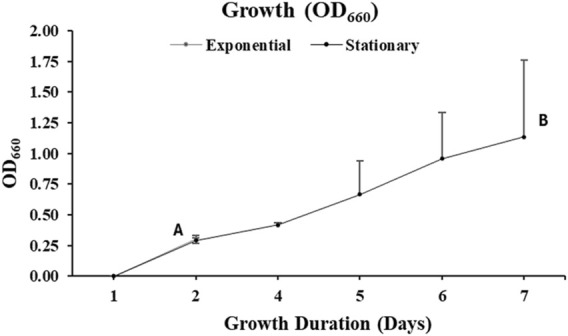
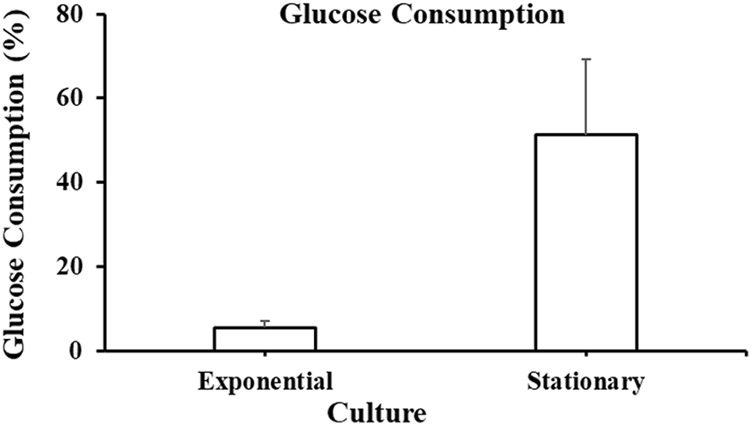
is a promising microbial source of polyunsaturated fatty acids (PUFAs), particularly Docosahexaenoic Acid (DHA, C22:6n-3). In this study, we first optimized the culture conditions of ATCC MYA-1381 (strain SR21). Cell growth was monitored optical density, cell counts, and glucose concentration. Cells were harvested at exponential and stationary phases, and lipids were extracted using a green method. Fatty Acid Methyl Esters (FAMEs) were prepared and analyzed using Gas Chromatography-Flame Ionisation Detection (GC-FID). At the exponential phase, DHA was the most abundant (65.6% of total fatty acids) followed by palmitic acid (C16:0) at 34.4%. At the stationary phase, Docosapentaenoic acid (DPA, C22:5n-3) and DHA were the most abundant at 45.4% and 33.9%, before respectively. Myristic acid (C14:0), myristoleic acid (C14:1n-9), palmitic acid (C16:0) were present at 4.6%, 6.2% and 9.9%, respectively. Compound-specific isotope analysis (CSIA) using Gas Chromatography-Combustion-Isotope Ratio Mass Spectrometry (GC-C-IRMS) revealed that all FAMEs had negative δC values, indicating depletion in C. At the exponential phase, δC (‰) of C16:0 and DHA were -16.8 ± 0.2 and -18.5‰ ± 0.1‰, respectively. At the stationary phase, δC (‰) of C14:0, C14:1n-9, C16:0, C22:5n-3 and DHA were -10.6 ± 1.1, -11.3 ± 0.1, -11.1 ± 0.2, -8.3 ± 0.2 and -10.6‰ ± 0.1‰, respectively. Overall, our findings emphasized the importance of as a viable microbial platform for environmentally friendly production of PUFA such as DHA. Also, the study reinforced the utility of CSIA in tracking PUFA metabolic fate, which has latent applications in biomedical research, particularly in neurodegenerative disease frameworks where DHA plays a vital role. Finally, these results may also contribute to understanding isotopic fractionation patterns and metabolic flux variations across different microalgal growth phases.
是多不饱和脂肪酸(PUFAs),特别是二十二碳六烯酸(DHA,C22:6n-3)的一个有前景的微生物来源。在本研究中,我们首先优化了ATCC MYA-1381(菌株SR21)的培养条件。通过光密度、细胞计数和葡萄糖浓度监测细胞生长。在指数期和稳定期收获细胞,并采用绿色方法提取脂质。制备脂肪酸甲酯(FAMEs)并使用气相色谱 - 火焰离子化检测(GC-FID)进行分析。在指数期,DHA最为丰富(占总脂肪酸的65.6%),其次是棕榈酸(C16:0),占34.4%。在稳定期,二十二碳五烯酸(DPA,C22:5n-3)和DHA最为丰富,分别为45.4%和33.9%。肉豆蔻酸(C14:0)、肉豆蔻油酸(C14:1n-9)、棕榈酸(C16:0)分别占4.6%、6.2%和9.9%。使用气相色谱 - 燃烧 - 同位素比率质谱法(GC-C-IRMS)进行的化合物特异性同位素分析(CSIA)表明,所有FAMEs的δC值均为负,表明碳的贫化。在指数期,C16:0和DHA的δC(‰)分别为-16.8±0.2和-18.5‰±0.1‰。在稳定期,C14:0、C14:1n-9、C16:0、C22:5n-3和DHA的δC(‰)分别为-10.6±1.1、-11.3±0.1、-11.1±0.2、-8.3±0.2和-10.6‰±0.1‰。总体而言,我们的研究结果强调了作为环境友好型生产DHA等PUFA的可行微生物平台的重要性。此外,该研究加强了CSIA在追踪PUFA代谢命运方面的效用,其在生物医学研究中具有潜在应用,特别是在DHA起重要作用的神经退行性疾病框架中。最后,这些结果也可能有助于理解不同微藻生长阶段的同位素分馏模式和代谢通量变化。