Peng Xinhua, Zhu Rongrong, Zhang Ke, Ji Jianghong, Lv Chuanguo, Feng Feng
Medical School of Nantong University, Nantong, China.
Imaging Department, Qidong People's Hospital, Qidong Liver Cancer Institute, Affiliated Qidong Hospital of Nantong University, Qidong, China.
Front Neurol. 2025 Jul 23;16:1624101. doi: 10.3389/fneur.2025.1624101. eCollection 2025.
Malignant cerebral edema (MCE) is a life-threatening complication of acute brain injuries, with mortality rates exceeding 80% in the absence of treatment. Despite advancements in osmotic therapies and decompressive craniectomy (DC), MCE continues to pose substantial clinical challenges. This study systematically maps the evolution of MCE research (2005-2024) to identify key trends, research gaps, and future priorities.
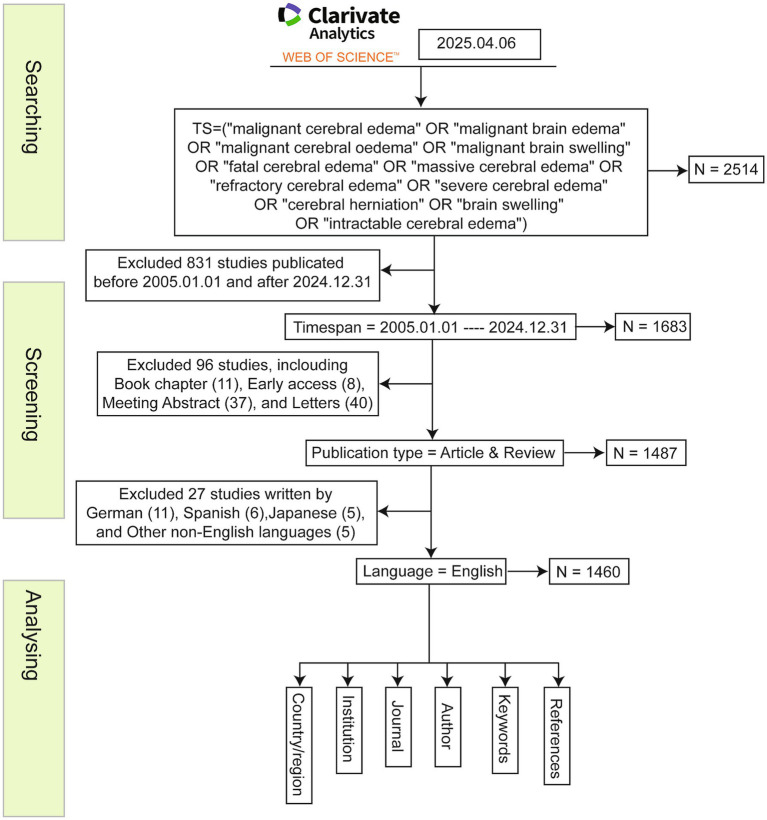
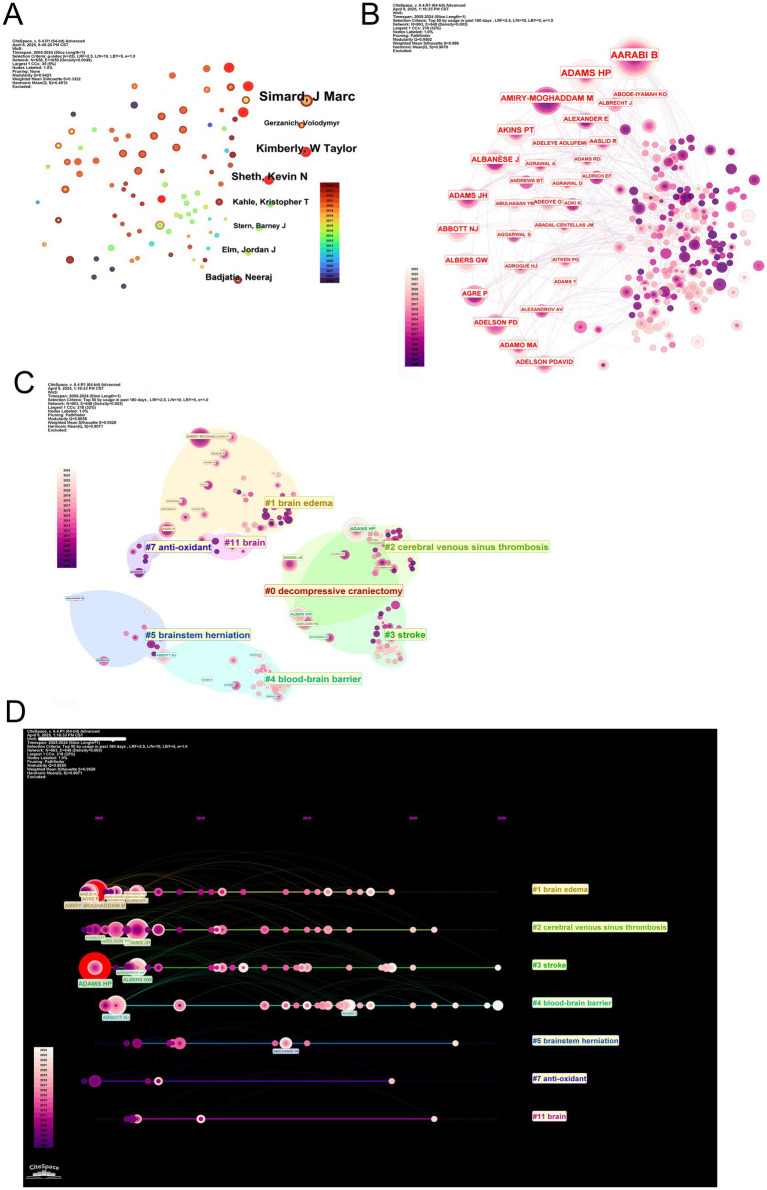
A bibliometric analysis of 1,460 peer-reviewed articles from the Web of Science Core Collection was conducted using CiteSpace, VOSviewer, and Bibliometrix. Key metrics included publication trends, geographic and institutional contributions, keyword co-occurrence, citation networks, and co-authorship patterns.
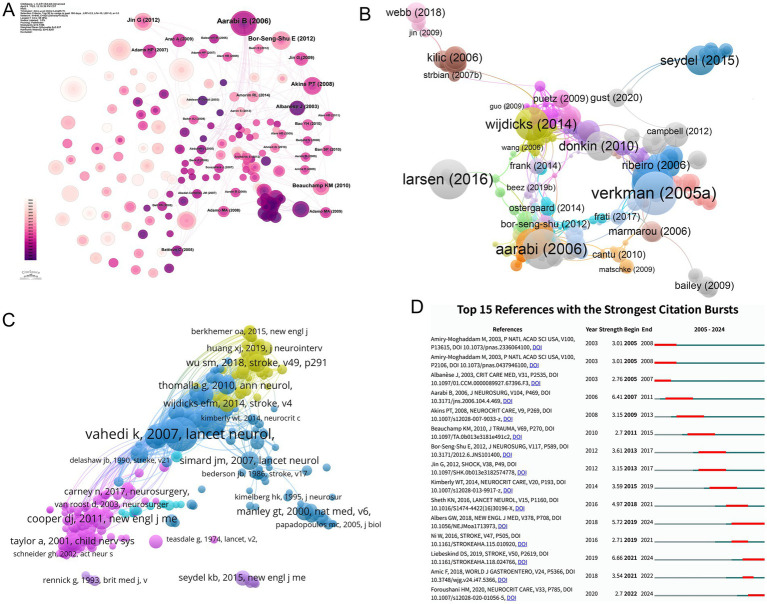
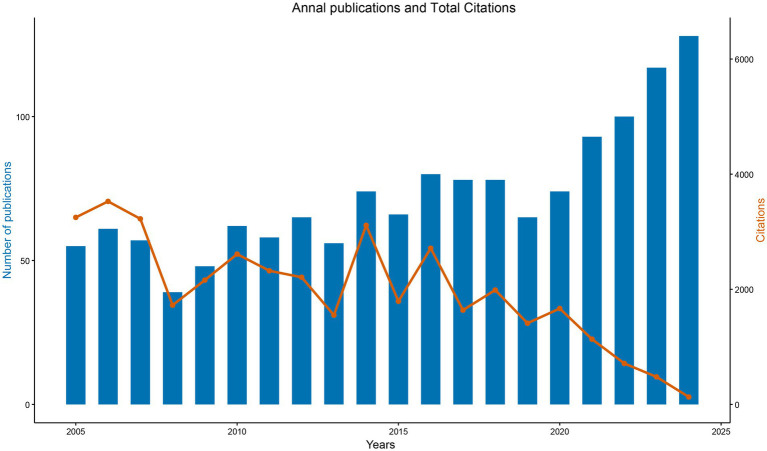
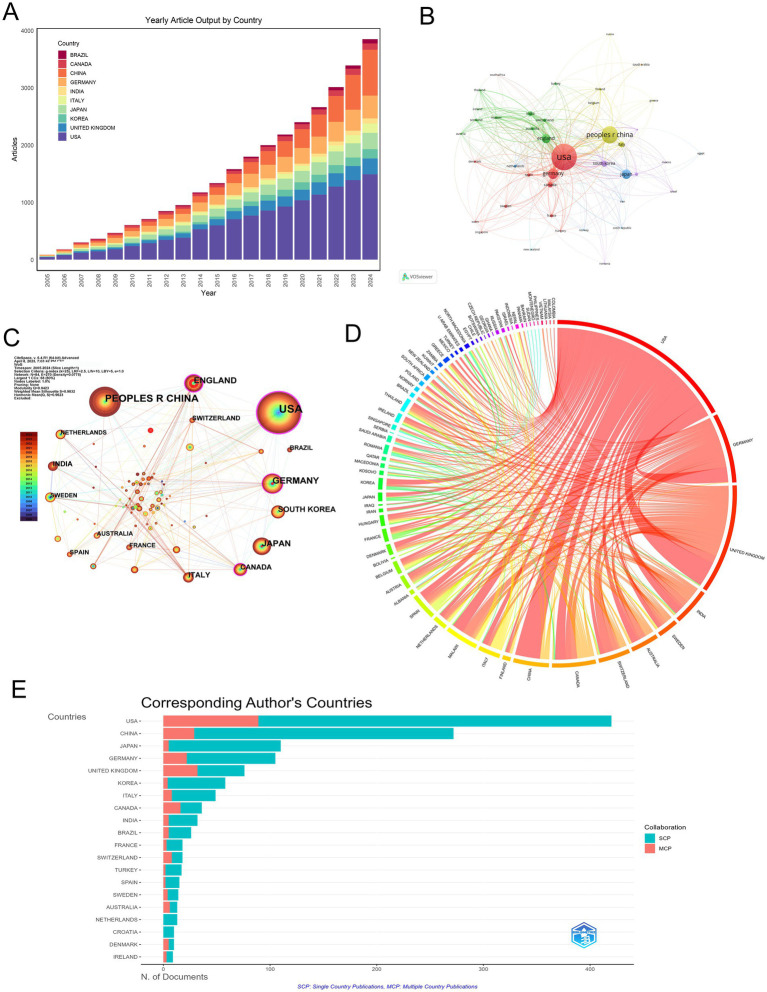
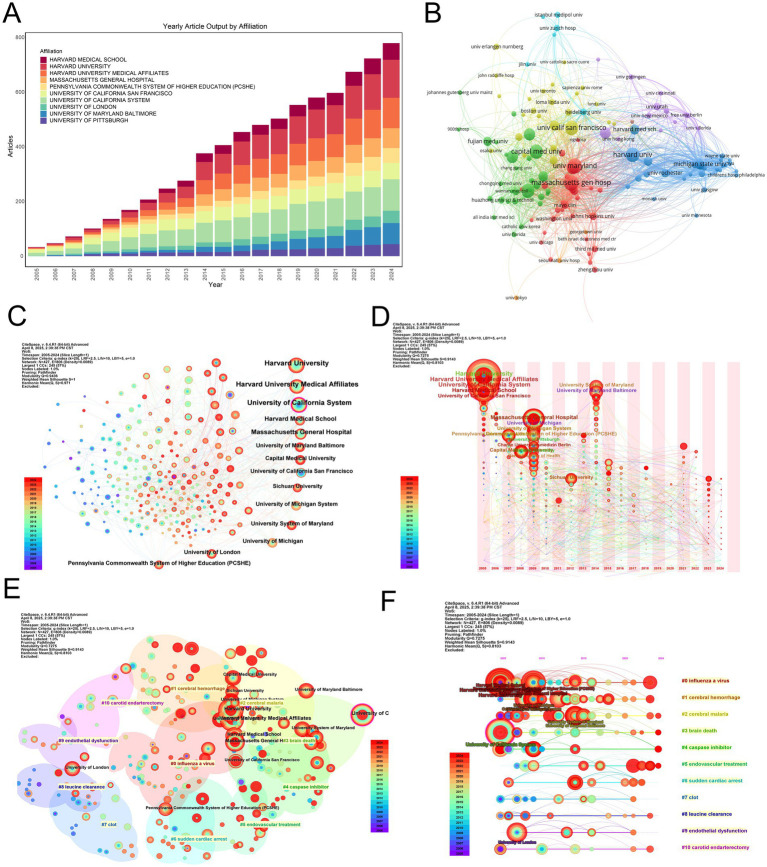
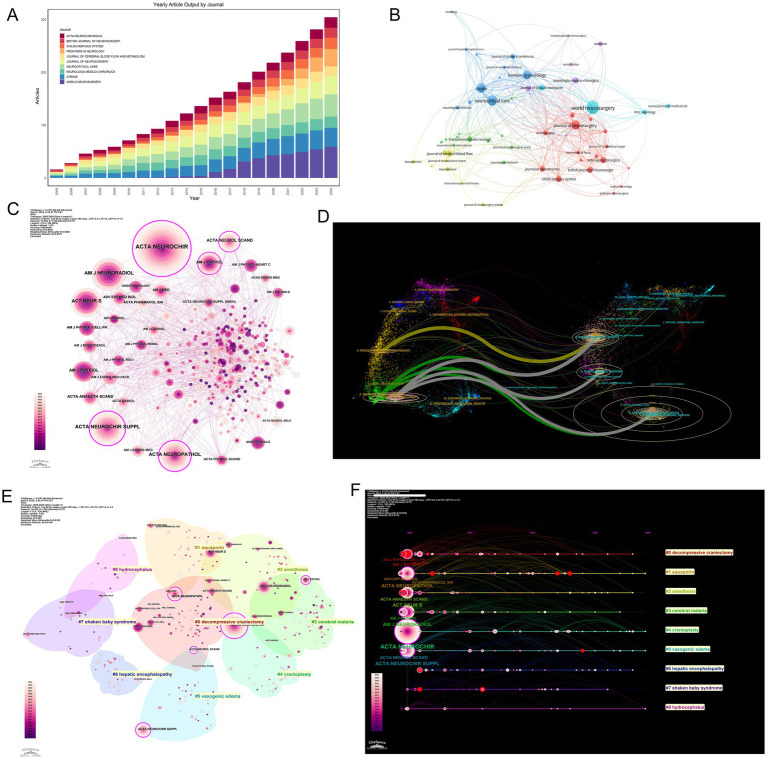
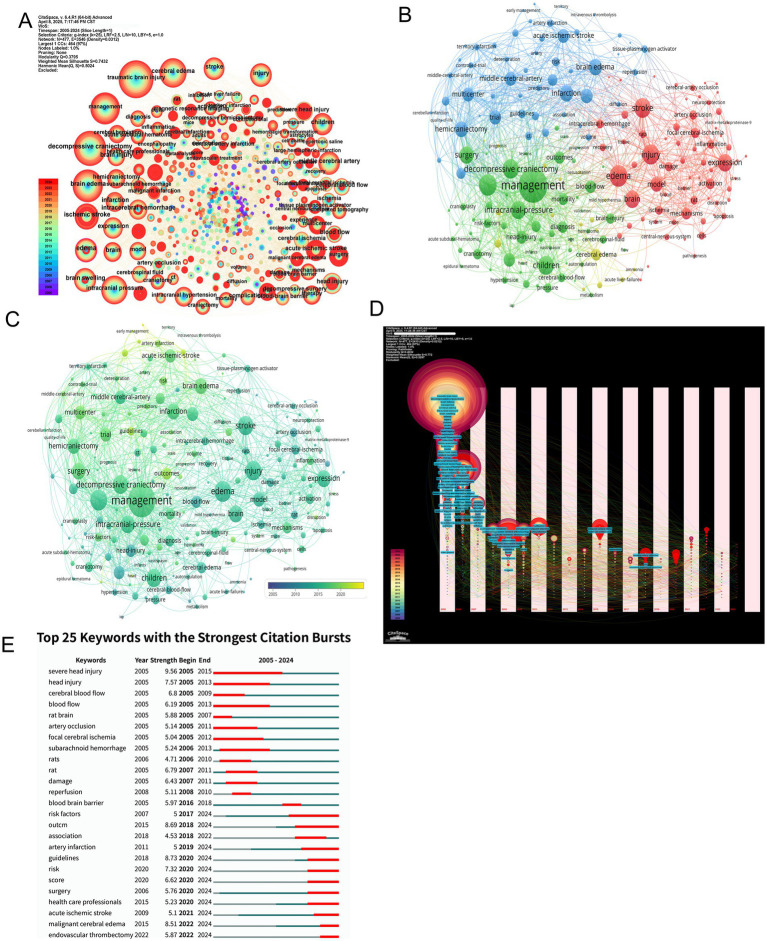
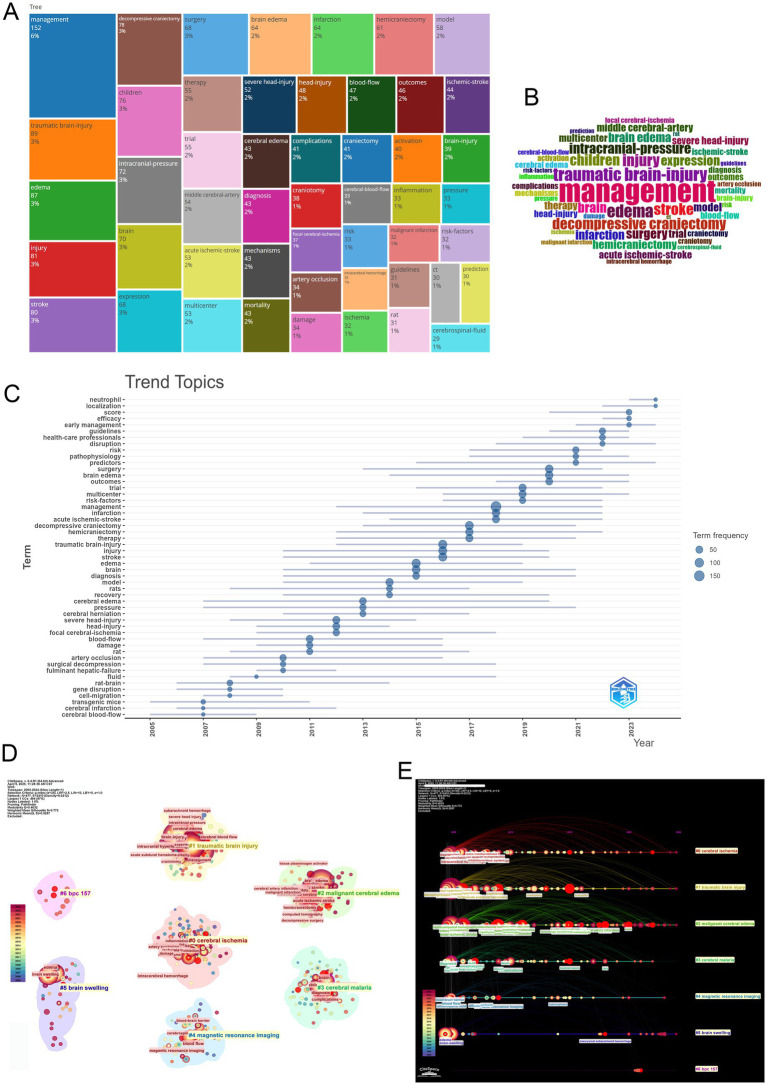
Annual publications increased from 55 in 2005 to 128 in 2024, progressing through three distinct phases: Foundational growth (2005-2009), consolidation (2010-2014), and rapid expansion (2015-2024). The United States (28.9%) and China (18.7%) dominated research output, with Harvard University and the University of California System leading institutional collaboration clusters. High-impact journals highlighted clinical advancements, including Stroke (h-index = 27). Keyword analysis demonstrated a thematic progression from blood-brain barrier pathophysiology to clinical innovations, including DC and emerging predictive modeling techniques incorporating machine learning. Landmark trials, including DECIMAL and HAMLET, validated early surgical intervention, while emerging trends have emphasized precision medicine and artificial intelligence (AI)-driven risk stratification.
The MCE research has transitioned from foundational pathophysiology to interdisciplinary clinical practice and data integration. However, critical gaps remain, including underrepresentation in pediatric research, disparities in global neurocritical care, and challenges in translational application. Future priorities should focus on biomarker discovery, equitable global collaborations, and AI-enhanced frameworks to transform survival into functional recovery worldwide.
恶性脑水肿(MCE)是急性脑损伤的一种危及生命的并发症,在未治疗的情况下死亡率超过80%。尽管渗透疗法和减压颅骨切除术(DC)取得了进展,但MCE仍然带来重大的临床挑战。本研究系统地梳理了MCE研究的发展历程(2005 - 2024年),以确定关键趋势、研究差距和未来重点。
使用CiteSpace、VOSviewer和Bibliometrix对来自科学引文索引核心合集的1460篇同行评议文章进行文献计量分析。关键指标包括发表趋势、地理和机构贡献、关键词共现、引文网络和共同作者模式。
年度发表量从2005年的55篇增加到2024年的128篇,经历了三个不同阶段:基础增长阶段(2005 - 2009年)、巩固阶段(2010 - 2014年)和快速扩张阶段(2015 - 2024年)。美国(28.9%)和中国(18.7%)在研究产出方面占主导地位,哈佛大学和加利福尼亚大学系统引领机构合作集群。高影响力期刊突出了临床进展,包括《中风》(h指数 = 27)。关键词分析表明,主题从血脑屏障病理生理学到临床创新有所进展,包括DC以及纳入机器学习的新兴预测建模技术。包括DECIMAL和HAMLET在内的里程碑式试验验证了早期手术干预,而新兴趋势强调精准医学和人工智能(AI)驱动的风险分层。
MCE研究已从基础病理生理学转向跨学科临床实践和数据整合。然而,关键差距仍然存在,包括儿科研究代表性不足、全球神经重症监护的差异以及转化应用方面的挑战。未来重点应聚焦于生物标志物发现、公平的全球合作以及AI增强框架,以在全球范围内将生存转化为功能恢复。