Chiu Doris W, Rashad Noha, Kordy Nashwa, Shash Emad, Soliman Amr
Graduate School of Public Health and Policy, The City University of New York (CUNY), New York, NY, USA.
Shefaa Al-Orman Hospital, Luxor, Egypt.
BMC Gastroenterol. 2025 Aug 8;25(1):569. doi: 10.1186/s12876-025-04164-8.
To calculate the incidence of colorectal cancer in Southern Egypt and to describe the epidemiological profiles of people with colorectal cancer in this region.
Colorectal cancer (CRC) is one of the common cancers in high income countries but historically CRC has been uncommon in low- and middle-income countries (LMICs). Egypt was among the first countries to report higher incidence of early-onset CRC under age 40. While previous studies on CRC in Egypt over the past 3 decades have focused on Cairo and the northern Nile delta regions, this study focused on CRC in the Southern Egypt, an underserved region with distinct socioeconomic and patient constitutional characteristics.
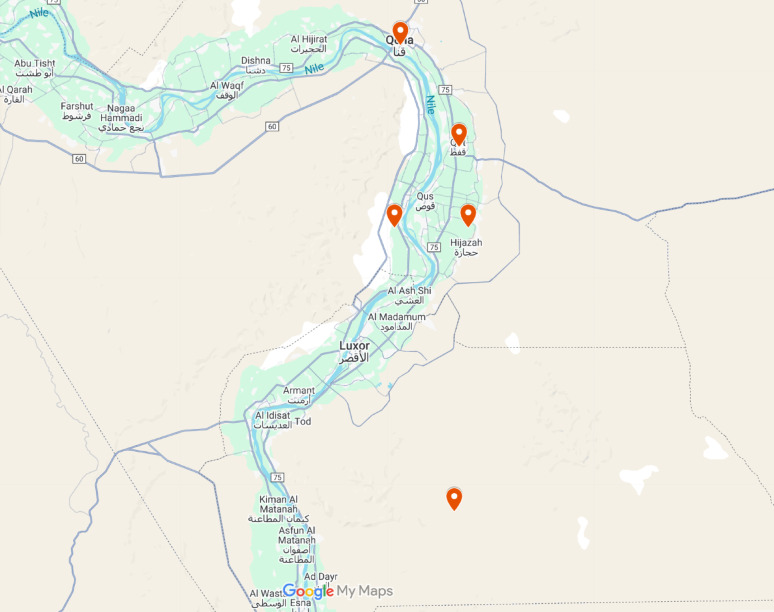
We identified 613 CRC patients who received care during 2018-2022 at the Shefa Al-Orman Cancer Hospital (SOH), the main cancer hospital in the Luxor province in Southern Egypt. Data retrieved from the medical records included demographic, clinical, and family history of all patients managed at SOH. We calculated the incidence by two age groups, under age 45 vs. 45 + years, the incidence rate (IR), age- and sex-specific rates, and distribution of clinical characteristics.
Twenty-three percent of patients were diagnosed under age 45. The 5-year incidence was 4.5 per 100,000, and the incidence rate (IR) of early-onset was 1.3 vs 18.3 per 100,000 for those 45 + years. Distant metastasis was identified in 28% of patients, and 38% of patients had rectal cancers and 58% of the patients were alive at last follow-up.
The incidence of early-onset and late-onset CRC is lower in Southern Egypt than the reported incidence from other regions of the country. Future etiologic studies should focus on investigating the socioeconomic and lifestyle factors of Southern Egypt. Clinical studies should also explore factors related to late-stage presentation and low survival in this population. The study may have global implications for the etiology and management of colorectal cancer.
计算埃及南部结直肠癌的发病率,并描述该地区结直肠癌患者的流行病学特征。
结直肠癌(CRC)是高收入国家常见的癌症之一,但从历史上看,CRC在低收入和中等收入国家(LMICs)并不常见。埃及是最早报告40岁以下早发性CRC发病率较高的国家之一。虽然过去30年埃及关于CRC的研究主要集中在开罗和尼罗河三角洲北部地区,但本研究聚焦于埃及南部,这是一个服务不足的地区,具有独特的社会经济和患者体质特征。
我们确定了2018年至2022年期间在埃及南部卢克索省的主要癌症医院谢法·奥尔曼癌症医院(SOH)接受治疗的613例CRC患者。从病历中检索的数据包括在SOH接受治疗的所有患者的人口统计学、临床和家族史。我们按两个年龄组(45岁以下与45岁及以上)计算发病率、发病率(IR)、年龄和性别特异性率以及临床特征分布。
23%的患者在45岁以下被诊断出患有结直肠癌。5年发病率为每10万人4.5例,早发性发病率为每10万人1.3例,而45岁及以上人群为每10万人18.3例。28%的患者出现远处转移,38%的患者患有直肠癌,58%的患者在最后一次随访时存活。
埃及南部早发性和晚发性CRC的发病率低于该国其他地区报告的发病率。未来的病因学研究应侧重于调查埃及南部的社会经济和生活方式因素。临床研究还应探索与该人群晚期表现和低生存率相关的因素。该研究可能对结直肠癌的病因学和管理具有全球意义。