Kataya Ghenwa, Issa May, Badran Adnan, Cornu David, Bechelany Mikhael, Jellali Salah, Jeguirim Mejdi, Hijazi Akram
Doctoral School of Science and Technology, Research Platform for Environmental Science (PRASE), Lebanese University, Beirut, Lebanon.
Institut Européen Des Membranes, IEM - UMR 5635, University of Montpellier, CNRS, ENSCM, Place Eugène Bataillon, 34095, Montpellier, France.
Sci Rep. 2025 Aug 14;15(1):29907. doi: 10.1038/s41598-025-14133-6.
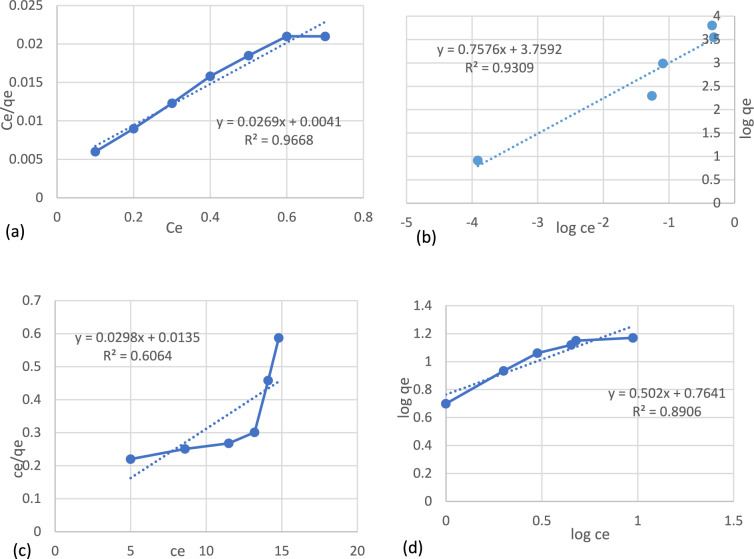
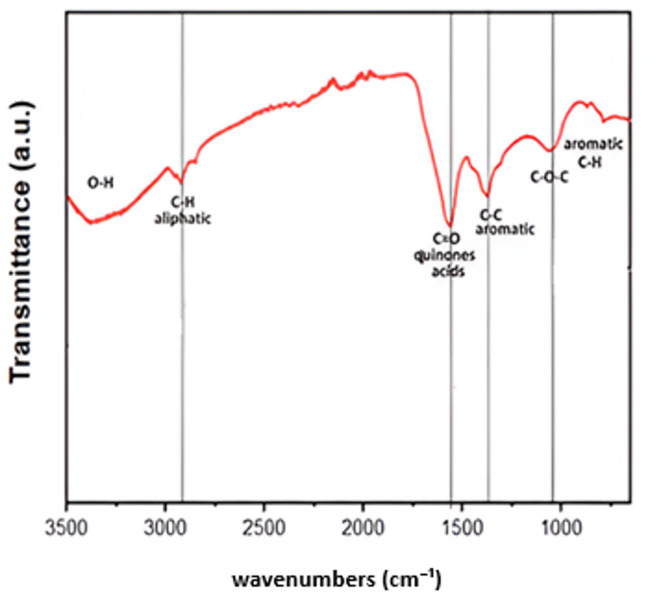
Access to pure and clean water is an upcoming challenge globally due to increased pollution by household waste and industrial effluents, specifically artificial dyes, which are not biodegradable and pose toxicity. Low-cost, mass-producible, and efficient technologies, particularly in developing environments, are highly needed. In this study, Kitchen waste derived biochar was prepared from orange peels (OP), potato peels (PP), banana peels (BP), and coffee residue (CR) via pyrolysis in a muffle furnace at 400 °C for 1 h. The prepared biochar was characterized by BET surface area analysis and Fourier Transform Infrared spectroscopy (FTIR). Low-cost kitchen waste derived biochar (KWDB)-sand composite filter material was developed as an eco-friendly adsorbent for the removal of a cationic Methylene Blue (MB) and an anionic dye Methyl Orange (MO) from aqueous solutions . Systematic research on contact time (0.5 to 24 h) and initial dye concentration (5-25 mg/L for MO and 10-180 mg/L for MB) was conducted. KWDB had extremely high and constant removal efficiency of a maximum of 99.5% for MB, while removal of MO was contact time dependent and had the following highest removal of 29% after 24 h. Higher initial dye concentration resulted in greater adsorption capacities. Langmuir isotherm analysis gave maximum adsorption capacities of 25.15 mg/g for MO and 30.40 mg/g for MB, which are greater than for most of the other biochars. Isotherm modeling further revealed that MO adsorption would be according to a multilayer, heterogeneous mode and MB adsorption according to a monolayer mode. This biochar-based filter is an efficient and scalable treatment system for water, particularly in situations with limited infrastructure, in which locally produced filters can be quickly implemented as part of inexpensive decentralized treatment systems. These findings confirm the design of biochar-enhanced filtration modules tailored for specific dye pollutants and environmental settings.
由于家庭垃圾和工业废水造成的污染增加,获取纯净清洁的水已成为全球面临的一项紧迫挑战,尤其是人工合成染料,它们不可生物降解且具有毒性。因此,非常需要低成本、可大规模生产且高效的技术,特别是在发展中环境中。在本研究中,通过在马弗炉中于400℃热解1小时,由橙皮(OP)、土豆皮(PP)、香蕉皮(BP)和咖啡渣(CR)制备了厨房垃圾衍生生物炭。通过BET表面积分析和傅里叶变换红外光谱(FTIR)对制备的生物炭进行了表征。开发了低成本的厨房垃圾衍生生物炭(KWDB)-沙子复合过滤材料,作为一种环保吸附剂,用于从水溶液中去除阳离子亚甲基蓝(MB)和阴离子染料甲基橙(MO)。对接触时间(0.5至24小时)和初始染料浓度(MO为5-25mg/L,MB为10-180mg/L)进行了系统研究。KWDB对MB具有极高且恒定的去除效率,最高可达99.5%,而对MO的去除则取决于接触时间,24小时后最高去除率为29%。较高的初始染料浓度导致更大的吸附容量。朗缪尔等温线分析得出MO的最大吸附容量为25.15mg/g,MB为30.40mg/g,这大于大多数其他生物炭。等温线模型进一步表明,MO的吸附将遵循多层、非均相模式,而MB的吸附遵循单层模式。这种基于生物炭的过滤器是一种高效且可扩展的水处理系统,特别是在基础设施有限的情况下,当地生产的过滤器可以作为廉价的分散式处理系统的一部分快速实施。这些发现证实了针对特定染料污染物和环境设置设计生物炭增强过滤模块的可行性。