Liu Yu, Shen Guohang, Xia Zidong, Wang Ruoyan, Dai Yupei
Women and Children's Center of the Affiliated Hospital of North Sichuan Medical College, No. 63 Wenhua Road, Shunqing District, Nanchong City, Sichuan Province, 637000, China.
North Sichuan Medical College, No. 234 Fu Jiang Road, Shunqing, Nanchong, Sichuan, 637000, P. R. China.
BMC Pharmacol Toxicol. 2025 Aug 18;26(1):150. doi: 10.1186/s40360-025-00990-4.
The commonly used brominated flame retardant (2,2’,4,4’-Tetrabromodiphenyl Ether, BDE-47) is a persistent organic pollutant that is widely distributed in the environment and is associated with adverse health effects, including an increased risk of osteoarthritis. However, the specific molecular mechanisms by which BDE-47 contributes to the development of osteoarthritis (OA) remain largely unclear. This study aimed to investigate the potential relationship between BDE-47 exposure and osteoarthritis pathogenesis.
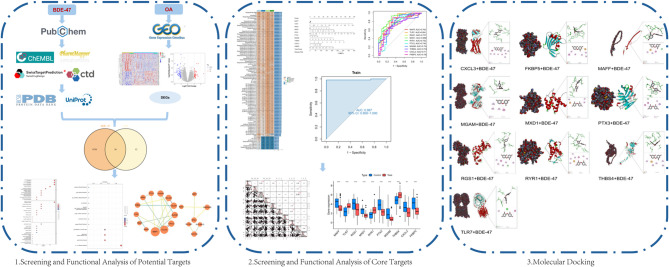
To achieve this, we employed an integrative approach combining network toxicology, machine learning, SHAP analysis, molecular docking, and molecular dynamics simulations.
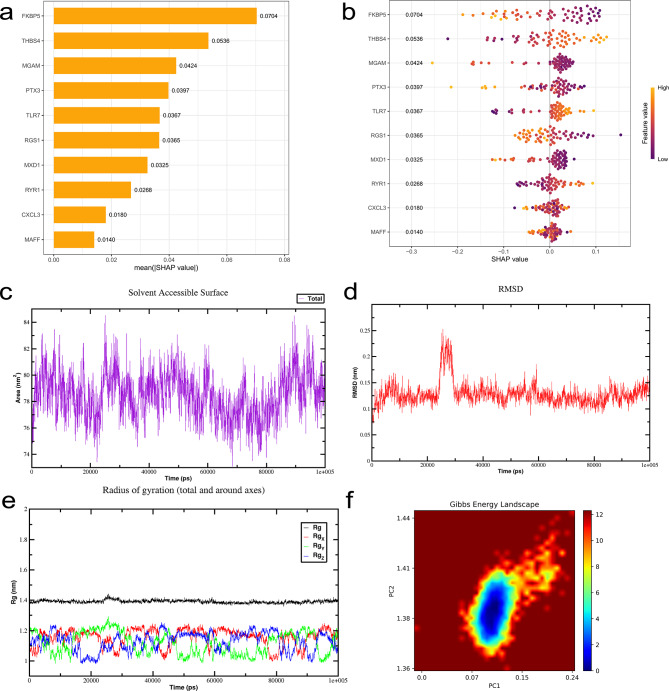
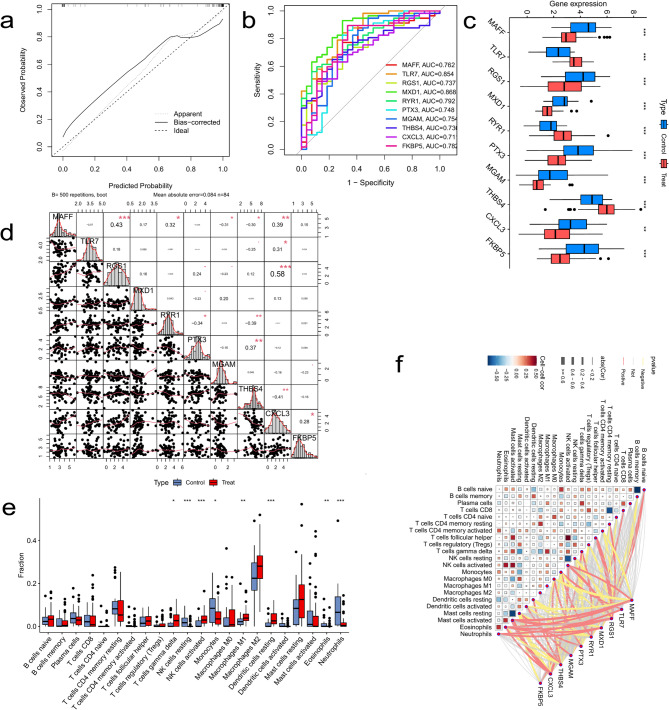
Initially, potential target genes associated with BDE-47 and OA were retrieved from multiple public databases, including PharmMapper, ChEMBL, and GEO. Subsequently, a comprehensive machine learning workflow involving 113 different algorithms was used to identify 10 core target genes as potential mediators of BDE-47-induced osteoarthritis. Finally, SHAP analysis identified FKBP5 as the most critical toxic target. Molecular docking and molecular dynamics (MD) simulations were then performed to evaluate the binding interactions and stability between BDE-47 and FKBP5.
The research results suggest that BDE-47 may be involved in the pathogenesis of osteoarthritis by targeting and regulating specific toxic targets, with FKBP5 being particularly prominent as the most crucial potential therapeutic target. These insights provide a theoretical foundation for developing preventive and therapeutic strategies against BDE-47-induced OA and underscore the importance of raising public awareness regarding the health risks of environmental pollution.
The online version contains supplementary material available at 10.1186/s40360-025-00990-4.
常用的溴化阻燃剂(2,2',4,4'-四溴二苯醚,BDE-47)是一种持久性有机污染物,广泛分布于环境中,并与不良健康影响相关,包括骨关节炎风险增加。然而,BDE-47导致骨关节炎(OA)发展的具体分子机制仍 largely 不清楚。本研究旨在探讨 BDE-47 暴露与骨关节炎发病机制之间的潜在关系。
为实现这一目标,我们采用了一种综合方法,结合网络毒理学、机器学习、SHAP 分析、分子对接和分子动力学模拟。
最初,从多个公共数据库(包括 PharmMapper、ChEMBL 和 GEO)中检索与 BDE-47 和 OA 相关的潜在靶基因。随后,使用涉及 113 种不同算法的综合机器学习工作流程来识别 10 个核心靶基因,作为 BDE-47 诱导骨关节炎的潜在介质。最后,SHAP 分析确定 FKBP5 为最关键的毒性靶标。然后进行分子对接和分子动力学(MD)模拟,以评估 BDE-47 与 FKBP5 之间的结合相互作用和稳定性。
研究结果表明,BDE-47 可能通过靶向和调节特定毒性靶标参与骨关节炎的发病机制,其中 FKBP5 作为最关键的潜在治疗靶标尤为突出。这些见解为制定针对 BDE-47 诱导的 OA 的预防和治疗策略提供了理论基础,并强调了提高公众对环境污染健康风险认识的重要性。
在线版本包含可在 10.1186/s40360-02***990-4 获得的补充材料。