Mohammadzaheri Fatemeh, Sheikhhossein Fatemeh, Hemmati Amirhossein, Ghoreishy Seyed Mojtaba, Mohammadi-Sartang Mohsen, Shiraseb Farideh, Keshavarz Seyed Ali
Department of Nutrition, Science and Research Branch, Islamic Azad University, Tehran, Iran.
Department of Clinical Nutrition, Tehran University of Medical Center, Tehran, Iran.
BMC Nutr. 2025 Aug 22;11(1):168. doi: 10.1186/s40795-025-01138-7.
Pomegranate consumption may have a beneficial effect on glucose control and insulin resistance due to its bioactive compounds. However, the results of available clinical trials are inconsistent. To address these inconsistencies, we conducted a meta-analysis of 34 randomized clinical trials (RCTs) evaluating the effects of pomegranate on glycemic parameters in adults.
A thorough search was conducted across multiple databases until December 2024 to identify trials that investigated the impact of pomegranate on glucose control and insulin sensitivity. We calculated the effect size, reported as the weighted mean difference (WMD) with 95% confidence intervals (CIs), based on the net changes in fasting blood glucose (FBS), insulin, HOMA-IR, and Hemoglobin A1c (HbA1c).
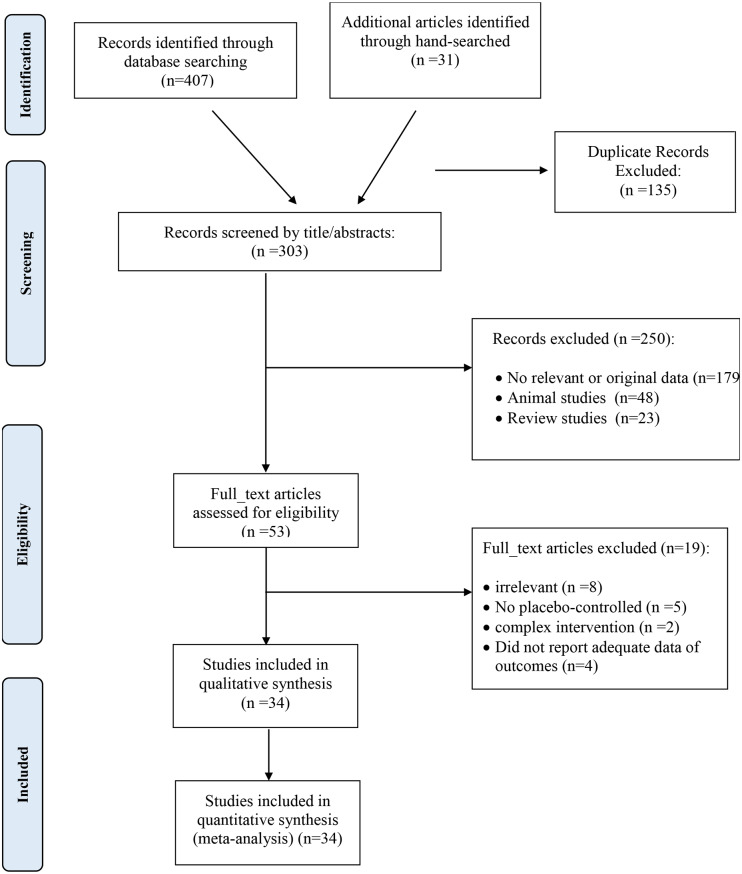
Among the 407 records, this meta-analysis included 34 eligible RCTs involving 1500 participants. Pomegranate consumption was significantly associated with a reduction in FBS (WMD: -3.036 mg/dl; 95% CI, -4.273 to -1.799, P < 0.001, Tau = 6.039, I = 89.22%), insulin (WMD: -0.967 IU/mL; 95% CI, -1.486 to -0.448, P < 0.001, Tau = 0.761, I = 83.82%), HOMA-IR (WMD: -0.338; 95% CI, -0.470 to -0.205, P < 0.001, Tau = 0.031, I = 84.96%), and QUICKI (WMD: 0.003; 95% CI, 0.001 to 0.006, P = 0.011, Tau = 0.00, I = 7.11%), whereas changes in HbA1c (WMD: 0.046, 95% CI: -0.207 to 0.298, P = 0.723, Tau = 0.081, I = 60.62%) were not statistically significant. The non-linear dose-response analysis showed a significant association between the pomegranate dose and FBS (P for non-linearity = 0.006). Also, the duration of pomegranate consumption showed a significant non-linear relationship with FBS (P for non-linearity = 0.022) and insulin (P for non-linearity = 0.030). We did not find a significant non-linear association between the dosage of pomegranate juice and FBS (P for non-linearity = 0.83), insulin (P for non-linearity = 0.51), and duration of pomegranate extract with FBS (P for non-linearity = 0.30).
This meta-analysis suggests that the consumption of pomegranate products can result in positive effects on FBS, insulin levels, HOMA-IR, and QUICKI in adults. More RCTs with longer duration and larger sample sizes are needed to confirm these findings.
由于石榴中的生物活性化合物,食用石榴可能对血糖控制和胰岛素抵抗产生有益影响。然而,现有临床试验的结果并不一致。为了解决这些不一致性,我们对34项评估石榴对成年人血糖参数影响的随机临床试验(RCT)进行了荟萃分析。
在多个数据库中进行了全面检索,直至2024年12月,以确定研究石榴对血糖控制和胰岛素敏感性影响的试验。我们根据空腹血糖(FBS)、胰岛素、HOMA-IR和糖化血红蛋白(HbA1c)的净变化计算效应量,以加权平均差(WMD)及95%置信区间(CI)表示。
在407条记录中,该荟萃分析纳入了34项符合条件的RCT,涉及1500名参与者。食用石榴与FBS降低显著相关(WMD:-3.036mg/dl;95%CI,-4.273至-1.799,P<0.001,Tau=6.039,I=89.22%)、胰岛素降低(WMD:-0.967IU/mL;95%CI,-1.486至-0.448,P<0.001,Tau=0.761,I=83.82%)、HOMA-IR降低(WMD:-0.338;95%CI,-0.470至-0.205,P<0.001,Tau=0.031,I=84.96%)以及QUICKI升高(WMD:0.003;95%CI,0.001至0.006,P=0.011,Tau=0.00,I=7.11%),而HbA1c的变化(WMD:0.046,95%CI:-0.207至0.298,P=0.723,Tau=0.081,I=60.62%)无统计学意义。非线性剂量反应分析显示石榴剂量与FBS之间存在显著关联(非线性P=0.006)。此外,食用石榴的持续时间与FBS(非线性P=0.022)和胰岛素(非线性P=0.030)呈现显著的非线性关系。我们未发现石榴汁剂量与FBS(非线性P=0.83)、胰岛素(非线性P=0.51)以及石榴提取物持续时间与FBS(非线性P=0.30)之间存在显著的非线性关联。
该荟萃分析表明,食用石榴产品可对成年人的FBS、胰岛素水平、HOMA-IR和QUICKI产生积极影响。需要更多持续时间更长、样本量更大的RCT来证实这些发现。