Russell H, Morgan Department of Radiology and Radiological Science, The Johns Hopkins University School of Medicine, Baltimore, MD, 21205, USA.
Center for Nanomedicine at the Wilmer Eye Institute, The Johns Hopkins University School of Medicine, Baltimore, MD, 21205, USA.
Acta Neuropathol Commun. 2021 Apr 26;9(1):78. doi: 10.1186/s40478-021-01180-z.
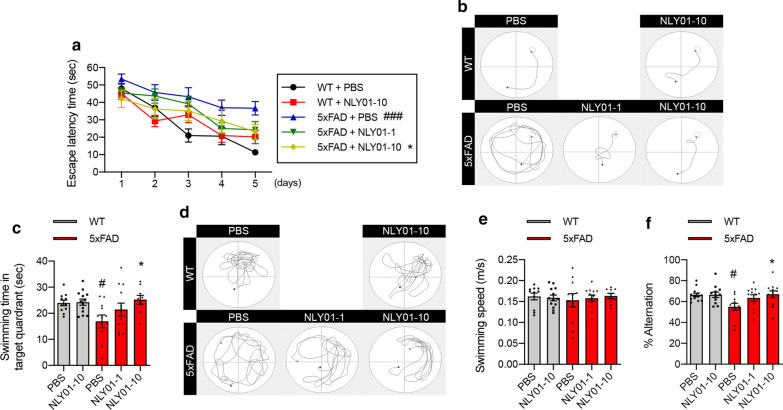
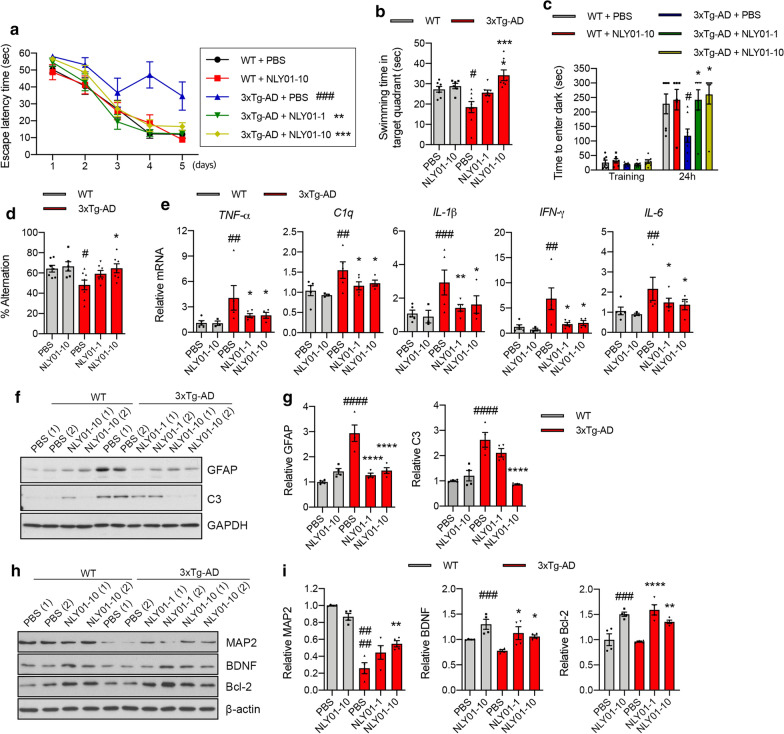
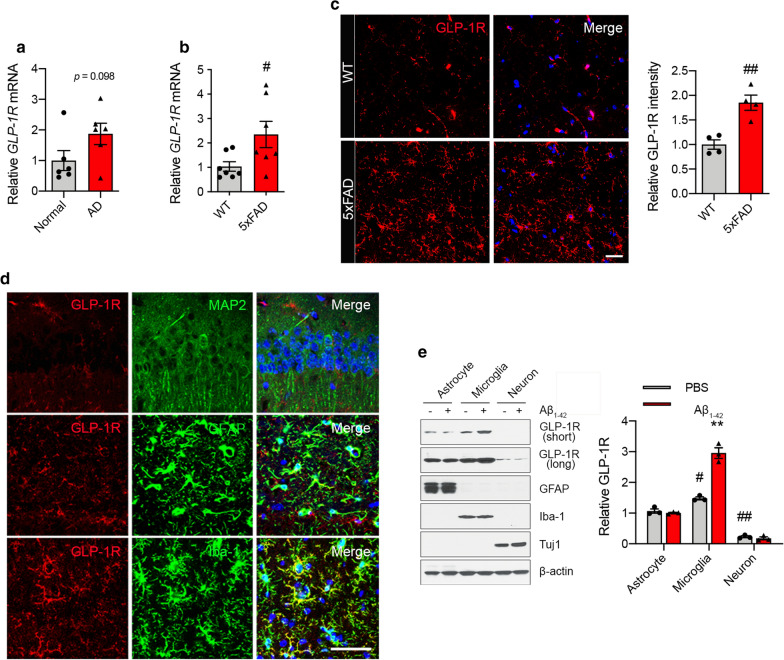
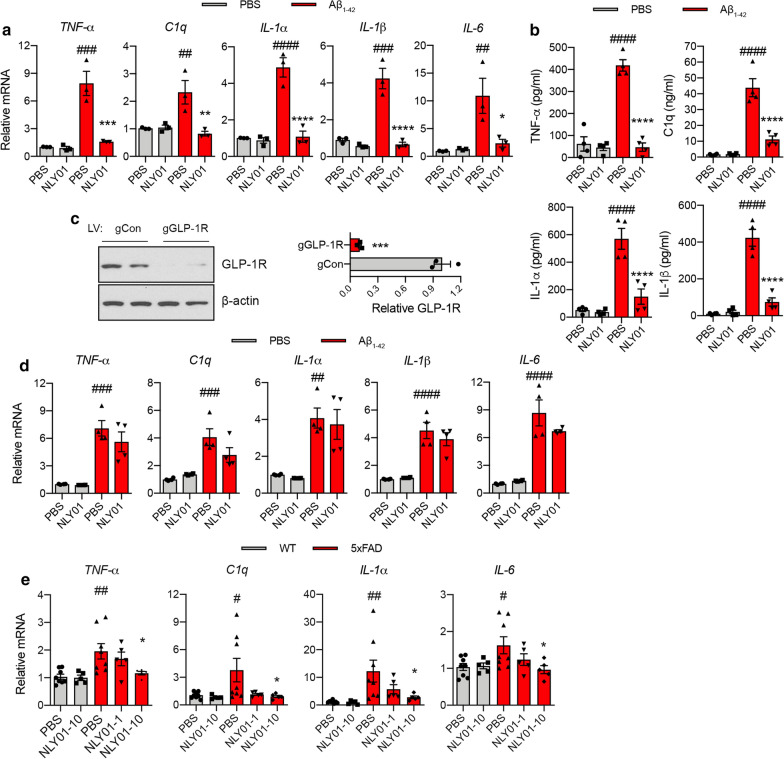
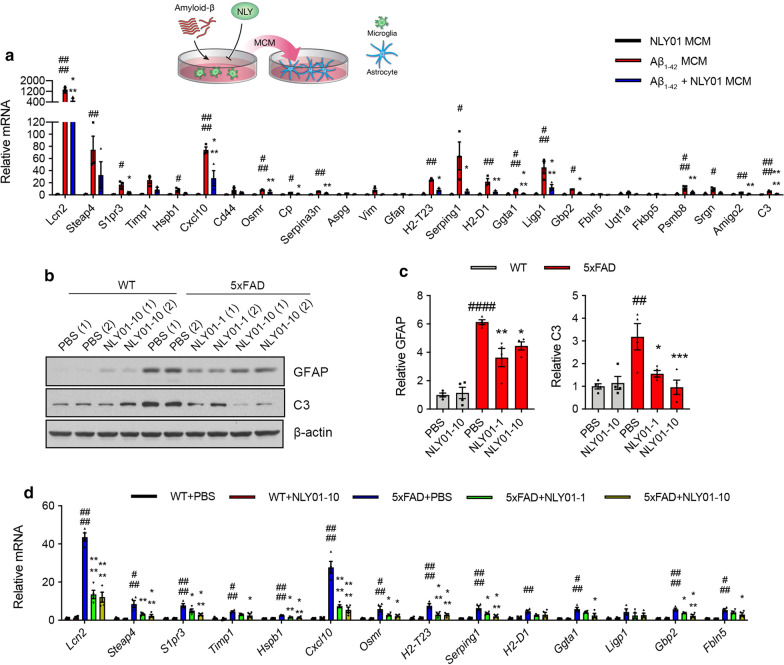
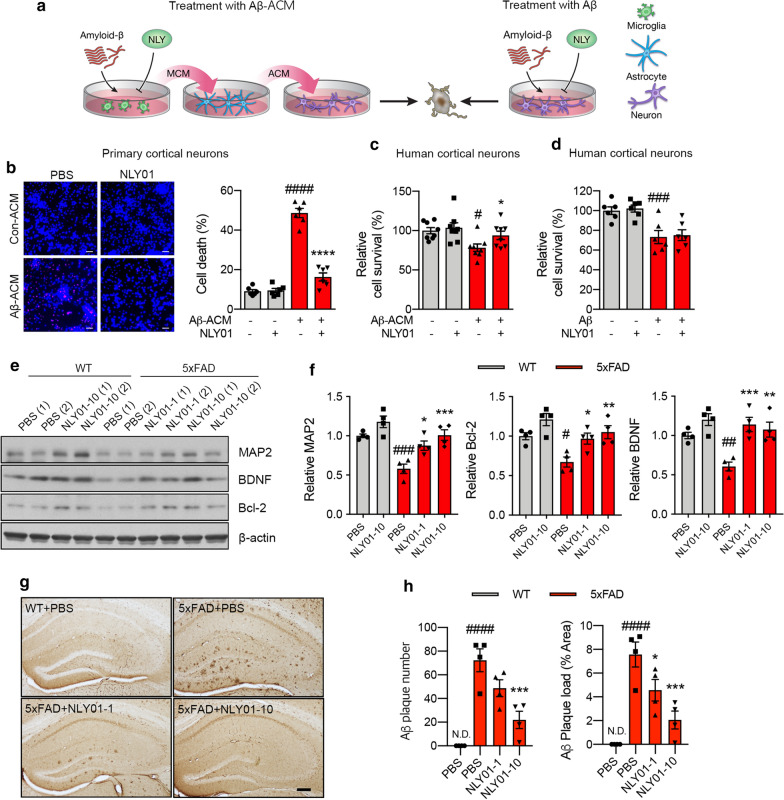
Alzheimer's disease (AD) is the most common cause of age-related dementia. Increasing evidence suggests that neuroinflammation mediated by microglia and astrocytes contributes to disease progression and severity in AD and other neurodegenerative disorders. During AD progression, resident microglia undergo proinflammatory activation, resulting in an increased capacity to convert resting astrocytes to reactive astrocytes. Therefore, microglia are a major therapeutic target for AD and blocking microglia-astrocyte activation could limit neurodegeneration in AD. Here we report that NLY01, an engineered exedin-4, glucagon-like peptide-1 receptor (GLP-1R) agonist, selectively blocks β-amyloid (Aβ)-induced activation of microglia through GLP-1R activation and inhibits the formation of reactive astrocytes as well as preserves neurons in AD models. In two transgenic AD mouse models (5xFAD and 3xTg-AD), repeated subcutaneous administration of NLY01 blocked microglia-mediated reactive astrocyte conversion and preserved neuronal viability, resulting in improved spatial learning and memory. Our study indicates that the GLP-1 pathway plays a critical role in microglia-reactive astrocyte associated neuroinflammation in AD and the effects of NLY01 are primarily mediated through a direct action on Aβ-induced GLP-1R microglia, contributing to the inhibition of astrocyte reactivity. These results show that targeting upregulated GLP-1R in microglia is a viable therapy for AD and other neurodegenerative disorders.
阿尔茨海默病(AD)是最常见的与年龄相关的痴呆症。越来越多的证据表明,小胶质细胞和星形胶质细胞介导的神经炎症会导致 AD 和其他神经退行性疾病的进展和严重程度增加。在 AD 进展过程中,常驻小胶质细胞发生促炎激活,导致静止星形胶质细胞向反应性星形胶质细胞转化的能力增加。因此,小胶质细胞是 AD 的主要治疗靶点,阻断小胶质细胞-星形胶质细胞激活可能会限制 AD 中的神经退行性变。在这里,我们报告说,NLY01,一种工程化的 exedin-4、胰高血糖素样肽-1 受体(GLP-1R)激动剂,通过 GLP-1R 激活选择性地阻断β-淀粉样蛋白(Aβ)诱导的小胶质细胞激活,并抑制反应性星形胶质细胞的形成以及保护 AD 模型中的神经元。在两种转基因 AD 小鼠模型(5xFAD 和 3xTg-AD)中,NLY01 的重复皮下给药阻断了小胶质细胞介导的反应性星形胶质细胞转化并保留了神经元活力,导致空间学习和记忆能力提高。我们的研究表明,GLP-1 通路在 AD 中小胶质细胞-反应性星形胶质细胞相关神经炎症中起关键作用,NLY01 的作用主要通过直接作用于 Aβ诱导的 GLP-1R 小胶质细胞来介导,有助于抑制星形胶质细胞的反应性。这些结果表明,靶向小胶质细胞中上调的 GLP-1R 是治疗 AD 和其他神经退行性疾病的可行方法。