
易患精神病个体中情感面孔与声音的多感官整合
Multisensory integration of affective faces and voices in psychosis proneness.
作者信息
Weiss Andreas, Bruns Patrick, Röder Brigitte, Lincoln Tania M
机构信息
Institute of Psychology, Biological Psychology and Neuropsychology, University of Hamburg, Hamburg, Germany.
Institute of Psychology, Clinical Psychology and Psychotherapy, University of Hamburg, Hamburg, Germany.
出版信息
Schizophrenia (Heidelb). 2025 Sep 22;11(1):118. doi: 10.1038/s41537-025-00676-0.
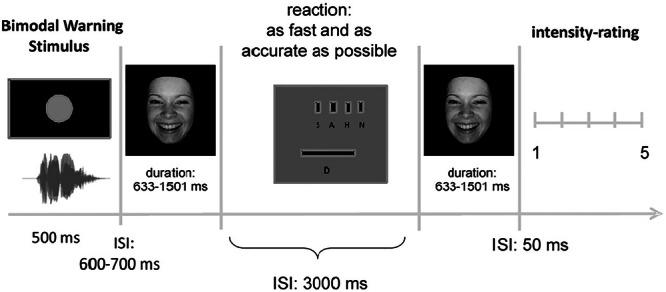
It has been proposed that dysfunctions in emotional multisensory integration (MSI) could contribute to the development of psychosis. To further substantiate this proposition, we investigated whether impaired MSI of emotional cues can be observed in people with high psychosis proneness without a diagnosis of psychosis and whether it is associated with aberrant perception and psychotic experiences. Adults scoring high vs. low on the positive subscale of the Community Assessment of Psychic Experiences (score ≥9 or <9, respectively; n = 36 each) categorized the perceived emotion and rated the intensity of unimodal, bimodal emotionally congruent and bimodal emotionally incongruent dynamic face-voice stimuli. In different blocks, participants were asked to attend to one modality and to ignore the other modality input. Additionally, participants completed self-report questionnaires on anomalous perceptual experiences, hallucinations and paranoia. Participants with high and low psychosis proneness did not differ in emotion categorization performance as indicated by similar inverse efficiency (IE) scores (i.e., mean reaction time divided by accuracy) in all conditions, nor did they differ in intensity ratings in any condition. Correlation analyses did not reveal significant associations between crossmodal (in)congruency effects and self-reported anomalous perceptual experiences, hallucinations or paranoia. Our findings, thus, do not provide support for the assumption that MSI of emotional cues is linked to altered perception or subclinical psychotic symptoms, nor for the notion that MSI of emotional cues is already altered at a very early stage in the developmental trajectory of psychosis.
有人提出,情绪多感官整合(MSI)功能障碍可能导致精神病的发展。为了进一步证实这一观点,我们调查了在未被诊断为精神病但具有高精神病倾向的人群中,是否能观察到情绪线索的MSI受损,以及它是否与异常感知和精神病体验有关。在精神体验社区评估的积极子量表上得分高(分别为得分≥9或<9;每组n = 36)的成年人对感知到的情绪进行分类,并对单模态、双模态情绪一致和双模态情绪不一致的动态面部-声音刺激的强度进行评分。在不同的组块中,要求参与者关注一种模态并忽略另一种模态的输入。此外,参与者完成了关于异常感知体验、幻觉和偏执的自我报告问卷。在所有条件下,高精神病倾向和低精神病倾向的参与者在情绪分类表现上没有差异,这表现为相似的反向效率(IE)分数(即平均反应时间除以准确率),在任何条件下他们在强度评分上也没有差异。相关分析没有揭示跨模态(不)一致性效应与自我报告的异常感知体验、幻觉或偏执之间的显著关联。因此,我们的研究结果不支持情绪线索的MSI与感知改变或亚临床精神病症状有关的假设,也不支持情绪线索的MSI在精神病发展轨迹的早期阶段就已经改变的观点。

 Zotero 插件