
解读胶质纤维酸性蛋白的结构生物学:其在预测创伤性脑损伤和阿尔茨海默病诊断中的效能内涵
Deciphering the Structural Biology of GFAP: Connotations of Its Potency in Presaging the Diagnosis for Traumatic Brain Injury and AD.
作者信息
Kanuri Sri Harsha, Sirrkay Prapthi Jayesh
机构信息
Merit Health Wesley Medical Center, 1501 Hardy Street, Hattiesburg, MS 39402, USA.
Medical School, University of Minnesota, Minneapolis, MN 55455, USA.
出版信息
Neurol Int. 2025 Aug 26;17(9):134. doi: 10.3390/neurolint17090134.
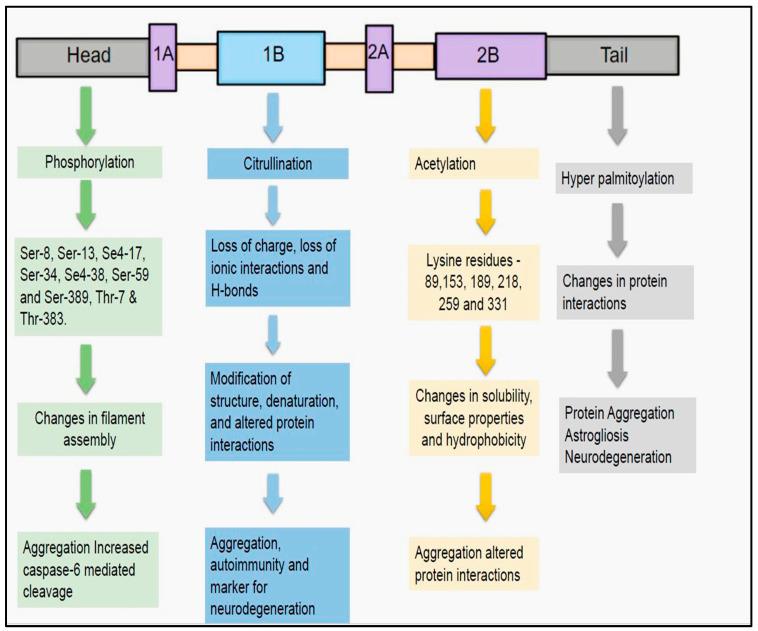
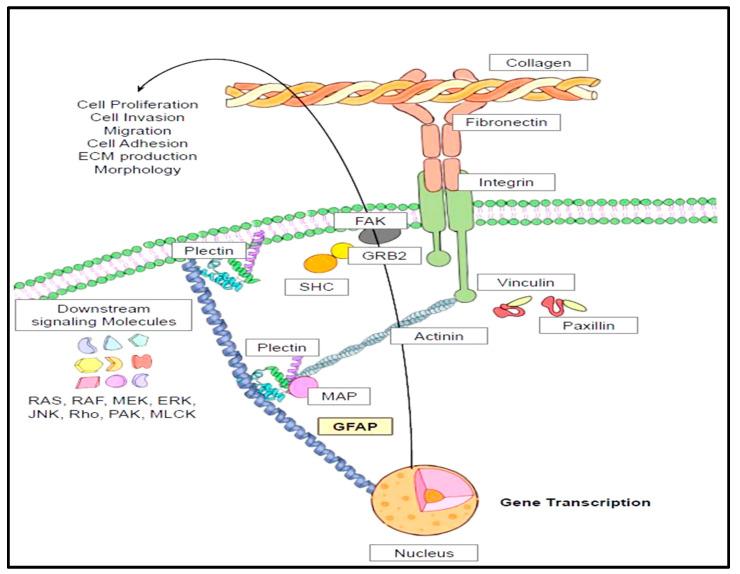
In Alzheimer's disease, accumulation of Aβ and tau aggregates in the limbic and cortical regions of the brain forms the pathological basis for the onset of memory loss and cognitive abnormalities. The neuronal desecration inflicted by these toxic pile-ups will rouse the onset of innate immune defense mechanisms including astrogliosis within the neuronal milieu. A potential ramification of astrogliosis is the overproduction and spillage of GFAP into the brain circulation. Execution of GFAP vital physiological functions rests upon the preservation of its filamentous structure as well as its cytoskeletal interactions. Any anomaly that hampers the structural integrity of GFAP will engender filament disassembly, cytoplasmic aggregation, and decreased solubility with the resultant deleterious consequences. The potency of GFAP as a reliable biomarker in the blood also rests on its ability to navigate the glymphatic excretory pathways and spill into the systemic circulation. Recent reports have suggested GFAP is a dependable marker for auguring subtle disease changes in traumatic brain injury (TBI) and AD. However, pathological anomalies such abnormal structural integrity, cleavage, impaired drainage pathways, and alternative isoforms will lessen its potency and thwarts its ability from becoming a full-fledged and stable biomarker for neurological diseases. Understanding the GFAP biology, including factors that influence its structural integrity and excretory pathways, will be crucial and this review underscores these sections in a succinct manner. Thorough comprehension of GFAP biology is the principal step in unearthing its potential as a powerful marker for auguring disease initiation, and progression in TBI and AD.
在阿尔茨海默病中,大脑边缘和皮质区域中β淀粉样蛋白(Aβ)和tau蛋白聚集体的积累构成了记忆丧失和认知异常发作的病理基础。这些有毒堆积物造成的神经元损伤会引发包括神经胶质增生在内的先天性免疫防御机制在神经元环境中的启动。神经胶质增生的一个潜在后果是胶质纤维酸性蛋白(GFAP)过度产生并泄漏到脑循环中。GFAP重要生理功能的执行依赖于其丝状结构的保存及其细胞骨架相互作用。任何妨碍GFAP结构完整性的异常都会导致细丝解体、细胞质聚集和溶解度降低,从而产生有害后果。GFAP作为血液中可靠生物标志物的效力还取决于其通过脑淋巴排泄途径进入并泄漏到体循环中的能力。最近的报告表明,GFAP是预测创伤性脑损伤(TBI)和阿尔茨海默病(AD)中细微疾病变化的可靠标志物。然而,诸如异常结构完整性、裂解、引流途径受损和替代异构体等病理异常会降低其效力,并阻碍其成为神经疾病的成熟稳定生物标志物。了解GFAP生物学,包括影响其结构完整性和排泄途径的因素,至关重要,本综述将简要强调这些方面。全面理解GFAP生物学是挖掘其作为预测TBI和AD疾病起始及进展的有力标志物潜力的首要步骤。





 Zotero 插件