Lazopulo Andrey, Emmenegger Yann, Đukanović Nina, Hoekstra Marieke M B, Franken Paul
Center for Integrative Genomics, University of Lausanne, Lausanne, Switzerland.
VIB Center for Brain & Disease Research, KU Leuven, Leuven, Belgium.
Sci Rep. 2025 Oct 24;15(1):37301. doi: 10.1038/s41598-025-21175-3.
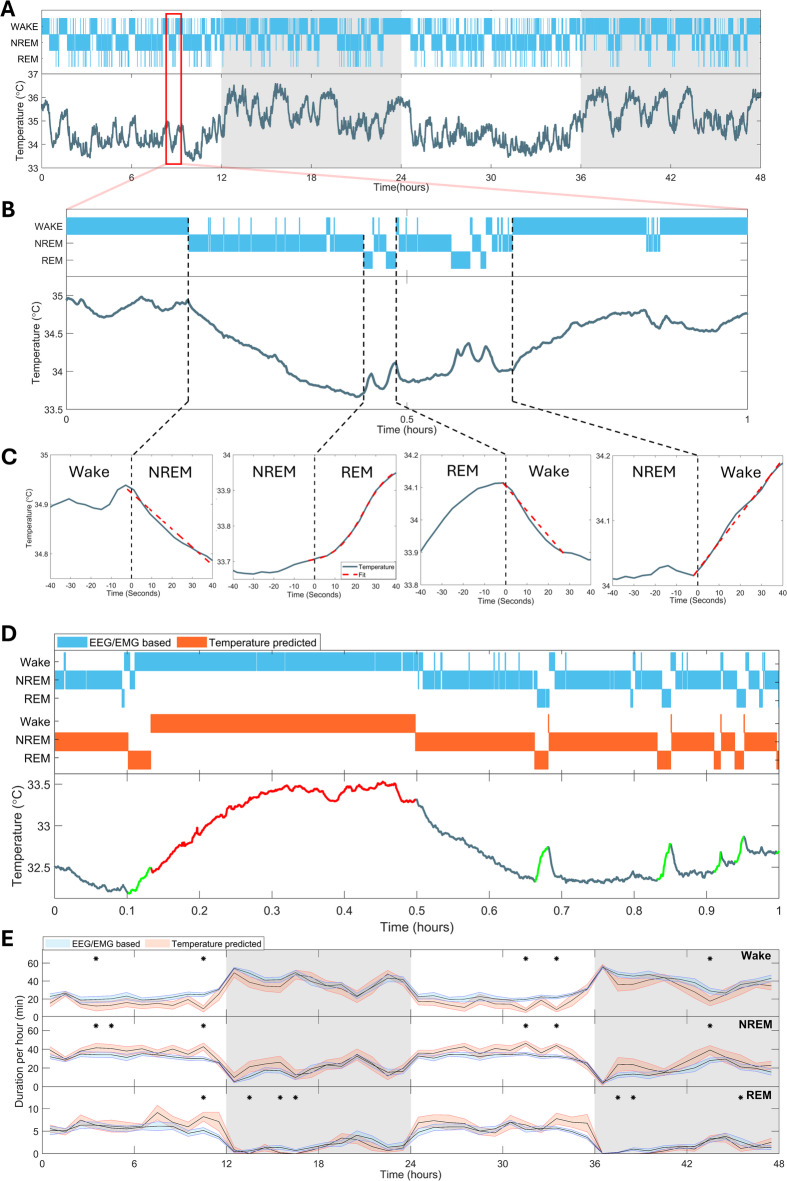
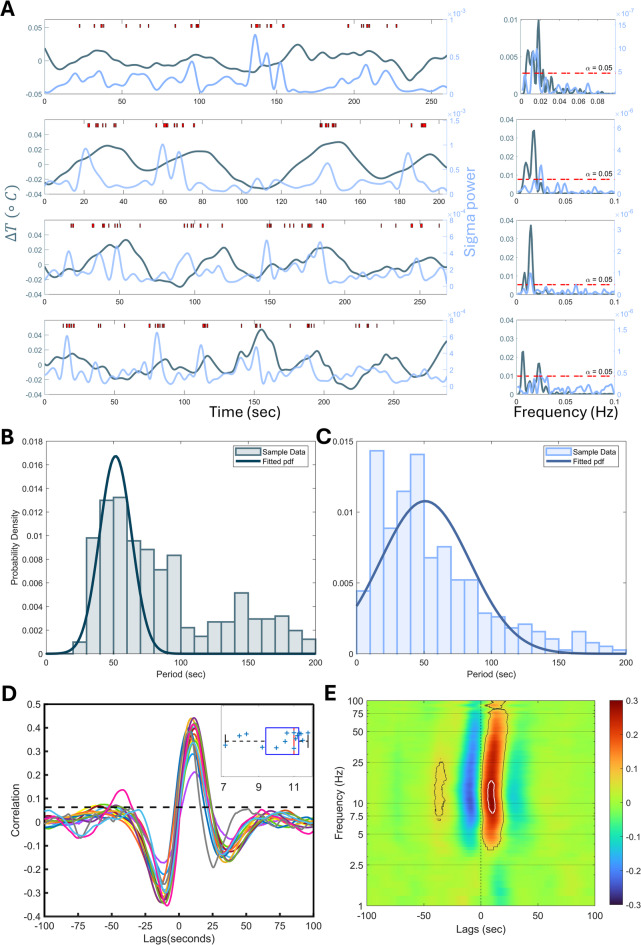
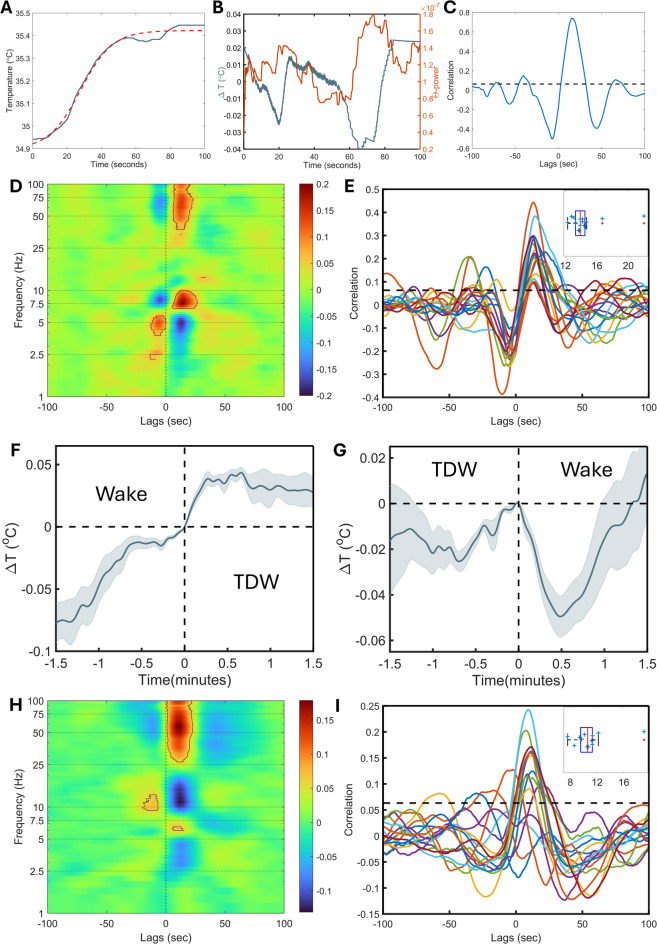
Brain temperature and brain activity are in a complex, bidirectional relationship. Changes in brain temperature impact brain functioning and, conversely, brain activity generates heat. The latter can be illustrated by the characteristic changes in brain temperature that accompany the transitions between the brain states wakefulness, NREM sleep, and REM sleep. Here we show in the mouse that these typical temperature changes are sufficiently consistent to predict brain state. To gain further insight into this relationship, we quantified the effects of specific EEG activity patterns characteristic of sleep-wake states on temperature. We found that occurrences of spindles (11-15 Hz) during NREM sleep and of theta (7-9 Hz) and gamma (55-85 Hz) activity during wakefulness and REM sleep, were followed by increases in cortical temperature with a 10-14 s delay. In contrast, temperature decreased during the theta-rich cataplexy-associated state (CAS) observed in mice lacking the hypocretin gene, shedding new light on this non-physiological state. Our results show that brain temperature can be used as a reliable and accessible proxy of brain state and the accompanying oscillatory activity.
脑温与脑活动处于复杂的双向关系中。脑温的变化会影响脑功能,反之,脑活动也会产生热量。后者可以通过清醒、非快速眼动睡眠和快速眼动睡眠这几种脑状态转换时脑温的特征性变化来说明。在此,我们在小鼠身上表明,这些典型的温度变化具有足够的一致性,能够预测脑状态。为了进一步深入了解这种关系,我们量化了睡眠 - 觉醒状态特有的特定脑电图活动模式对温度的影响。我们发现,非快速眼动睡眠期间纺锤波(11 - 15赫兹)以及清醒和快速眼动睡眠期间θ波(7 - 9赫兹)和γ波(55 - 85赫兹)活动出现后,皮层温度会在10 - 14秒的延迟后升高。相反,在缺乏下丘脑泌素基因的小鼠中观察到的富含θ波的猝倒相关状态(CAS)期间,温度会下降,这为这种非生理状态提供了新的线索。我们的结果表明,脑温可以用作脑状态及伴随的振荡活动的可靠且可获取的指标。