Hoeniger J F, Headley C L
J Bacteriol. 1968 Nov;96(5):1835-47. doi: 10.1128/jb.96.5.1835-1847.1968.
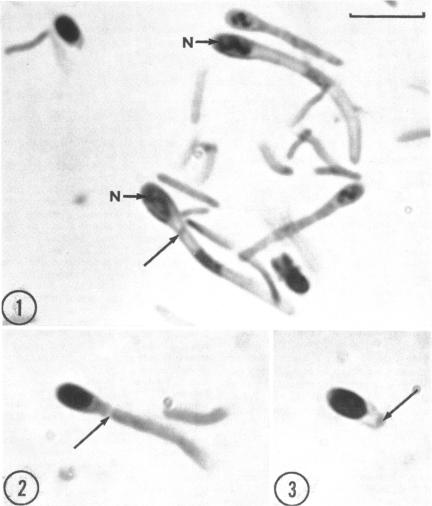
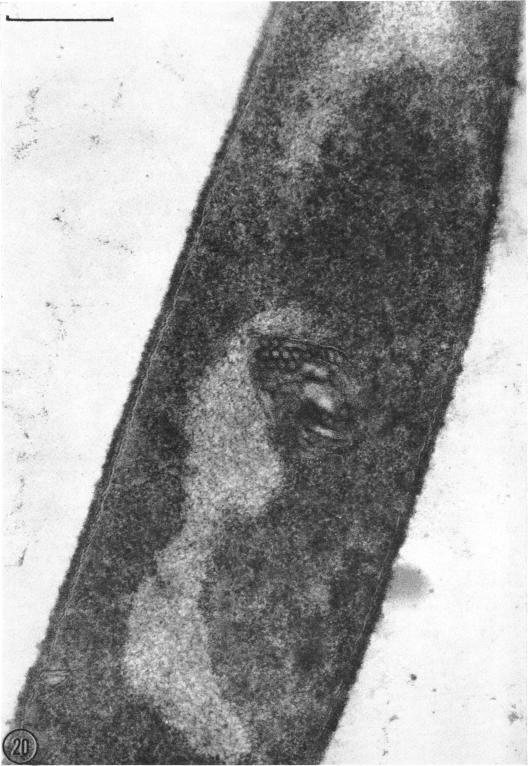
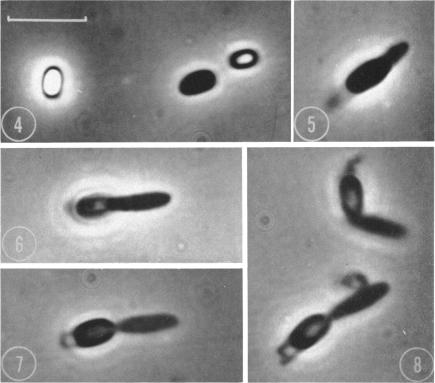
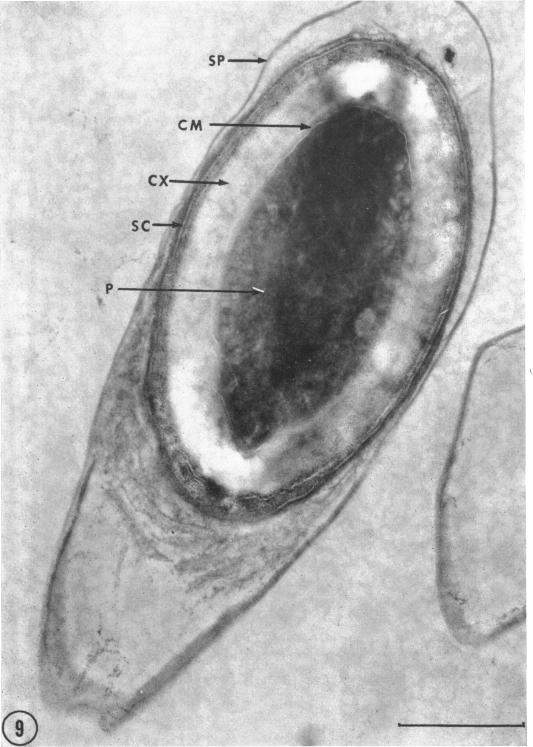
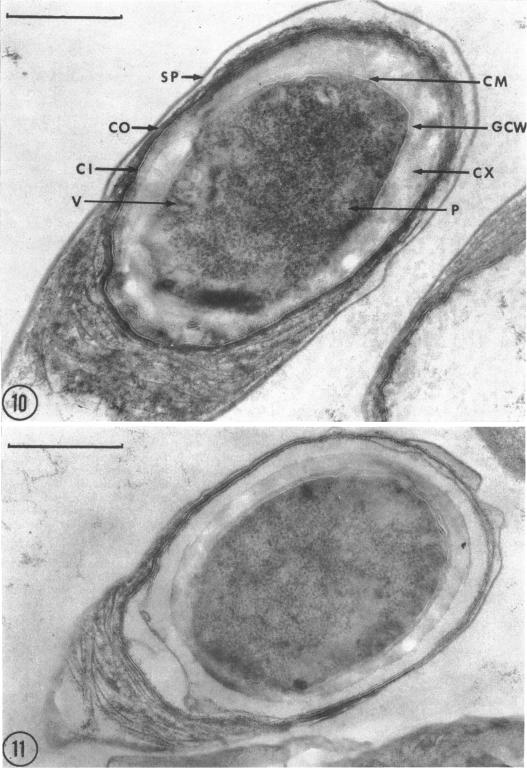
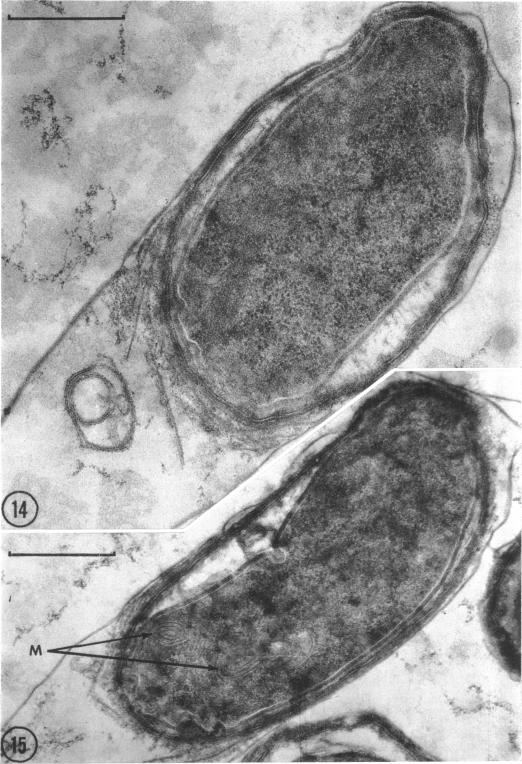
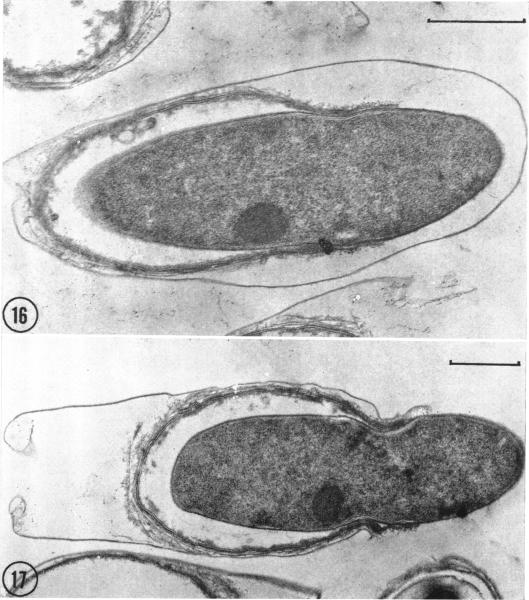
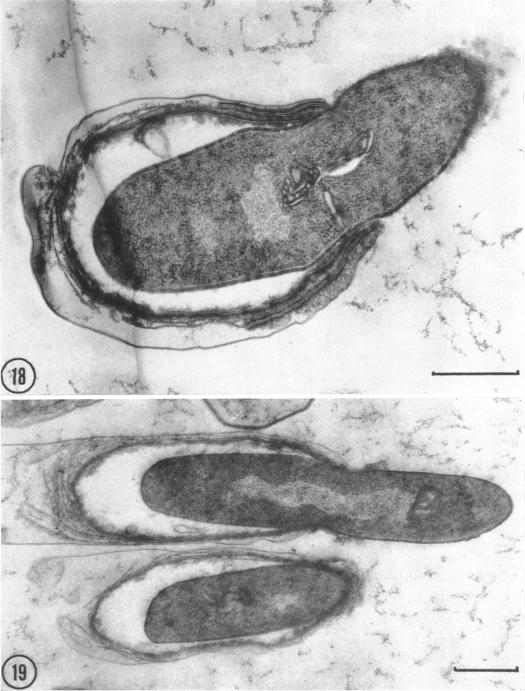
The process of spore germination in Clostridium pectinovorum has been followed by phase-contrast and electron microscopy. Unlike most other Bacillaceae, germination of this species takes place within the sporangium. Under phase-contrast, the spore darkens and swells slightly, and then the vegetative rod slips out through the end opposite the collar-like extension of the sporangium. In thin sections, a spore from an early stage in germination consists of a central protoplast, core membrane, germ cell wall, cortex, and two coats. Within a short period, the cortex disintegrates and the young cell develops. It possesses a large fibrillar nucleoplasm and several mesosomes. Subsequently, the young cell elongates, becomes somewhat deformed, and then emerges through a narrow aperture in the inflexible coats of the spore, finally rupturing the sporangium. Free vegetative cells of C. pectinovorum resemble in their structure other gram-positive rods.
通过相差显微镜和电子显微镜观察了果胶梭菌的孢子萌发过程。与大多数其他芽孢杆菌科不同,该菌种的萌发发生在孢子囊内。在相差显微镜下,孢子变暗并略有肿胀,然后营养杆从与孢子囊领状延伸相对的一端滑出。在薄片中,处于萌发早期的孢子由中央原生质体、核心膜、生殖细胞壁、皮层和两层外膜组成。在短时间内,皮层解体,幼细胞发育。它具有大的纤维状核质和几个中体。随后,幼细胞伸长,变得有些变形,然后通过孢子坚硬外膜上的一个窄孔出现,最终冲破孢子囊。果胶梭菌的游离营养细胞在结构上与其他革兰氏阳性杆菌相似。