Hammond B F
J Bacteriol. 1970 Sep;103(3):634-40. doi: 10.1128/jb.103.3.634-640.1970.
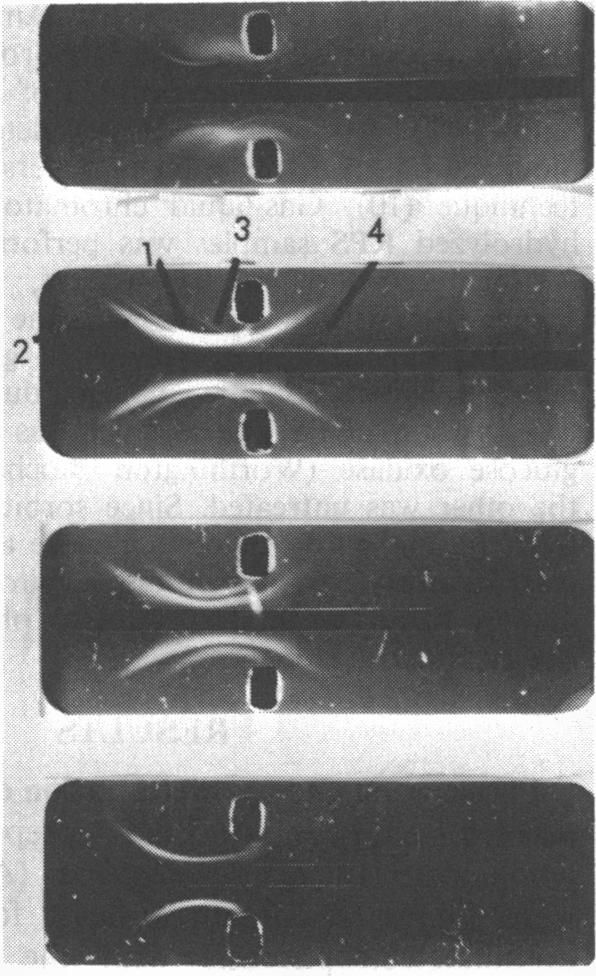
A soluble polysaccharide antigen from the cell wall of Rothia dentocariosa ATCC 17931 has been isolated, purified and characterized by serological and chemical procedures. The polysaccharide (RPS) was found to be located at the surface of cells grown under diverse environmental conditions, and could be easily detected on cells in pure culture or in clinical samples from humans and experimentally infected hamsters by fluorescent-antibody techniques. Fructose, glucose, galactose, and ribose were the major constituents of RPS. Although purified RPS was not immunogenic in rabbits, it was presumed to be a major antigen of the cell because it could specifically absorb approximately one-third of the antibody nitrogen in antisera prepared against whole cells of R. dentocariosa. Haptene inhibition studies indicated that fructose was the principal determinant of serological specificity in RPS. This polysaccharide was found to be serologically unique and did not cross-react with the polysaccharides and surface polymers of other oral actinomycetes and filamentous organisms.
已从龋齿罗氏菌ATCC 17931的细胞壁中分离、纯化出一种可溶性多糖抗原,并通过血清学和化学方法对其进行了表征。发现该多糖(RPS)位于在不同环境条件下生长的细胞表面,通过荧光抗体技术可在纯培养的细胞或来自人类以及实验感染仓鼠的临床样本中的细胞上轻松检测到。果糖、葡萄糖、半乳糖和核糖是RPS的主要成分。尽管纯化的RPS在兔子中无免疫原性,但推测它是细胞的主要抗原,因为它能特异性吸收针对龋齿罗氏菌全细胞制备的抗血清中约三分之一的抗体氮。半抗原抑制研究表明,果糖是RPS血清学特异性的主要决定因素。发现这种多糖在血清学上是独特的,并且不与其他口腔放线菌和丝状生物的多糖及表面聚合物发生交叉反应。