Berman J D, Dwyer D M, Wyler D J
Infect Immun. 1979 Oct;26(1):375-9. doi: 10.1128/iai.26.1.375-379.1979.
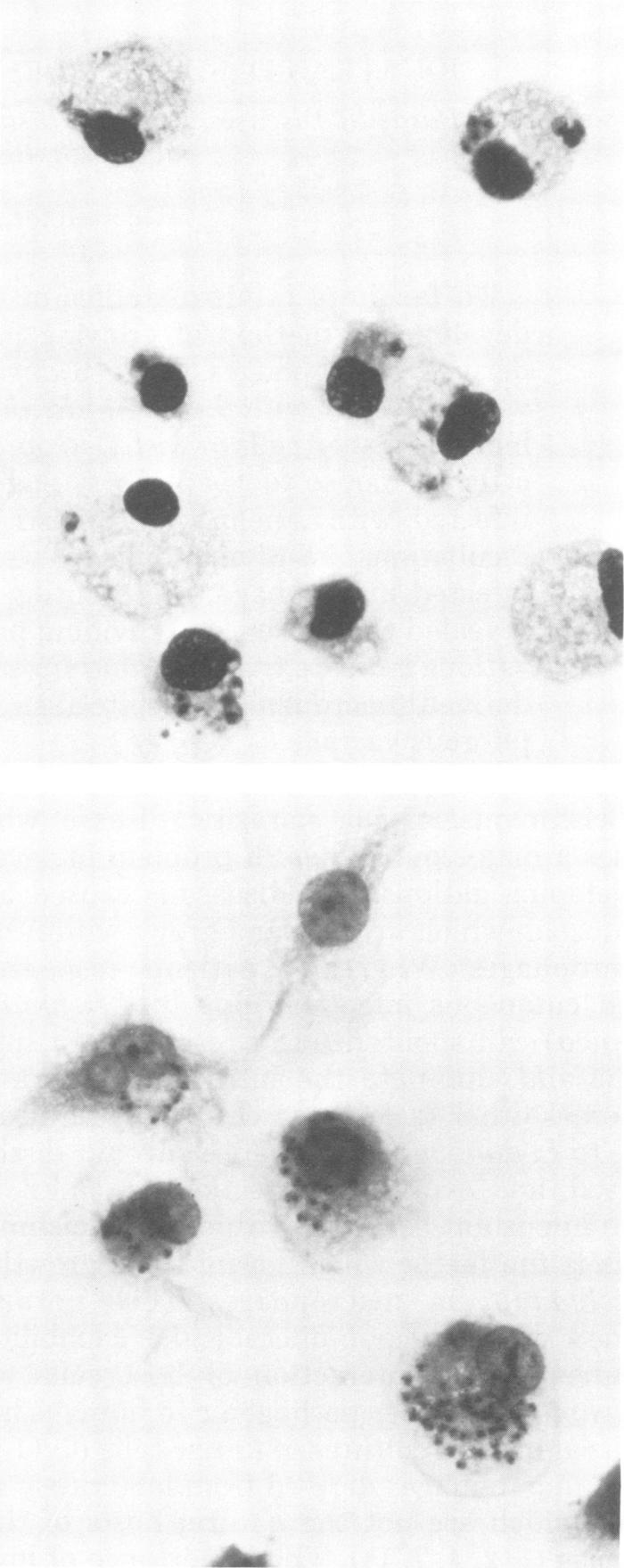
To facilitate in vitro studies of the immunology of human leishmaniasis, we developed a method of growing pathogenic Leishmania in human monocyte-derived macrophages. After 6 days of incubation, adherent mononuclear cells were infected with Leishmania donovani amastigotes obtained from infected hamster spleen cells or with L. tropica amastigotes obtained from infected BALB/c tissue mouse footpad. Forty-eight percent of the macrophages were initially infected, with a mean of 3.0 amastigotes per infected macrophage. After 6 days of incubation, 59% of macrophages were infected and contained 8.8 amastigotes per infected macrophage, representing 2.9-fold multiplication. Electron microscopy revealed the presence of dividing parasites within phagolysosomes. These observations indicate that Leishmania survive and multiply within human monocyte-derived macrophages despite fusion of secondary lysosomes with the parasitophorous vacuole.
为便于对人类利什曼病的免疫学进行体外研究,我们开发了一种在人单核细胞衍生的巨噬细胞中培养致病性利什曼原虫的方法。孵育6天后,贴壁单核细胞用从感染仓鼠脾细胞中获得的杜氏利什曼原虫无鞭毛体或从感染的BALB/c组织小鼠足垫中获得的热带利什曼原虫无鞭毛体进行感染。最初,48%的巨噬细胞被感染,每个被感染的巨噬细胞平均含有3.0个无鞭毛体。孵育6天后,59%的巨噬细胞被感染,每个被感染的巨噬细胞含有8.8个无鞭毛体,增殖了2.9倍。电子显微镜显示吞噬溶酶体内存在正在分裂的寄生虫。这些观察结果表明,尽管次级溶酶体与寄生泡融合,但利什曼原虫仍能在人单核细胞衍生的巨噬细胞内存活和增殖。