Mitruka B M, Costilow R N, Black S H, Pepper R E
J Bacteriol. 1967 Sep;94(3):759-65. doi: 10.1128/jb.94.3.759-765.1967.
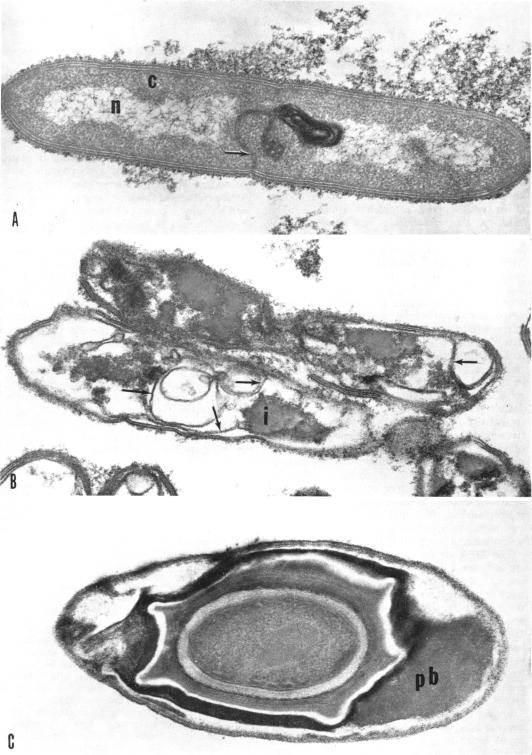
Spores of Bacillus popilliae from infected larvae and refractile bodies produced in a Trypticase-barbiturate medium were similar but distinct from vegetative cells of this organism in protein, nucleic acid, and enzyme composition. The spores and refractile bodies were found to have catalase activity, some of which was heat-resistant. This enzyme was not found in the vegetative cells. The spores contained dipicolinic acid, but the refractile bodies did not. The latter were similar to cells in having considerably higher levels of phosphate extractable with cold trichloroacetic acid and of poly-beta-hydroxybutyrate than had the spores. Electron microscopy demonstrated conclusively that the refractile bodies are distinctly different from either cells or spores of B. popilliae. The possibility that these bodies are formed as a result of an aborted sporulation process is discussed.
从受感染幼虫中提取的日本金龟子芽孢杆菌孢子以及在胰蛋白酶-巴比妥酸盐培养基中产生的折光体,在蛋白质、核酸和酶组成方面与该生物体的营养细胞相似但又有所不同。发现孢子和折光体具有过氧化氢酶活性,其中一些具有耐热性。在营养细胞中未发现这种酶。孢子含有吡啶二羧酸,但折光体不含。后者与细胞相似,其可被冷三氯乙酸提取的磷酸盐和聚-β-羟基丁酸酯的含量比孢子高得多。电子显微镜最终证明,折光体与日本金龟子芽孢杆菌的细胞或孢子明显不同。讨论了这些物体是由于孢子形成过程中止而形成的可能性。