Danbara H, Timmis J K, Lurz R, Timmis K N
J Bacteriol. 1980 Dec;144(3):1126-38. doi: 10.1128/jb.144.3.1126-1138.1980.
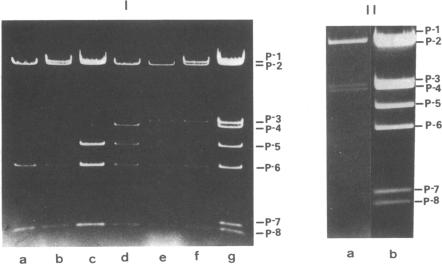
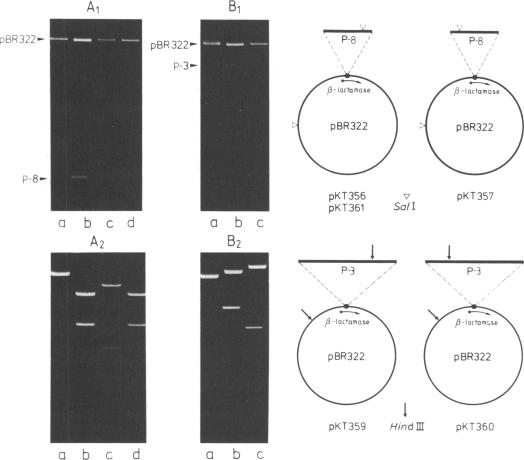
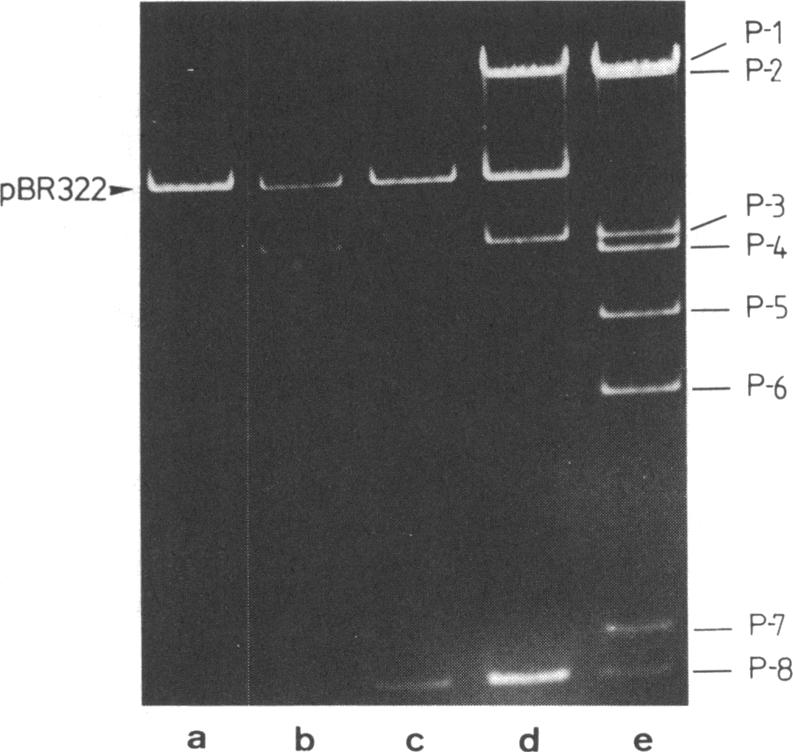
The genetic determinants for replication and incompatibility of plasmid R1 were investigated by gene cloning methods, and three types of R1 miniplasmid derivatives were generated. The first, exemplified by plasmid pKT300, consisted of a single BglII endonuclease-generated deoxyribonucleic acid fragment derived from the R1 region that is located between the determinants for conjugal transfer and antibiotic resistance. Two types of miniplasmids could be formed from PstI endonuclease-generated fragments of pKT300. One of these, which is equivalent to miniplasmids previously generated from plasmids R1-19 and R1-19B2, consisted of two adjacent PstI fragments that encode the RepA replication system of plasmid R1. The other type contained a segment of R1, designated the RepD replication region, that is adjacent to the RepA region and that has not been identified previously as having the capacity for autonomous replication. Plasmid R1, therefore, contained two distinct deoxyribonucleic acid segments capable of autonomous replication. The RepA-RepD miniplasmid pKT300 had a copy number about eightfold higher than that of R1 and hence lacked a determinant for the regulation of plasmid copy number. Like R1, it was maintained stably in dividing bacteria. RepA miniplasmids had copy numbers which were two- to fourfold higher than that of R1 (i.e., which were lower than that of pKT300) and were maintained slightly less stably than those of pKT300 and R1. The RepD miniplasmid was not maintained stably in dividing bacteria. Previous experiments have shown that incompatibility of IncFII group plasmids is specified by a plasmid copy control gene. Despite the fact that RepA miniplasmids of R1 were defective in copy control, they nevertheless expressed incompatibility. This suggests that two genes are responsible for plasmid copy control, one that specifies incompatibility and is located on RepA miniplasmids and another that is located outside of, but adjacent to, the RepA replication region. Hybrid plasmids composed of pBR322 and one PstI fragment from the RepA region, P-8, exhibited incompatibility towards R2 and RepA miniplasmids but not the RepD miniplasmid, whereas hybrids composed of pBR322 and the PstI fragment of the RepD region, P-3, exhibited incompatibility towards R1 and the RepD miniplasmid but not RepA miniplasmids. These results indicate that the two replication systems are functionally distinct and that, although the RepA system is the principal replication system of R1, the RepD system also plays a role in the maintenance of this plasmid.
通过基因克隆方法研究了质粒R1复制和不相容性的遗传决定因素,并构建了三种类型的R1微型质粒衍生物。第一种以质粒pKT300为例,由单个BglII核酸内切酶产生的脱氧核糖核酸片段组成,该片段源自R1区域,位于接合转移和抗生素抗性决定因素之间。从pKT300的PstI核酸内切酶产生的片段可以形成两种类型的微型质粒。其中一种与先前从质粒R1-19和R1-19B2产生的微型质粒等效,由两个相邻的PstI片段组成,它们编码质粒R1的RepA复制系统。另一种类型包含一段R1片段,称为RepD复制区域,它与RepA区域相邻,以前未被鉴定为具有自主复制能力。因此,质粒R1包含两个能够自主复制的不同脱氧核糖核酸片段。RepA-RepD微型质粒pKT300的拷贝数比R1高约八倍,因此缺乏质粒拷贝数调节的决定因素。与R1一样,它在分裂细菌中稳定维持。RepA微型质粒的拷贝数比R1高两到四倍(即低于pKT300)并且维持稳定性略低于pKT300和R1。RepD微型质粒在分裂细菌中不能稳定维持。先前实验表明,IncFII组质粒的不相容性由质粒拷贝控制基因决定。尽管R1的RepA微型质粒在拷贝控制方面存在缺陷,但它们仍然表现出不相容性。这表明两个基因负责质粒拷贝控制,一个决定不相容性,位于RepA微型质粒上,另一个位于RepA复制区域之外但与之相邻。由pBRlI和来自RepA区域的一个PstI片段P-8组成的杂交质粒对R2和RepA微型质粒表现出不相容性,但对RepD微型质粒则不然,而由pBR322和RepD区域的PstI片段P-3组成的杂交质粒对R1和RepD微型质粒表现出不相容性,但对RepA微型质粒则不然。这些结果表明,这两个复制系统在功能上是不同的,并且尽管RepA系统是R1的主要复制系统,但RepD系统在该质粒的维持中也起作用。