Humphries E H, Glover C, Reichmann M E
Proc Natl Acad Sci U S A. 1981 Apr;78(4):2601-5. doi: 10.1073/pnas.78.4.2601.
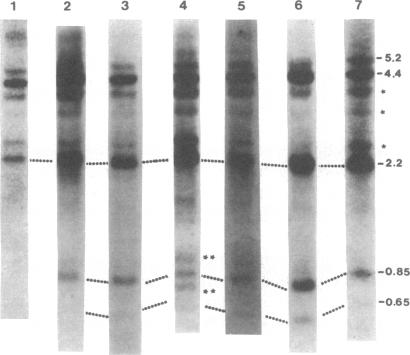
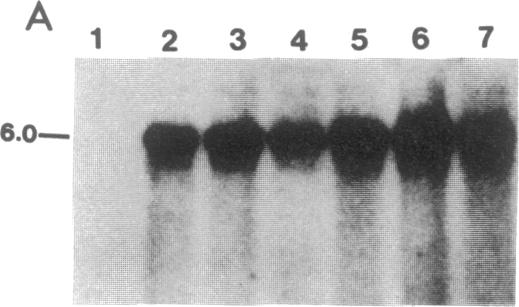
Synchronized chicken embryo fibroblasts, prepared by addition of serum to stationary cells arrested in Go, were exposed to the Prague strain of Rous sarcoma virus. At different times during the cell cycle, high molecular weight DNA was prepared from infected cells and examined for the presence of newly integrated viral DNA sequences. The results demonstrate that newly integrated viral sequences were first detected during S-phase DNA synthesis 9 hr after infection. The presence of colchicine prevented cellular division and delayed the appearance of progeny virus but it did not affect the appearance of viral specific DNA in the high molecular weight fraction of cellular DNA. Our results indicate that provirus integration, occurring during S-phase DNA synthesis, does not require cell division. Previous experiments have demonstrated that Rous sarcoma virus infection of chicken embryo fibroblasts requires cell division to initiate viral RNA synthesis and the production of progeny virus. The findings presented in this report support the hypothesis that division of the infected cells is required for an event that controls viral expression at the level of the integrated provirus.
通过向处于G0期静止的细胞中添加血清制备同步化的鸡胚成纤维细胞,使其暴露于劳氏肉瘤病毒布拉格株。在细胞周期的不同时间,从感染细胞中制备高分子量DNA,并检测新整合的病毒DNA序列的存在。结果表明,感染后9小时,在S期DNA合成过程中首次检测到新整合的病毒序列。秋水仙碱的存在阻止了细胞分裂并延迟了子代病毒的出现,但它不影响细胞DNA高分子量部分中病毒特异性DNA的出现。我们的结果表明,在S期DNA合成过程中发生的前病毒整合不需要细胞分裂。先前的实验表明,鸡胚成纤维细胞感染劳氏肉瘤病毒需要细胞分裂来启动病毒RNA合成和子代病毒的产生。本报告中的研究结果支持这样的假设,即感染细胞的分裂对于在整合前病毒水平控制病毒表达的事件是必需的。