Sorensen O, Dugre R, Percy D, Dales S
Infect Immun. 1982 Sep;37(3):1248-60. doi: 10.1128/iai.37.3.1248-1260.1982.
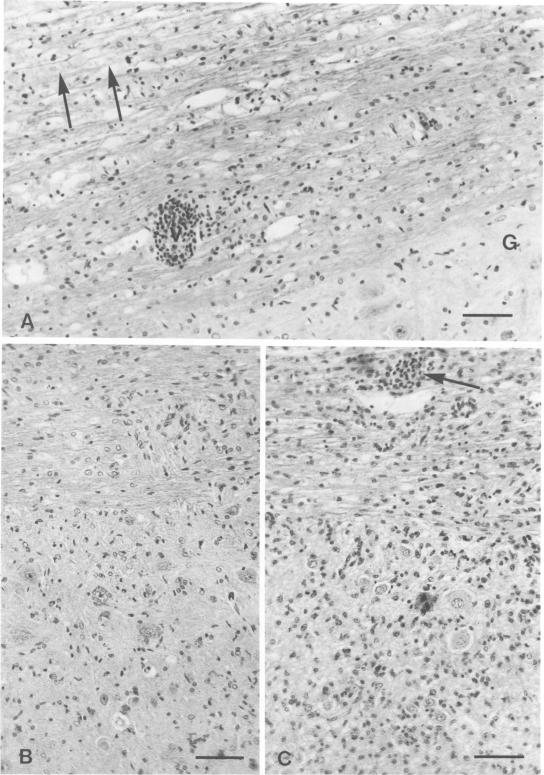
Intracerebral inoculation of JHM virus (JHMV), the neuropathic strain of mouse hepatitis virus, into Wistar Furth, Wistar Lewis, and Fischer 344 rats at various ages indicated that Wistar Furth rats are more susceptible to the virus than are the other strains. Fischer 344 and Wistar Lewis rats were more resistant to inoculation at 2 and 5 days of age and completely resistant by 10 days of age. In contrast, Wistar Furth rats which were very susceptible at both 2 and 5 days of age remained susceptible until 21 days of age. Intracerebral challenge of an F1 cross between Wistar Furth and Wistar Lewis rats at 10 days of age indicated that resistance to JHMV infection is dominant. Cyclophosphamide treatment 28 days after intracerebral inoculation exacerbated an inapparent infection, leading to paralysis in eight of nine and death in six of nine Wistar Furth test rats. In such immunosuppressed animals, grey- and white-matter lesions were noted throughout the central nervous system, in contrast to the purely demyelinating lesions noted previously. Since rats, unlike mice, were not susceptible to disease after intracerebral injection with the serorelated viscerotropic strain MHV-3, we wished to extend our understanding of the neurological disease process elicited by the two viruses in rodents. For this reason, various mouse strains, including some with recognized immunodeficiencies, were challenged by different routes of inoculation. Intraperitoneal infection of nude and beige mice with JHMV indicated that lack of natural killer cell functions does not markedly enhance the susceptibility to virus, whereas T-cell activity appears to be essential for resisting infection. JHMV and MHV-3 replication in peritoneal macrophages from highly resistant A/J mice was reduced in comparison with that noted in macrophages from susceptible C57BL6/J mice. An initial intraperitoneal inoculation of JHMV was able to protect C57BL6/J mice against fatal intracerebral challenge within 3 days, whereas A/J mice remained susceptible beyond day 3. The protective effect did not appear to result from increased levels of circulating interferon, preceded elevation in serum JHMV-neutralizing antibody titers, and persisted for at least several weeks after intraperitoneal inoculation. Based on the combined studies described here and on previous work by us and others, it appears that the factors influencing the outcome of coronavirus disease in rodents are age at inoculation, route of challenge, genetic constitution of the virus and host, and competence of the immune system, particularly cellular immunity involving T-cells.
将小鼠肝炎病毒的神经病变株JHM病毒(JHMV)脑内接种到不同年龄的Wistar Furth大鼠、Wistar Lewis大鼠和Fischer 344大鼠体内,结果表明Wistar Furth大鼠比其他品系的大鼠对该病毒更易感。Fischer 344大鼠和Wistar Lewis大鼠在2日龄和5日龄时对接种更具抵抗力,到10日龄时完全具有抵抗力。相比之下,在2日龄和5日龄时都非常易感的Wistar Furth大鼠直到21日龄时仍易感。对10日龄的Wistar Furth大鼠和Wistar Lewis大鼠的F1杂交后代进行脑内攻毒表明,对JHMV感染的抵抗力是显性的。脑内接种28天后用环磷酰胺治疗使隐性感染加剧,导致9只Wistar Furth试验大鼠中有8只瘫痪,9只中有6只死亡。在这种免疫抑制的动物中,整个中枢神经系统都出现了灰质和白质病变,这与之前观察到的纯脱髓鞘病变不同。由于大鼠与小鼠不同,脑内注射血清相关的嗜内脏性毒株MHV-3后不易感病,我们希望扩展对这两种病毒在啮齿动物中引发的神经疾病过程的认识。因此,用不同的接种途径对包括一些具有公认免疫缺陷的小鼠品系进行了攻毒。用JHMV对裸鼠和米色小鼠进行腹腔感染表明,缺乏自然杀伤细胞功能并不会显著增加对病毒的易感性,而T细胞活性似乎对抵抗感染至关重要。与易感的C57BL6/J小鼠的巨噬细胞相比,高抵抗力的A/J小鼠腹腔巨噬细胞中JHMV和MHV-3的复制减少。初次腹腔接种JHMV能够在3天内保护C57BL6/J小鼠免受致命的脑内攻毒,而A/J小鼠在3天后仍易感。这种保护作用似乎不是由循环干扰素水平升高引起的,血清JHMV中和抗体滴度先升高,并且在腹腔接种后至少持续数周。根据这里描述的综合研究以及我们和其他人之前的工作,似乎影响啮齿动物冠状病毒病结局的因素包括接种时的年龄、攻毒途径、病毒和宿主的基因构成以及免疫系统的功能,特别是涉及T细胞的细胞免疫。