Espejo R T, Puerto F, Soler C, González N
Infect Immun. 1984 Apr;44(1):112-6. doi: 10.1128/iai.44.1.112-116.1984.
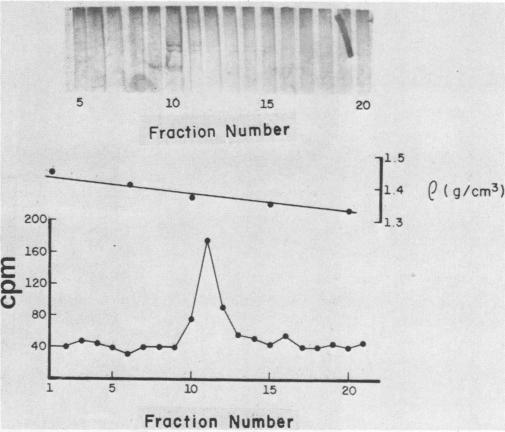
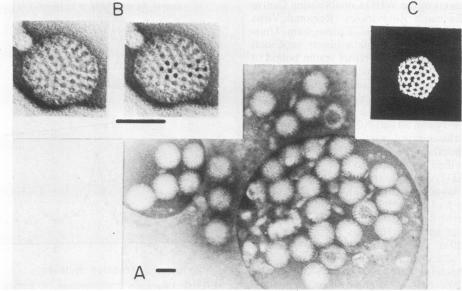
A virus isolate with the properties of a pararotavirus was found after routine analysis by RNA electrophoresis of 658 samples of diarrheic feces from hospitalized infants and young children in Mexico City. Of the patients included in this survey, which was initiated in 1977, 29% excreted rotaviruses which were detected by their characteristic RNA pattern after gel electrophoresis. The morphology and sedimentation coefficient of this pararotavirus, which was the apparent cause of a diarrhea with moderate dehydration in a 2-year-old male infant, were indistinguishable from those of rotaviruses, but its buoyant density in CsCl was slightly higher than that of simian rotavirus SA11. By electron microscopy, the viral particles showed a regular pattern of cavities or holes that constituted the 5- and 6-coordinated units of the virion with a structure characteristic of T = 12. The virion also was apparently composed of protein classes similar to those found in rotaviruses. Seroconversion in the patient and presence of anti-pararotavirus antibodies in most of the members of the family of the patient was shown by immunoelectron microscopy. Of the sera from 12 healthy adults which were examined by this technique, seven were negative, three were slightly positive, and only two were strongly positive.
在对墨西哥城住院婴幼儿的658份腹泻粪便样本进行RNA电泳常规分析后,发现了一种具有副轮状病毒特性的病毒分离株。在这项始于1977年的调查所纳入的患者中,29%排出了轮状病毒,通过凝胶电泳后其特征性RNA模式得以检测。这种副轮状病毒是一名2岁男婴中度脱水腹泻的明显病因,其形态和沉降系数与轮状病毒无法区分,但其在CsCl中的浮力密度略高于猿猴轮状病毒SA11。通过电子显微镜观察,病毒颗粒呈现出规则的空洞或孔模式,这些空洞或孔构成了病毒体的5配位和6配位单元,具有T = 12的结构特征。病毒体显然也由与轮状病毒中发现的类似蛋白质类别组成。免疫电子显微镜显示患者发生了血清转化,且患者家族中的大多数成员体内存在抗副轮状病毒抗体。在用该技术检测的12名健康成年人的血清中,7份为阴性,3份呈弱阳性,只有2份呈强阳性。