Gonzalez A, Prediger E, Huecas M E, Nogueira N, Lizardi P M
Proc Natl Acad Sci U S A. 1984 Jun;81(11):3356-60. doi: 10.1073/pnas.81.11.3356.
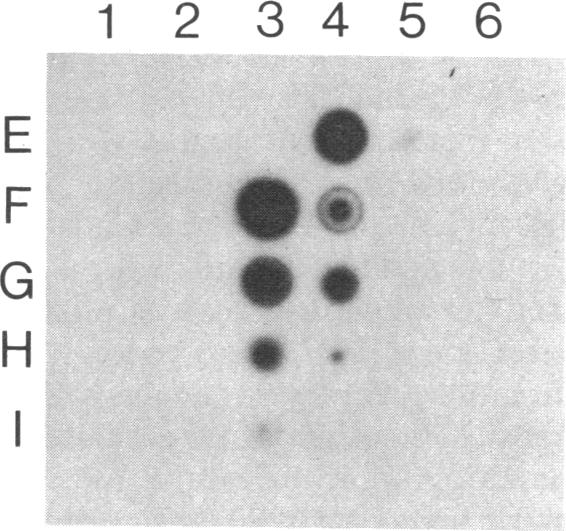
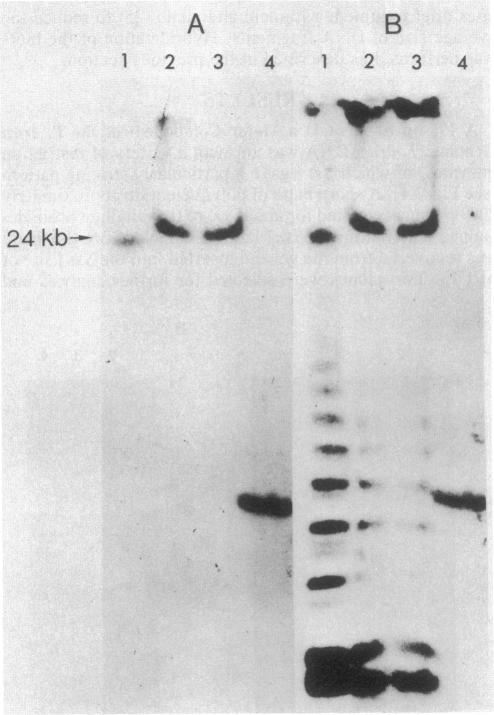
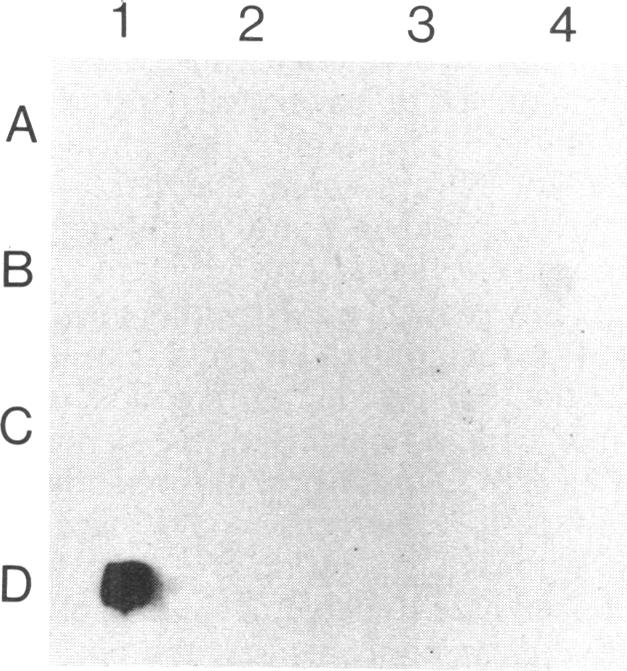
We have isolated genomic clones containing members of a tandemly repeated DNA family from Trypanosoma cruzi. This family, which contains a 195-base pair (bp) repeating unit, is the most abundant repetitive DNA in this organism. DNA sequencing analysis of three adjacent tandem repeats as well as two independent nonadjacent repeats showed relatively little sequence heterogeneity. Surprisingly, the three tandem elements contained a 585-bp open reading frame. However, blot hybridization of RNA from epimastigotes as well as blood-form trypomastigotes failed to show evidence for transcription of these sequences. Fractionation of whole T. cruzi DNA in sucrose gradients or in agarose gels followed by hybridization with appropriate radioactive probes showed that the size distribution of DNA bearing the 195-bp repetitive element is distinct from that of kinetoplast DNA as well as from that of DNA bearing tubulin genes. Hybridization of the 195-bp element probe with DNA from six different T. cruzi strains was positive; hybridization with DNA of other protozoa was negative with the single exception of Leptomonas collosoma , which displayed a weak cross-hybridization signal. Clones bearing this repetitive element are shown to be useful as probes for identification and counting of T. cruzi cells by dot-blot hybridization. The sensitivity of this assay permits detection of the DNA of 30 parasites in blood samples.
我们从克氏锥虫中分离出了包含串联重复DNA家族成员的基因组克隆。这个家族含有一个195碱基对(bp)的重复单元,是该生物体中最丰富的重复DNA。对三个相邻串联重复序列以及两个独立的非相邻重复序列进行的DNA测序分析显示,序列异质性相对较小。令人惊讶的是,这三个串联元件包含一个585 bp的开放阅读框。然而,来自上鞭毛体以及血液型锥鞭毛体的RNA的印迹杂交未能显示这些序列转录的证据。将克氏锥虫全DNA在蔗糖梯度或琼脂糖凝胶中进行分级分离,然后与适当的放射性探针杂交,结果表明携带195 bp重复元件的DNA的大小分布与动质体DNA以及携带微管蛋白基因的DNA的大小分布不同。用195 bp元件探针与六种不同克氏锥虫菌株的DNA杂交呈阳性;与其他原生动物的DNA杂交呈阴性,唯一的例外是粗线利什曼原虫,它显示出微弱的交叉杂交信号。携带这种重复元件的克隆被证明可作为通过斑点印迹杂交鉴定和计数克氏锥虫细胞的探针。该检测方法的灵敏度能够检测出血液样本中30个寄生虫的DNA。