Sunter J P, Appleton D R, Wright N A, Watson A J
Br J Cancer. 1978 May;37(5):662-72. doi: 10.1038/bjc.1978.104.
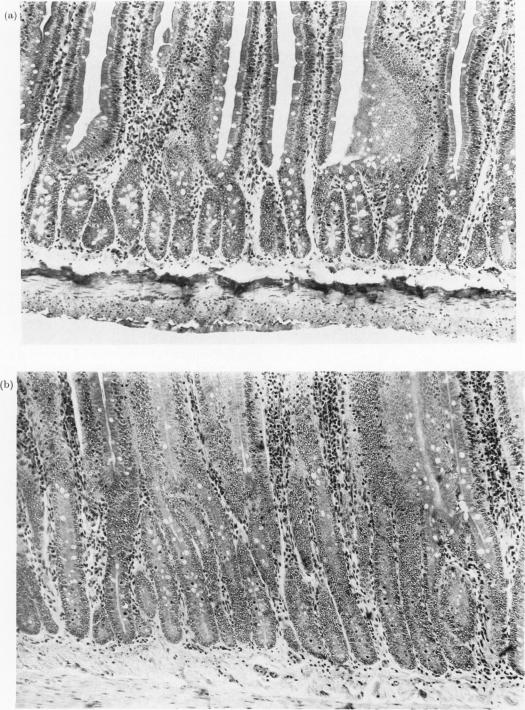
When symmetrical 1,2 dimethylhydrazine was administered to rats by weekly s.c. injection, 37% of the animals had developed small intestinal carcinomas after 21-27 weeks. These lesions were largely localized to duodenum and upper jejunum. At the same time there was a diffuse crypt hyperplasia in the jejunum which affected all the treated animals, not just those with neoplasms. This marked hyperplasia was preceded by a modest sustained crypt elongation which was seen soon after DMH injections began. In these hyperplastic jejunal crypts the absolute size of the proliferative compartment was increased, but the growth fraction calculated from labelling studies appeared to fall, probably by reduction in relative size of the proliferating population within the proliferative compartment. No convincing alteration in actual cell-cycle time was observed in the abnormal crypts. There was a slight (25%) increase in cell-production rate in the abnormal crypts.
当通过每周皮下注射向大鼠施用对称的1,2 - 二甲基肼时,21 - 27周后37%的动物发生了小肠癌。这些病变主要局限于十二指肠和空肠上段。与此同时,空肠出现弥漫性隐窝增生,所有接受治疗的动物均受影响,而非仅那些发生肿瘤的动物。这种明显的增生之前有适度的持续性隐窝延长,在开始注射二甲基肼后不久即可见到。在这些增生的空肠隐窝中,增殖区室的绝对大小增加,但根据标记研究计算的生长分数似乎下降,可能是由于增殖区室内增殖群体的相对大小减小。在异常隐窝中未观察到实际细胞周期时间有令人信服的改变。异常隐窝中的细胞产生率略有增加(25%)。